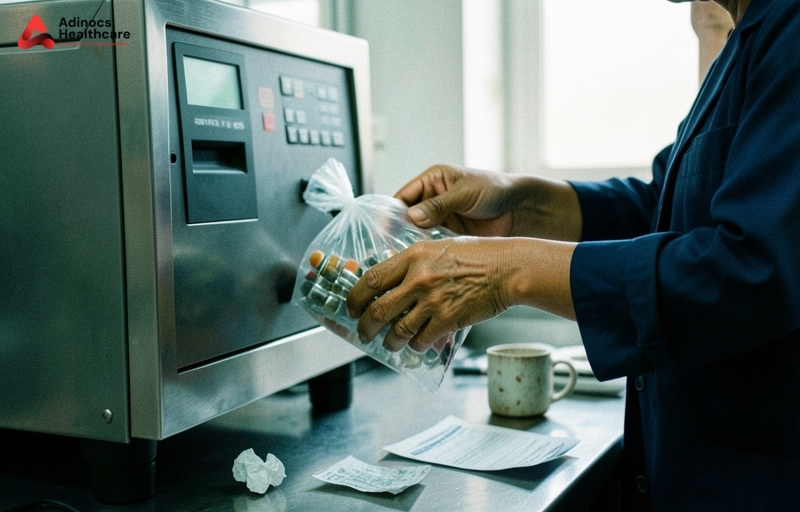
Did you know that a single compliance error under the latest bio-medical waste management India guidelines can trigger environmental compensation fines of up to Rs. 50,000 per day? State Pollution Control Boards (SPCB) are no longer conducting casual, scheduled inspections. Instead, they are running automated digital audits that catch mismatches instantly.
The short answer: In 2026, the direct bio-medical waste management India compliance cost for a small lab ranges between Rs. 12,000 and Rs. 45,000 annually in basic fees. However, indirect operational costs, staff training, and record-keeping push the actual burden closer to Rs. 1.2 lakh per year. Ignoring these rules can trigger immediate SPCB fines starting at Rs. 50,000 per violation. A costly mistake.
Managing this overhead while keeping your margins intact is a delicate balancing act. Let us break down the exact costs, the rules you must follow, and how to protect your facility from aggressive regulatory penalties this year.
What are the latest rules for bio-medical waste management India in 2026?
A pathology lab owner in Siliguri recently faced a sudden closure notice. The reason? They were still using non-chlorinated plastic bags without barcoded labels for their yellow waste. They thought the local collection agent would handle the labeling. They were wrong. Under the current guidelines enforced by the Central Pollution Control Board (CPCB), the generator of the waste is solely responsible for segregation and barcoding before it leaves the facility. No exceptions.
So what changed in 2026? The enforcement of real-time digital tracking is now absolute. SPCBs across states like West Bengal, Bihar, and Odisha have integrated their portals with local Common Bio-medical Waste Treatment Facilities (CBWTFs). Every single bag of waste must have a unique barcode that is scanned at the point of collection. This scan instantly logs the weight, time, and GPS coordinates of the pickup vehicle.
Here's the catch. The system is designed to catch mismatches. If your laboratory reports 150 patient registrations in a day but logs zero grams of yellow or red bag waste, the digital portal flags your facility automatically. Regulatory bodies do not need to visit your lab physically to issue a show-cause notice. The algorithm does it for them.
What this means in practice: Your staff must weigh and log every category of waste daily. You cannot rely on manual paper logbooks that are backdated at the end of the month. According to CPCB compliance reports, over 92% of flagged audits in recent months were triggered by data mismatches between patient registers and waste logs. You must treat waste tracking as an extension of your daily billing workflow.
How much does bio-medical waste management India compliance cost for small labs?
A small pathology lab in Patna processing 50 to 80 samples a day faces a very different cost structure than a 100-bed hospital. Yet, the regulatory burden remains almost identical. Many lab owners ask: how much does BMW compliance cost for small labs India? The answer depends heavily on your local CBWTF pricing structure and your daily waste volume.
The trade-off: Some states charge a flat monthly fee for diagnostic centres, while others charge strictly by the kilogram. In Eastern India, most private concessionaires charge a base fee plus a variable rate per kilogram. If you do not monitor this closely, you will overpay. Every single month.
Here is a realistic breakdown of the annual BMW compliance cost for small labs India in 2026:
| Expense Category | Average Annual Cost (INR) | Billing Frequency | |
|---|---|---|---|
| CBWTF Membership & Registration | Rs. 8,000 - Rs. 15,000 | Annual fee | The flat rate to keep your registration active. |
| Daily Collection Charges (up to 2 kg/day) | Rs. 18,000 - Rs. 36,000 | Monthly billing (Rs. 1,500 - Rs. 3,000/month) | Covers the daily pickup vehicle visit. |
| Barcoded Bags & Non-Chlorinated Consumables | Rs. 6,000 - Rs. 10,000 | As consumed | Must comply with strict thickness and colour standards. |
| Staff Training & Annual Audits | Rs. 5,000 - Rs. 8,000 | Internal cost | Covers mandatory bi-annual training for lab technicians. |
| Total Direct Compliance Cost | Rs. 37,000 - Rs. 69,000 | Annualized | Assumes no fines or penalties are levied. |
Plot twist: There is a hidden cost that most lab owners miss. It is the "Weight-Matching Trap." Many bio-medical waste disposal services India charge based on the weight recorded by their collection agent's handheld scale. If your lab does not own a calibrated digital scale to verify these numbers, you are likely overpaying by 20% to 35% every month. An agent might round up 1.2 kg to 2 kg. Over a year, that minor rounding error adds up to thousands of rupees in inflated bills. Buy a calibrated digital scale for Rs. 2,500 today. It pays for itself in three months.
Why do State Pollution Control Boards (SPCB) fine diagnostic centers?
A 30-bed nursing home with an attached pathology lab in Burdwan was hit with a Rs. 1.5 lakh fine in late 2025. What was their crime? They stored their red and yellow waste bags in the same open utility closet for 74 hours. The local SPCB guidelines for diagnostic centers 2026 state clearly that untreated bio-medical waste must not be stored beyond 48 hours. When the collection vehicle broke down on a long holiday weekend, the lab staff simply let the waste pile up.
The SPCB does not care if the collection agency was late. Not at all. The legal responsibility to find an alternative or report the delay to the board lies with you, the waste generator. This is where SPCB fines for healthcare waste become incredibly painful.
Based on recent enforcement actions across Tier 2 and Tier 3 cities, the top reasons for heavy penalties include:
- Improper Segregation: Finding blood-soaked cotton (yellow waste) inside a red plastic recycle bag. This is viewed as intentional contamination of the recycling stream.
- Missing Barcodes: Handing over unlabelled bags to the CBWTF driver. This violates the digital tracking mandate.
- Untrained Staff: Lab technicians who cannot produce their mandatory annual training certificates during a surprise inspection.
- No On-site Pre-treatment: Failing to disinfect liquid microbiology waste before pouring it down the drain. You must autoclave or chemically treat this waste on-site.
These compliance gaps often happen because of high staff turnover. If you want to understand why keeping trained staff is such a massive operational bottleneck, read our detailed analysis on Why Staff Shortages Cost Indian Hospitals Millions in 2026. When experienced technicians leave, they take their compliance habits with them, leaving your lab vulnerable to sudden inspections.
How to maintain a BMW logbook for NABL and SPCB audits?
A pathology lab in Asansol almost lost its NABL accreditation last month. Why? Their manual waste register was too perfect. Every single day for six months, the recorded weight of their yellow waste was exactly 1.50 kg. The NABL auditor immediately flagged this as fabricated data. No real-world laboratory generates the exact same weight of waste down to the gram every single day. Never happens.
To pass both SPCB and NABL audits, your logbook must reflect reality. It must also match your patient volume. Follow this simple, five-step process to maintain a bulletproof logbook:
- Record Weight at Source: Weigh each colour-coded bag (Yellow, Red, Blue, White container) separately at the end of each shift. Write these numbers down in your internal register immediately.
- Log the Barcode Numbers: Note down the unique barcode series used for that day's disposal. This links your physical register to the digital database.
- Get the Collection Agent's Signature: When the CBWTF vehicle arrives, ensure the driver signs your physical logbook. They must also print their name and the vehicle number.
- Verify the Digital Receipt: Within 24 hours, log into your state's SPCB portal or the CBWTF app. Verify that the weight they uploaded matches what you wrote in your physical register. If there is a discrepancy of more than 10%, file a dispute immediately.
- Keep Pre-treatment Records: Maintain a separate section in your logbook for liquid waste disinfection. Log the volume of waste, the concentration of sodium hypochlorite used, the contact time, and the signature of the technician who performed the treatment.
This level of detail might feel like administrative overkill. But during an audit, a clean, variable, and verified logbook is your best shield. If your internal documentation is weak, your NABL dreams are in serious jeopardy. For a deeper look at where labs stumble during these inspections, see our guide on Why Do Internal NABL Audits Fail Indian Pathology Labs?.
Which waste categories are most commonly mismanaged in Indian labs?
A busy diagnostic centre in Dhanbad with 40 patients waiting in the reception area is a prime breeding ground for compliance errors. When the waiting room is packed, mistakes happen. A technician accidentally drops a used syringe with a needle into the red bag instead of the puncture-proof white container. It seems like a small error. But that single slip-up can get your lab blacklisted by the local disposal facility. Every time.
In our work with diagnostic networks across Eastern India, we see the same three categories mismanaged repeatedly. Understanding these patterns can save you from costly SPCB fines for healthcare waste.
1. Yellow Waste vs. Red Waste
This is the most common confusion in Indian pathology labs. Yellow waste is for highly infectious, non-recyclable materials that must be incinerated. Red waste is for recyclable plastics that must be autoclaved and shredded.
The rule of thumb: If it is soiled with blood or body fluids (like cotton swabs, gauze, or tissue samples), it goes into the Yellow Bag. If it is clean plastic (like empty syringes without needles, IV bottles, or vacant vacutainers), it goes into the Red Bag. Never mix them.
2. Sharp Waste (White Translucent Containers)
Needles, scalpels, and blades must go into a puncture-proof, leak-proof white container. The common mistake? Staff fill these containers to the brim. You must seal and replace these containers when they are three-quarters full. Forcing a used needle into an overfilled container is how needle-stick injuries occur.
3. Glassware (Blue Cardboard Boxes)
Broken glass, glass slides, and medicine vials must be placed in a blue cardboard box with a protective blue inner lining. Too often, labs throw broken glass slides into the yellow bag. When the collection agent lifts the bag, the glass tears the plastic, spilling infectious waste onto your lab floor. That is a major biohazard and an instant SPCB violation.
These operational challenges are even more pronounced when expanding your footprint. Managing compliance across multiple branches in smaller towns is incredibly difficult. If you are planning to grow your network, you should read our strategic breakdown on Why Indian Labs Struggle Expanding to Tier 2 Cities in 2026 to avoid these common scaling traps.
Key Takeaways
- Digital Tracking is Non-negotiable: In 2026, SPCB portals use automated algorithms to cross-reference your patient footfall with your daily waste logs. Silent digital audits are the new normal.
- Buy Your Own Scale: Do not rely on the CBWTF agent's handheld scale. Weigh your own waste daily to avoid inflated monthly bills and mismatched digital records.
- Never Store Beyond 48 Hours: Untreated bio-medical waste must be cleared within 48 hours. If your local collection vehicle is delayed, document it and report it to avoid automatic penalties.
- Train and Retrain: High staff turnover is a major risk. Implement a mandatory, 30-minute monthly refresher course on waste segregation for all new technicians and housekeeping staff.
- Protect Your NABL Status: Ensure your waste logbooks show natural daily variations in weight. Perfect, identical numbers are an immediate red flag for NABL and SPCB auditors.
Frequently Asked Questions
Do small pathology labs need SPCB registration for waste management?
Yes. Every healthcare facility that generates, collects, receives, stores, or handles bio-medical waste must obtain authorization from their respective State Pollution Control Board. This applies to all pathology labs, diagnostic centres, and blood banks, regardless of their daily sample volume or bed count.
How much is the SPCB fine for bio-medical waste violations in India?
Fines start at Rs. 50,000 for minor administrative lapses and can escalate to Rs. 5 lakh or more for serious violations, such as illegal dumping of infectious waste. Under the Environment (Protection) Act, SPCB officials also have the authority to issue immediate closure notices, disconnect your electricity and water supply, or file criminal charges against the lab owner.
Can a diagnostic centre dispose of waste without CBWTF in India?
No. If a Common Bio-medical Waste Treatment Facility is operating within a 150-kilometer radius of your laboratory, you are legally required to obtain a membership and hand over your waste to them. On-site deep burial or open burning is strictly prohibited for urban and semi-urban diagnostic facilities.
How many years should a lab keep bio-medical waste records for NABL?
You must maintain your physical waste logbooks, CBWTF receipts, and annual reports for a minimum of five years. These records must be readily available at your facility for inspection by SPCB officers or NABL auditors at any time.
Running a compliant, profitable diagnostic facility in 2026 requires more than just excellent clinical skills. It demands operational discipline and the right administrative support. If you are looking to streamline your laboratory operations, reduce compliance stress, or upgrade your diagnostic infrastructure without heavy upfront capital, Adinocs Healthcare is here to help. We provide end-to-end diagnostic equipment solutions, complete with installation, operator training, and reliable on-ground support across Eastern India. Get a free diagnostic equipment and compliance consultation from Adinocs Healthcare today to find out how we can help your facility run smoother and safer.
Data sources: Central Pollution Control Board (CPCB) Guidelines for Common Bio-medical Waste Treatment Facilities, Ministry of Environment, Forest and Climate Change (MoEFCC) notifications, and State Pollution Control Board compliance circulars.