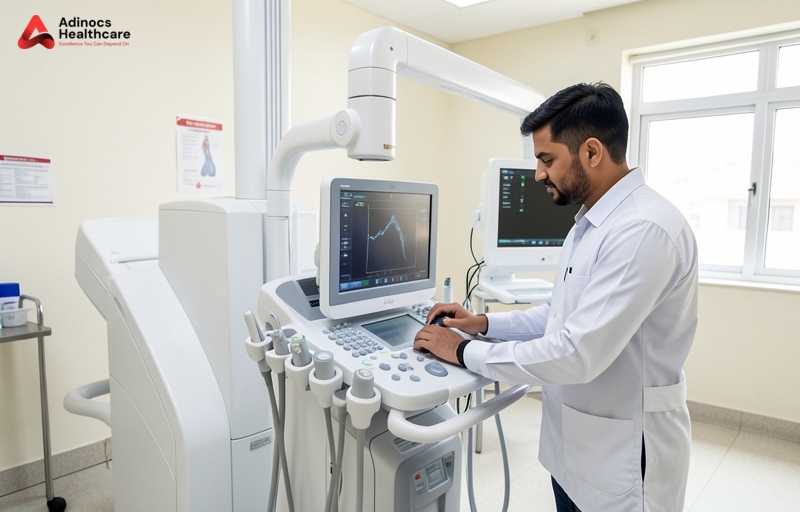
According to a 2024 industry survey, 62 percent of diagnostic lab owners in India experience at least one major equipment failure every three years due to power instability or environmental factors. When a power surge destroys a CT scanner motherboard or a monsoon flood damages a high-end ultrasound unit in a basement-level lab, the financial hit often exceeds Rs. 15 lakhs in repair costs and lost revenue. Securing comprehensive medical equipment insurance India is a fundamental requirement for maintaining operational stability in a market where a single machine failure can halt 60 percent of your daily revenue. Relying on standard property insurance is a common oversight that leaves lab owners exposed to significant capital losses.
What does medical equipment insurance actually cover for Indian labs?
A 50-bed hospital in Bhubaneswar recently discovered that their standard building insurance did not cover the delicate internal sensors of their MRI machine following a localized fire in the control room. The management assumed the general policy would suffice, but they found that diagnostic hardware requires specialized protection that addresses the unique risks of medical electronics. Unlike standard property insurance, a dedicated policy for medical assets focuses on the precision and sensitivity of the equipment.
When you invest in medical device insurance coverage India, you are protecting your business against specific technical failures. These policies typically cover:
- Mechanical and electrical breakdown: Coverage for internal component failures that are not caused by simple wear and tear, such as circuit board failure due to internal heat.
- Voltage fluctuations: Protection against the erratic power supply common in many Indian regions that can destroy sensitive diagnostic boards.
- Accidental damage: Coverage for physical damage caused by human error during installation, cleaning, or patient handling.
- Data recovery costs: Expenses related to restoring patient data if the device storage fails due to a covered event.
- Loss of revenue: Compensation for business interruption during the repair period, which can be as long as 30 days for imported parts.
Understanding these specifics is necessary, especially when you are balancing equipment ROI with NABL compliance in 2026. If your machine is out of service, you are not just losing the cost of the repair; you are losing the daily revenue that keeps your staff paid and your lab operational.
How much does it cost to insure a CT or MRI machine in India in 2026?
A diagnostic lab owner in Siliguri recently compared quotes for a new 16-slice CT scanner. He found that while the machine cost Rs. 1.2 crore, the annual premium for a specialized medical equipment policy hovered around 0.5 percent to 1.5 percent of the total machine value. This cost varies based on the age of the machine, the location of the facility, and the specific security measures installed, such as high-capacity Uninterruptible Power Supply (UPS) units and voltage stabilizers.
The diagnostic center equipment insurance cost is influenced by several factors that you can control to lower your premiums:
- AMC Status: Facilities with active Annual Maintenance Contracts (AMC) with the manufacturer often receive lower insurance premiums because the risk of long-term neglect is reduced.
- Fire Safety Compliance: Labs that strictly follow fire safety norms as per the National Building Code of India (2016) often qualify for premium discounts of up to 10 percent.
- Surge Protection: Installing industrial-grade surge protectors demonstrates to the insurer that you are actively mitigating the risk of electrical damage.
- Equipment Age: Machines older than 7-10 years may attract higher premiums or be limited to "actual cash value" coverage rather than "replacement value."
For many, the cost of insurance is a small fraction compared to the potential loss. If you are currently evaluating your capital expenditure, you may want to look into leasing vs buying radiology equipment for Indian clinics in 2026 to understand how insurance fits into your long-term financial planning.
Why is standard business insurance insufficient for diagnostic equipment?
Consider a pathology lab in Nagpur that suffered significant losses after a short circuit in the building's main panel. Their general commercial policy covered the physical structure and office furniture, but the insurance company denied the claim for the high-end chemistry analyzer. The reason was simple: the policy contained an "exclusion clause" for sensitive electronic equipment that required specialized handling and climate-controlled environments.
Standard business insurance is designed for physical assets like tables, chairs, and building walls. It is rarely designed for the sophisticated technology found in modern Indian diagnostic centres. Here is why you need to look beyond generic policies:
- Exclusions for Internal Damage: Standard policies usually cover fire and theft but ignore internal electrical faults caused by power instability.
- Replacement Value Gaps: General insurance often pays the depreciated value of an item, whereas medical equipment insurance can be structured to cover the "new for old" replacement cost, allowing you to buy an equivalent modern machine.
- Lack of Technical Expertise: General insurance adjusters may not understand the diagnostic impact of a malfunctioning component, leading to delayed or rejected claims.
- Compliance Alignment: NABL and NABH standards often require that your facility has a documented risk management plan. Proper insurance coverage is a verified part of that risk management strategy.
As you manage your facility, remember that your equipment is your revenue engine. You can read more about 5 reasons Indian labs fail AERB inspections for radiology equipment to see how documentation and equipment maintenance are linked to operational success.
How do electrical surges and floods impact insurance premiums in India?
A diagnostic centre in a flood-prone area of Kolkata learned the hard way that their location dictated their insurance premiums. After a heavy monsoon season resulted in water ingress that damaged the floor-mounted radiology equipment, their premiums spiked by 25 percent the following year. Insurers look at the geography of your facility as much as they look at the equipment itself.
In India, the primary threats to high-value medical hardware are environmental and electrical. Insurers assess these risks using local data:
- Monsoon Risks: If your lab is in a basement or a low-lying area in cities like Mumbai, Chennai, or Kolkata, insurers will mandate specific flood mitigation protocols.
- Grid Stability: Facilities in regions with frequent power fluctuations pay higher premiums unless they can prove the presence of high-end power conditioning equipment.
- Regional Claims History: If diagnostic centres in your specific pin code have filed frequent claims for equipment damage, the overall risk rating for your area may be higher.
To keep premiums manageable, you should provide your insurer with proof of your site-readiness, including certificates for your electrical grounding and your backup power infrastructure.
What is the process for claiming insurance on damaged medical devices in India?
A lab owner in Indore faced a potential Rs. 8 lakh repair bill when a power surge damaged his ultrasound machine. Because he had the correct insurance for radiology machines India and followed a strict documentation process, his claim was settled within 45 days. The key to a successful claim is preparation long before the accident occurs.
The process for filing a claim typically follows these steps:
- Immediate Documentation: Take photos and videos of the damage and the surrounding environment immediately after the incident.
- Notify the Insurer: Most policies require notification within 24 to 48 hours. Do not attempt to repair the machine before the surveyor visits.
- Technical Report: You will need a formal report from the original equipment manufacturer (OEM) or an authorized service partner detailing the cause of failure.
- Surveyor Inspection: An insurance surveyor will visit your facility to verify the damage and reconcile it with your policy terms.
- Final Settlement: Once the repair is completed by an authorized vendor, the insurer releases the payment based on the approved estimate.
Always keep your maintenance logs and service records updated. If you cannot prove that the machine was serviced regularly, the insurer may argue that the damage was due to lack of maintenance rather than an external event.
Key Takeaways
- Move beyond basic coverage: Do not rely on general property insurance for diagnostic equipment; it rarely covers internal electronic failure.
- Focus on replacement value: Ensure your policy covers the cost of replacing the machine with a new one, not just its current depreciated market value.
- Document everything: Maintain detailed service records and AMC documentation to facilitate faster, hassle-free insurance claims.
- Mitigate local risks: Invest in high-quality voltage stabilizers and flood-prevention measures to reduce your annual insurance premiums.
- Operational continuity: Choose an insurance plan that includes "business interruption" clauses to protect your cash flow if a machine is down for weeks.
Frequently Asked Questions
Is medical equipment insurance mandatory for NABL accreditation in India?
While NABL does not explicitly dictate the type of insurance policy you must hold, they do require a comprehensive risk management plan. Having proper insurance is a critical component of demonstrating that your facility can handle financial and operational risks effectively during an audit.
Can I insure used or refurbished medical equipment in India?
Yes, but it is more difficult. Insurers will require a professional valuation report and a clean bill of health from an authorized service engineer before providing coverage. Expect higher premiums for older, refurbished units compared to new equipment.
Does my AMC (Annual Maintenance Contract) replace the need for insurance?
No. An AMC covers wear and tear and routine repairs, but it does not cover "acts of God" like floods, fire, theft, or catastrophic electrical damage caused by surges. You need both an AMC for maintenance and insurance for unexpected disasters.
Managing a diagnostic facility in India requires balancing technical excellence with financial prudence. Whether you are upgrading your radiology suite or setting up a new lab, protecting your assets is just as important as the diagnostic quality you provide. For expert guidance on radiology setups, sub-specialist reporting, and NABL-compliant workflows, Adinocs Healthcare provides end-to-end support for facilities across India. Talk to our team today to learn how we can help you optimize your operations and secure your investments.
Data sources: National Building Code of India (2016), NABL Accreditation Guidelines, and industry benchmarks for diagnostic equipment maintenance and insurance coverage in India.