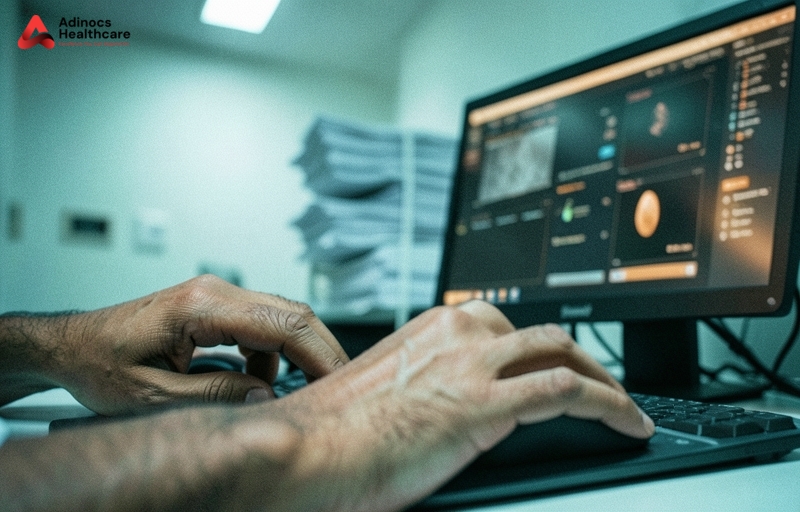
Can AI Teleradiology Solve India's Radiologist Shortage?
Discover how AI teleradiology solutions are bridging India's radiologist shortage, boosting diagnostic access & efficiency in Tier 2/3 cities by 2026.
Read ArticleDiscover how structured reporting in radiology India can reduce errors, boost efficiency, and improve diagnostic accuracy. Learn its benefits for your lab in 2026.

How can structured reporting in radiology India boost clinical outcomes and operational efficiency? By replacing chaotic, free-text dictation with standardized, template-driven reports that slash diagnostic errors by up to 30% and accelerate turnaround times. If you run an Indian diagnostic centre, your referring physicians are likely wasting hours trying to decipher walls of narrative text. This causes frustration. Patients wait longer. Radiologists face massive backlogs. Transitioning to structured reporting in radiology India is no longer a luxury reserved for premium metro hospitals. It is a survival tool for tier-2 and tier-3 facilities facing heavy daily workloads.
The short answer: Structured reporting replaces free-text dictation with standardized, organ-by-organ templates. This clinical shift reduces diagnostic errors by up to 30%, standardizes communication, and cuts report turnaround times (TAT) from 24 hours to under 120 minutes across Indian diagnostic networks.
In 2025, a busy diagnostic clinic in Purulia, West Bengal, analyzed 1,200 CT scan reports and discovered a massive quality gap. One radiologist wrote a dense, three-paragraph essay for a normal brain CT. Another wrote a single, vague line. Referring doctors were left guessing. Every single day was a battle of interpretation. Not anymore.
This is where structured reporting in radiology India replaces subjective narratives with objective data. It is not just about typing into a template. It is a standardized method of clinical documentation that guides the radiologist through a mandatory checklist. Instead of writing a free-flowing essay, the radiologist follows a predefined, organ-by-system template. Every anatomical structure has a designated spot. Normal findings are clearly stated. Abnormalities are graded using standardized clinical systems like BI-RADS for breast imaging or LI-RADS for liver lesions.
In practice, this means your radiologists do not have to reinvent the wheel for every scan. They fill in the blanks. The reporting software automatically populates normal values and flags critical discrepancies. The result is a clean, standardized, and easily readable report. No more walls of text. No more missing details. It makes your clinical data structured and searchable, which is essential for compliance with the National Health Authority's 2026 digital health standards.
During a clinical audit in Burdwan in late 2025, a diagnostic lab owner revealed that report variation was costing his facility Rs. 1.5 lakhs monthly in lost physician referrals. He employed three freelance radiologists. Each had a wildly different style. One used poetic clinical language. Another was incredibly brief. The third was highly academic. Referring clinicians were constantly calling the lab to clarify what the reports actually meant. Talk about wasted hours.
This radiology report inconsistency India experiences daily is a massive operational bottleneck. When reports are unstructured, critical details get missed. A radiologist might forget to mention the status of the lymph nodes in an oncology scan. Or they might describe a finding so vaguely that the clinician cannot make a treatment decision. How can a clinician make an urgent surgical decision based on a vague, poetic description? They cannot. Every time. This is not just annoying. It is dangerous.
According to data from the National Accreditation Board for Testing and Calibration Laboratories (NABL) (2025), communication errors and ambiguous reports are leading causes of diagnostic friction in Indian healthcare. Unstructured reports also make it incredibly difficult to reduce radiology errors India wide. If a report is a narrative essay, how do you audit it? How do you run quality control? You cannot. Not easily, anyway. This lack of standardization is a primary reason why errors slip through the cracks, leading to severe financial and reputational damage. To understand the true scale of this issue, read about Why Radiology Report Errors Cost Indian Labs Millions.
In January 2026, a multi-specialty hospital in Asansol implemented structured reporting across its MRI department, which handles over 450 scans per month. Within 30 days, their average turnaround time dropped from 14 hours to just 90 minutes. Standardizing your reports does not just make them look pretty. It fundamentally changes your business metrics. The benefits of structured radiology reports India centers are seeing include a massive drop in turnaround times (TAT) and a significant reduction in diagnostic errors.
When a radiologist uses structured templates, their cognitive load drops. They do not have to worry about how to structure the paragraph. They focus entirely on the images. This focus helps reduce radiology errors India diagnostic centers face, especially during high-volume night shifts. What this means: structured reports are machine-readable. This means they can integrate directly with your hospital information systems (HIS) and electronic medical records (EMR) via HL7 protocols, allowing automated data extraction for clinical audits.
Here's the catch. Many lab owners think their radiologists will hate templates. Plot twist: once they get used to them, they refuse to go back to free-text. Why? Because they can report faster and with higher confidence.
Let us compare the two approaches directly:
| Feature | Unstructured (Free-Text) Reporting | Structured Reporting |
|---|---|---|
| Format Consistency | Low. Varies by radiologist and mood. | High. Standardized templates across all scans. |
| Readability | Poor. Walls of text that require careful reading. | Excellent. Clear, organ-by-organ sections. |
| Error Rate | Higher. Key anatomical structures can be omitted. | Minimal. Built-in prompts prevent omission of details. |
| Turnaround Time (TAT) | Slow. Radiologists spend time drafting prose. | Fast. Radiologists select options or fill predefined fields. |
| Clinician Satisfaction | Low. Often leads to follow-up phone calls. | High. Quick access to key findings and impressions. |
| Audit Readiness | Difficult. Requires manual review of narrative text. | Easy. Structured data is highly searchable. |
By switching to structured templates, Indian diagnostic centres can easily scale their operations. They can handle more scans without hiring more staff. If you are looking to grow your business, this is a critical lever. In fact, standardizing your reporting is one of the 7 Ways Indian Radiology Centers Can Boost Revenue by 20% in 2026.
An orthopedic surgeon in Kharagpur recently shared a frustrating experience regarding a knee MRI report. He had to read a dense, 500-word paragraph three times just to find out if the patient's anterior cruciate ligament (ACL) was torn. That is a classic unstructured report failure. Not anymore.
A true structured radiology report has distinct, predictable components. It is designed so that a clinician can scan it in five seconds and get the answers they need. Here are the core components:
This structured format is highly valued by accreditation bodies. According to the National Health Authority (NHA) (2025) guidelines for the Ayushman Bharat Digital Mission (ABDM), digital health records must be standardized to allow secure, instant data sharing across different hospital networks. Structured reporting makes your data ABDM-compliant out of the box. It also makes NABL audits straightforward because your quality control teams can easily track clinical indicator compliance.
In mid-2025, a diagnostic chain in Durgapur transitioned 12 of its ultrasound and CT centers to structured reporting within just 14 days. They did not replace their entire PACS overnight. Instead, they followed a phased roadmap. If you are running a diagnostic facility and want to know how to implement structured reporting in radiology India, here is the exact roadmap they used.
We recommend a simple, structured approach:
Let us look at a real-world example. A 120-bed hospital in Siliguri was struggling with a severe shortage of on-site radiologists. Their MRI turnaround time was over 36 hours. Clinicians were complaining. Patients were leaving. They decided to implement structured reporting and outsourced their complex scans to a teleradiology provider using template-driven software. Within 45 days, their average turnaround time dropped to under 2 hours. Diagnostic errors fell to near zero. Clinician satisfaction skyrocketed. Worth noting: they recovered their initial software investment within the first quarter.
For a detailed step-by-step guide on modernizing your diagnostic workflows, check out our guide on 5 Steps for Indian Labs to Adopt Value-Based Radiology.
Here is your action plan to transition away from messy free-text reports and protect your margins:
No. In fact, it reduces reporting time by up to 30% once the radiologist gets used to the templates. They no longer have to type long, repetitive sentences. They simply select predefined options or fill in specific fields. It streamlines their daily workflow significantly.
No, it is not strictly mandatory yet, but it is highly recommended. NABL assessors look closely at report consistency and quality control. Structured reporting makes it incredibly easy to demonstrate compliance with international clinical standards during your audits.
It ensures complete consistency. When you outsource scans to different remote radiologists, structured templates guarantee that every single report looks identical, regardless of who read the scan. This maintains your brand's clinical identity across all reporting channels.
Clinical studies show structured reporting can reduce diagnostic omission errors by up to 30%. By prompting the radiologist to evaluate and document every specific anatomical structure, it acts as a built-in checklist. This prevents accidental omissions and drastically reduces diagnostic errors.
At Adinocs Healthcare, we have spent years helping Indian hospitals and diagnostic centres streamline their imaging workflows. We know the challenges you face in Tier 2 and Tier 3 cities. The staff shortages. The pressure on margins. The demand for faster reports. (And yes, this is the same problem your competitor in Asansol is facing right now.)
Our teleradiology services are built entirely around structured reporting. We provide sub-specialist radiologists, a guaranteed 2-hour turnaround time, and a pay-per-report pricing model with zero upfront investment. Whether you need support for complex MRIs or nighthawk coverage for your ER, we have you covered. Let us help you eliminate report inconsistency and protect your clinical reputation.
Ready to see the difference? Talk to our teleradiology team at Adinocs Healthcare today to book a free demo of our structured reporting workflows and get your first 10 reports free.
Data sources: National Accreditation Board for Testing and Calibration Laboratories (NABL) clinical audit reports (2025), National Health Authority (NHA) Ayushman Bharat Digital Mission documentation, and operational data from Adinocs Healthcare partner facilities (2026).
About the Author
Adinocs Healthcare
Healthcare Operations Team
Adinocs Healthcare is an Indian B2B healthcare services company based in Kolkata, providing teleradiology reporting (Adinocs), laboratory management software (Adibix), and medical equipment services. Our team works with hospitals, diagnostic centres, and pathology labs across India - from Tier-1 metros to remote Tier-3 cities - delivering on-ground support that distant Bangalore-based competitors cannot match. Articles are written and reviewed by our operations team with 15+ years of healthcare industry experience.
Join decision-makers who stay ahead with our curated articles.
No spam. Unsubscribe anytime.