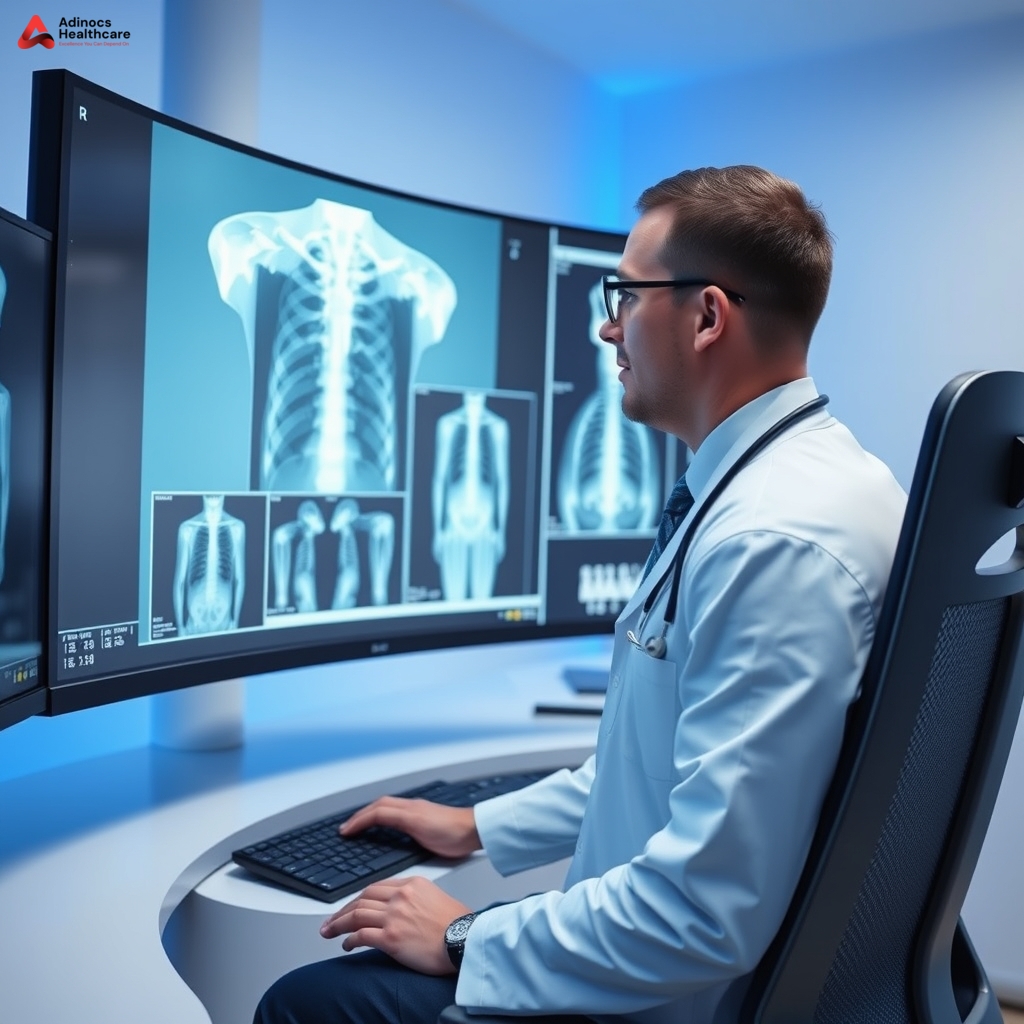
According to clinical audits conducted across corporate hospital networks in India in 2025, up to 35% of complex MRI and CT scans interpreted by general radiologists contain clinically significant diagnostic discrepancies when reviewed by sub-specialists. For a hospital administrator or diagnostic lab owner, this statistic represents a silent leak in both clinical credibility and referral revenue. When a local neurologist or orthopedic surgeon receives a vague or inaccurate scan report, they stop referring patients to your facility. This clinical gap highlights the urgent need for reliable sub-specialty radiology reporting India, where specialized eyes interpret complex cases to eliminate diagnostic errors and secure the trust of referring physicians.
What is the difference between general and sub-specialty radiology reporting India?
A diagnostic centre in Siliguri recently faced a major setback. A general radiologist missed a tiny, 3mm vestibular schwannoma on a routine brain MRI. The patient, still experiencing unilateral hearing loss, went to Kolkata for a second opinion. A sub-specialist neuroradiologist spotted the lesion immediately. The Siliguri centre lost not just that patient, but the trust of three prominent local ENT specialists who routinely referred Rs. 5 lakh worth of scans every month. This scenario is common across Tier 2 and Tier 3 cities where facilities rely solely on general radiologists for all modalities.
General radiologists are highly capable medical professionals, but their training is broad. They manage everything from chest X-rays and abdominal ultrasounds to basic trauma CTs. However, the sheer volume and variety of scans they interpret daily make it difficult to maintain the deep, focused expertise required for complex cases. Sub-specialty radiologists, on the other hand, have completed dedicated post-doctoral fellowships in specific areas such as neuroradiology, musculoskeletal imaging, breast imaging, or cardiac imaging. They understand the subtle anatomical variations and early-stage pathological signatures that a generalist might overlook.
According to the National Accreditation Board for Testing and Calibration Laboratories (NABL) document 112 (2025), diagnostic centres must ensure that the personnel interpreting specialized scans possess documented competency and specific training in those modalities. A 2024 NABL report found that 60% of diagnostic labs in Tier 2 cities struggle with compliance due to a lack of documented competency for specialized reporting. Relying on a generalist to report complex musculoskeletal or neurological scans not only increases clinical risk but also creates compliance vulnerabilities during NABL audits. For a busy facility, the operational difference is clear: a generalist provides a broad description of the scan, while a sub-specialist delivers an actionable, precise diagnostic roadmap that the referring clinician can immediately use for treatment planning.
- General Radiology: Focuses on broad diagnostic coverage, high-volume routine scans, and basic emergency interpretations.
- Sub-Specialty Radiology: Focuses on organ-specific or system-specific imaging, utilizing advanced protocols and fellowship-level expertise.
- Clinical Impact: Sub-specialty reports reduce equivocal findings (reports that end with "correlate clinically") by up to 60%, providing clear answers to referring doctors.
Which radiology cases in India require a sub-specialist's expertise?
A 50-bed multi-specialty hospital in Asansol installed a 128-slice CT scanner to tap into the growing regional demand for advanced cardiac imaging. However, their in-house radiologist, while excellent at abdominal and trauma CTs, was hesitant to report complex coronary angiographies. Because of this, the hospital had to refer patients to larger corporate hospitals in Kolkata, losing valuable revenue and delaying critical patient care. This highlights the practical limitations of general reporting when dealing with advanced clinical specialties.
Certain medical conditions demand specialized interpretation because the margins of error are incredibly narrow. In India, three primary areas require dedicated sub-specialty expertise:
First, neurological disorders require highly precise imaging. Subtle cortical dysplasias in pediatric epilepsy, micro-bleeds in stroke patients, and early-stage demyelinating plaques in multiple sclerosis are frequently missed on routine reviews. Utilizing dedicated neuro-radiology reporting services India ensures that these critical details are documented, allowing neurologists to initiate timely interventions.
Second, cardiovascular diseases are rising rapidly across the country. According to the Indian Council of Medical Research (ICMR) report on non-communicable diseases (2024), cardiovascular diseases and stroke account for over 28% of all mortalities in India. Interpreting coronary CT angiograms, fractional flow reserve (FFR) calculations, and cardiac MRIs requires specific training that general radiologists rarely possess. Implementing structured cardiac CT reporting for diagnostic centers India allows regional facilities to offer advanced cardiac screenings locally, keeping patients within their ecosystem.
Third, musculoskeletal (MSK) and oncology imaging present unique challenges. A generalist might identify a joint effusion but miss a subtle, partial-thickness tear of the anterior cruciate ligament (ACL) or a tiny labral tear in the shoulder. A 2025 clinical study published in the Indian Journal of Radiology and Imaging (IJRI) revealed that up to 22% of musculoskeletal MRI reports issued by generalists contained major grading errors for ligament tears. In oncology, tracking tumor response using strict RECIST 1.1 criteria requires meticulous measurement and comparison across historical scans, a task best suited for oncological imaging specialists.
- Neuroimaging: Brain tumors, stroke evaluation, epilepsy protocols, and neurodegenerative disease tracking.
- Cardiac Imaging: Coronary artery calcium scoring, CT coronary angiography, and myocardial viability MRI.
- Musculoskeletal: Sports injuries, complex joint arthropathies, and spine instability assessments.
- Oncology: Whole-body PET-CT interpretation, tumor staging, and post-chemotherapy response evaluations.
How does missing a sub-specialty finding impact diagnostic center revenue?
A pathology and radiology lab network in Patna noticed a sudden 20% drop in their monthly MRI scanning revenue. Upon investigating their referral patterns, they discovered that local neurosurgeons and orthopedic specialists had stopped referring patients. The feedback was consistent: the lab's MRI reports lacked detailed anatomical descriptions of nerve roots, foraminal stenosis, and ligamentous structures, forcing the specialists to re-read the scans themselves or send patients to a competitor. The lab's reliance on general reporting was directly hurting its bottom line.
The financial consequences of radiology misdiagnosis risks India extend far beyond a single lost scan. In the highly competitive Indian healthcare market, referring clinicians are the primary drivers of diagnostic volume. If a clinician receives a vague or incorrect report, their trust in your facility is broken. They will redirect their patient base to diagnostic networks that provide sub-specialty expertise, leading to a long-term decline in your scan volumes.
Let us look at the operational math. A standard 1.5T MRI scanner costs approximately Rs. 2.5 crore to purchase and install. The monthly operational cost, including the Annual Maintenance Contract (AMC) which typically runs at 6% to 8% of the equipment cost (around Rs. 15 lakh to Rs. 20 lakh annually), electricity, and technical staff salaries, is close to Rs. 4 lakh. If your facility charges Rs. 5,000 per MRI, you need at least 80 scans a month just to cover basic operating costs. If referral volumes drop from 150 scans a month to 70 due to poor reporting quality, your high-capital asset becomes a major financial liability.
Furthermore, diagnostic errors expose your organisation to consumer court litigation under the Consumer Protection Act. Legal disputes in India can lead to compensations ranging from Rs. 5 lakh to Rs. 50 lakh, alongside irreparable damage to your brand reputation. When a diagnostic centre misses a critical finding, they risk both financial penalties and their standing in the local medical community.
| Risk Factor | Direct Financial Impact (INR) | Operational Consequence |
|---|---|---|
| Loss of Specialist Referrals | Rs. 1.5 lakh to Rs. 5 lakh per month | Reduced utilization of high-cost MRI and CT machinery. |
| Repeat Scans & Refunds | Rs. 5,000 to Rs. 15,000 per disputed case | Wasted slot times and increased operational overhead. |
| Consumer Court Litigation | Rs. 5 lakh to Rs. 50 lakh per case | Severe brand damage and loss of local market share. |
How can sub-specialty radiology reporting India solve the geographic gap in Tier 2 and Tier 3 cities?
A diagnostic centre owner in Malda, West Bengal, spent six months trying to recruit a full-time musculoskeletal radiologist. Every qualified candidate preferred to remain in Kolkata or Delhi, demanding salaries that the Malda centre's scan volume could not justify. This is a common challenge across India, where over 80% of sub-specialist radiologists reside in Tier 1 metro areas, leaving Tier 2 and Tier 3 cities with limited access to advanced diagnostic expertise.
This geographic disparity is where outsourced sub-specialty teleradiology changes the operational model. Instead of struggling to recruit and retain expensive in-house specialists, regional diagnostic centres and hospitals can connect with remote sub-specialists via secure cloud networks. This approach converts a high, fixed monthly salary into a variable, pay-per-report expense, allowing smaller centres to offer high-quality reporting without heavy upfront investments.
Consider this real-world example: A 100-bed multi-specialty hospital in Siliguri achieved a 45% reduction in diagnostic error rates and a 30% increase in neurology referrals by partnering with a specialized teleradiology service. They routed all complex brain and spine scans to remote neuroradiologists while their in-house team focused on routine ultrasounds and emergency X-rays. This division of labor optimized their internal workflows and improved patient outcomes.
According to a 2025 report by the Association of Healthcare Providers India (AHPI), Tier 2 and Tier 3 hospitals face a 70% vacancy rate for super-specialist clinical roles, including sub-specialty radiologists. By routing scans to remote experts, these hospitals can offer advanced diagnostics without needing to relocate doctors.
To understand how this model impacts your bottom line, read our detailed breakdown on How Much Does Teleradiology Cost for Indian Diagnostic Centers?. For hospitals managing round-the-clock emergency departments, balancing day-time clinical work with night-time emergencies is a constant challenge. You can explore practical solutions in our guide on In-House vs Outsourced Night-Shift Radiology for Indian Hospitals. Ultimately, bridging this expertise gap is essential for Optimizing Patient Journey in Indian Diagnostic Imaging, ensuring that patients in regional towns receive the same standard of care as those in metropolitan cities.
- Cost Optimization: Eliminates the need for high fixed salaries, relocation allowances, and retention bonuses for sub-specialists.
- 24/7 Availability: Provides continuous access to specialized reporting, even during night shifts and national holidays.
- Clarity for Clinicians: Delivers detailed, sub-specialized reports that give local doctors the confidence to treat complex cases locally rather than referring them to metro hospitals.
What should Indian hospital admins look for in a sub-specialty reporting partner?
An administrator of a 120-bed hospital in Durgapur signed a contract with a low-cost teleradiology provider, only to face immediate operational issues. Emergency stroke CT scans were reported with a six-hour delay, missing the critical thrombolysis window and causing severe friction with the clinical neurology team. The hospital quickly realized that choosing a partner based solely on the lowest price per report can lead to significant clinical and operational problems.
When evaluating a teleradiology partner for sub-specialty reporting, hospital administrators and lab owners should focus on four key operational criteria:
First, look for guaranteed Turnaround Times (TAT) backed by clear Service Level Agreements (SLAs). For emergency cases like acute stroke or trauma, a strict 2-hour or 1-hour TAT is essential. The contract should include clear financial penalties for missed deadlines to ensure the partner remains accountable.
Second, verify the credentials of the reporting panel. Ensure that the radiologists interpreting your scans are registered with the National Medical Commission (NMC) or State Medical Councils, and hold verified post-graduate degrees (MD/DNB) alongside documented fellowship training in their respective sub-specialties.
Third, ensure strict regulatory compliance. The partner's workflow must align with the Pre-Conception and Pre-Natal Diagnostic Techniques (PNDT) Act where applicable, and their IT infrastructure must comply with the Digital Personal Data Protection (DPDP) Act 2023 of India and the Ayushman Bharat Digital Mission (ABDM) standards for secure health data exchange.
Fourth, choose a partner that operates on a pay-per-report model with no upfront capital expenditure. The integration should connect seamlessly with your existing Picture Archiving and Communication System (PACS) using standard DICOM protocols, avoiding the need for expensive proprietary software installations.
A 2025 survey of 150 Indian hospital administrators showed that 72% experienced clinical friction due to delayed teleradiology reports, highlighting the need for strict SLA penalties.
- SLA-Backed Turnaround Times: Look for a guaranteed 2-hour TAT for urgent cases and a 12-to-24-hour TAT for routine sub-specialty scans.
- Credential Verification: Confirm that reports are signed by radiologists with recognized sub-specialty fellowships, not generalists.
- Data Security and Compliance: Ensure full compliance with the DPDP Act 2023, ABDM guidelines, and local state medical regulations.
- Scalable Integration: Choose a partner that integrates easily with your current RIS/PACS setup without requiring major IT modifications.
Key Takeaways
- Generalist Limitations: General radiologists manage routine workloads well, but complex neurological, cardiac, and musculoskeletal scans often require specialized eyes to avoid missing subtle findings.
- Referral Revenue Protection: Providing vague or inaccurate reports risks alienating local specialists, who will redirect high-value patient referrals to competing facilities.
- Geographic Access: Outsourced teleradiology allows regional hospitals in Tier 2 and Tier 3 cities to access metro-level diagnostic expertise without the high cost of recruiting full-time specialists.
- Operational Efficiency: Shifting to a pay-per-report sub-specialty model converts high fixed staffing costs into a manageable, volume-based operational expense.
- Partner Selection: Choose a teleradiology partner based on guaranteed TATs, verified fellowships, and strict compliance with Indian digital health regulations.
Frequently Asked Questions
What is the average turnaround time for emergency teleradiology in India?
For urgent emergency cases, such as acute ischemic stroke or head trauma, professional partners offer a guaranteed turnaround time of 1 to 2 hours. For routine, non-emergency sub-specialty cases like elective joint MRIs or staging PET-CTs, the standard turnaround time ranges from 12 to 24 hours, ensuring a thorough review without delaying patient care plans.
How to connect local hospital PACS with remote teleradiology software?
Modern teleradiology platforms integrate using standard DICOM routing protocols. Your local imaging technicians send the raw scan data directly from your CT or MRI console to a secure, cloud-based PACS. The remote sub-specialist accesses the images, dictates the report, and sends the finalized PDF back to your local Hospital Information System (HIS) or email, requiring no major changes to your existing IT setup.
Does NABL accept teleradiology reports signed by remote radiologists?
Yes, outsourced teleradiology is fully compliant with NABL and NABH guidelines, provided the partner organisation employs radiologists registered with the National Medical Commission (NMC) or State Medical Councils. The partner must also maintain documented quality assurance protocols, participate in regular peer-review audits, and secure patient data in accordance with the DPDP Act 2023.
Can a diagnostic centre send only MRI scans to teleradiology partners?
Yes, many diagnostic centres use a hybrid model. Your in-house radiologist can focus on high-volume, immediate procedures like ultrasounds, routine X-rays, and basic CT scans, while complex cases such as cardiac CTs, brain MRIs, and joint scans are routed to remote sub-specialists. This approach optimizes your in-house resources while ensuring high-quality reporting for specialized cases.
Partner with Specialist Radiologists to Grow Your Diagnostic Business
For hospital administrators and diagnostic lab owners across India, maintaining high clinical standards while managing operational costs is a constant balancing act. Relying on generalists for complex cases can lead to missed findings, fractured clinician relationships, and lost referral revenue. At Adinocs Healthcare, we help you address these challenges directly. We provide access to a dedicated panel of sub-specialist radiologists with guaranteed 2-hour turnaround times for urgent cases, operating on a flexible, pay-per-report model with no upfront capital investment. Based in Kolkata, we offer dedicated, on-ground support across Eastern India to ensure your imaging operations run smoothly. Talk to our teleradiology team today to get a free demo of Adinocs Teleradiology and see how we can help you improve reporting quality and grow your referral network.
Talk to our teleradiology team today to get a free demo of Adinocs Teleradiology.
Data sources: National Accreditation Board for Testing and Calibration Laboratories (NABL) Document 112 Guidelines (2025); Indian Council of Medical Research (ICMR) Report on Non-Communicable Diseases Burden in India (2024); Ministry of Health and Family Welfare (MoHFW) Digital Health Implementation Framework (2025).