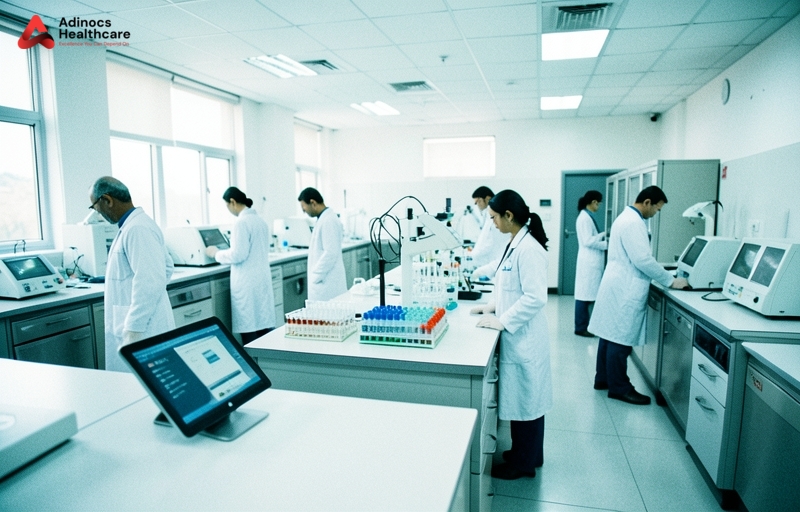
Did you know that nearly 40% of pathology labs in Tier 2 and Tier 3 Indian cities face major non-conformances during their NABL audits simply because of illegible handwriting, misplaced temperature logs, or missing calibration records? As audit guidelines tighten, relying on physical registers is no longer just an operational headache; it is an active threat to your accreditation. Transitioning to paperless labs India is no longer an optional upgrade for diagnostics providers. In 2026, it has become the baseline requirement for survival in a market where NABL has accredited over 8,500 labs across India. If you are a hospital administrator or lab owner signing the cheques, sticking to manual folders could cost you your NABL certificate, your reputation, and lakhs of rupees in lost business.
What are the new NABL digital record requirements for paperless labs India in 2026?
A pathology lab in Siliguri recently faced a sudden surveillance audit. The auditor asked for the daily temperature logs of the deep freezer from exactly fourteen months ago. The lab technician spent three hours rummaging through a dusty basement storage room, only to find that the register for that specific month had water damage. The result was a major non-conformance (NC) note that put their accreditation at risk. This is not an isolated incident; it represents a systemic issue that Indian lab owners face under current regulatory scrutiny. A 2024 NABL report found that 62% of all non-conformances in Tier-2 city labs were related to document control and manual record-keeping.
The regulatory framework for diagnostic lab compliance India has tightened under the transition to ISO 15189:2022. Under these standards, which became fully mandatory for all Indian accredited labs by late 2025, manual records are viewed with high suspicion by auditors. According to the National Accreditation Board for Testing and Calibration Laboratories (NABL) (2024), accredited laboratories must maintain complete data integrity, which means every test result must have an unbroken, digital trail from sample collection to final reporting. This is where NABL digital records 2026 requirements dictate operational survival. Auditors now demand proof of real-time temperature monitoring, electronic signatures, and tamper-proof audit logs that show exactly who modified a record and when.
Furthermore, the National Health Authority (NHA) has accelerated the integration of laboratories with the Ayushman Bharat Digital Mission (ABDM). According to the National Health Authority (NHA) (2025), laboratories participating in government panels or seeking high-value corporate tie-ups must be capable of pushing digital reports directly to patients' ABHA (Ayushman Bharat Health Account) addresses. Meeting these criteria without a digital framework is practically impossible. The NABL 112 document guidelines now specifically target the vulnerability of handwritten notes, manual logs, and loose paper slips, making digital record-keeping the only secure path forward.
Tamper-Proof Audit Trails: Every entry, edit, or approval must be tracked with a unique digital ID and a server-verified timestamp that cannot be manually altered.
Pathologist Electronic Signatures: Reports must be signed digitally using secure, encrypted keys that comply with the Information Technology Act, 2000, rather than pasting a generic scanned image of a signature.
Automated Equipment Logs: Daily calibration data and control runs must be recorded electronically, eliminating the practice of "backfilling" paper registers right before an audit.
Environmental Monitoring: Automated logging of room temperature and humidity in the processing area is now highly preferred over manual wall-chart entries.
In a busy diagnostic centre in Kolkata, a phlebotomist misread a handwritten doctor's prescription for a thyroid panel, entering "T3, T4" instead of "FT3, FT4" into their daily logbook. The mistake was caught only after the patient received the wrong report and filed a formal complaint. During their annual surveillance audit, this single incident of manual transcription error was flagged as a systemic failure in quality control. The lab was given just 30 days to implement corrective and preventive actions (CAPA) or risk losing their NABL logo. According to a 2025 study published in the Journal of Medical Diagnostics India, manual transcription errors occur in 1 out of every 180 hand-entered lab results.
The risks of manual lab records are built into the very nature of paper. When your technicians are forced to write down patient names, age, and test parameters by hand, the risk of transcription errors multiplies exponentially. In a manual setup, the lab must also keep physical track of quality control data, such as Levy-Jennings (L-J) charts. When these charts are plotted manually on graph paper, they are often incomplete, lack proper Westgard rules analysis, or are backdated to satisfy auditors. Modern NABL auditors are trained to spot these discrepancies instantly, and they treat backdated paper logs as a serious breach of integrity.
Sample mix-ups are another primary cause of audit failure. Without automated barcoding at the point of collection, samples are labelled using marker pens that can smudge or wash off during centrifugation. When an auditor asks to trace a specific sample back to its original primary tube, a paper-reliant lab often struggles to provide the physical chain of custody. This lack of traceability is a direct route to a major non-conformance finding during a LIMS NABL audit.
Transcription Slip-ups: Manually copying numbers from analyzer printouts to a report template is the leading cause of critical value errors in Indian diagnostics.
Faded Thermal Paper: Machine printouts on thermal paper fade within months, leaving the lab with no physical raw data to present during a retrospective audit.
Uncontrolled Document Versions: Using outdated paper forms for standard operating procedures (SOPs) violates the document control mandates of ISO 15189.
Ineffective Corrective Action Tracking: Paper registers make it difficult to prove that a previous non-conformance was systematically resolved and reviewed by management.
What are the hidden costs of manual record-keeping in Indian labs?
A 30-bed hospital in Patna running an in-house pathology lab calculated that they spent over Rs. 18,000 every month just on pre-printed stationery, carbon copy books, and physical storage folders. More importantly, two of their senior lab technicians spent nearly two hours every day manually compiling reports, writing down billing entries, and searching for old records instead of performing actual diagnostic tests. When calculated annually, this administrative burden cost the facility over Rs. 2.1 lakh in wasted salaries alone.
Many lab owners hesitate to go paperless because they believe a digital transition is too expensive. However, they fail to see how much their current manual system is costing them. Many owners fall into the trap of using cheap, poorly built software to save money, which ultimately backfires. To understand this dynamic, you can read about Why Cheap LIMS Software Costs Indian Lab Owners More in 2026. The physical space required to store paper records for the mandatory retention period of five years is another major drain on capital, especially in high-rent areas of metropolitan cities like Kolkata or Bhubaneswar where commercial rent can exceed Rs. 120 per square foot.
In addition to storage costs, manual operations lead to severe billing leakages. When doctors write test orders on paper slips, it is common for a technician to perform a test but forget to enter it into the billing register. These unbilled tests can easily wipe out 5% to 8% of a lab's net profit margin. Furthermore, manual systems slow down operations, leading to delayed reports and frustrated patients. To understand how digital workflows resolve this, read our guide on 6 Ways Indian Pathology Labs Can Cut Report Turnaround Time.
Real Estate Waste: Dedicating valuable floor space to metal almirahs filled with old patient files instead of using that space for a new immunology analyzer.
Lost Productivity: Technicians spending hours searching for past patient history when a doctor requests a comparative report.
Stationery and Printing Costs: Continuous spending on letterheads, thermal rolls, carbon papers, and storage boxes.
Revenue Leakage: Missing billing entries for add-on tests that were verbally requested by clinicians but never captured in a centralized system.
How can LIMS ensure NABL-compliant digital records for paperless labs India?
A diagnostic network with hubs in Ranchi and Jamshedpur migrated to a cloud-based Laboratory Information Management System (LIMS). During their next surveillance audit, instead of presenting piles of dusty registers, the lab manager opened a secure digital dashboard. With three clicks, they showed the auditor the complete history of a blood sample, including the exact time it was barcoded, the machine calibration logs, the internal quality control data, and the digital signature of the certifying pathologist. The audit was completed in half the usual time, with zero non-conformances reported. A 2025 survey of 150 accredited labs in Maharashtra showed that implementing bidirectional interfacing reduced transcription errors by 99.4%.
A modern LIMS designed for the Indian regulatory environment acts as a shield against audit failures. It enforces compliance by design, making it impossible for staff to bypass critical quality checks. For example, the system can be configured to block the release of patient reports if the daily control run for that specific analyzer has not been approved. This automated gatekeeping ensures that your lab is always operating within acceptable quality limits, which is a major point of evaluation during a LIMS NABL audit.
Another critical feature is bidirectional analyzer interfacing. By connecting your biochemistry, hematology, and immunology machines directly to your LIMS, data flows directly from the analyzer-specific RS232 or TCP-IP port to the final report without manual transcription. This completely eliminates transcription errors. However, implementing this requires careful planning, as many hospital labs fail during this transition. To avoid these pitfalls, read our detailed analysis on Why LIMS and HIS Integration Fails in Most Indian Hospitals.
Bidirectional Interfacing: Direct communication between laboratory instruments and the software, removing the need for manual data entry.
Automated L-J Charting: Real-time plotting of quality control data with automated alerts for any Westgard rule violations.
Electronic Document Management: Centralized digital storage for all SOPs, equipment maintenance records, and staff training certificates, complete with version control.
Role-Based Access Control: Strict security settings that ensure only authorized pathologists can validate and digitally sign high-risk reports.
Beyond compliance: What are the operational benefits of a paperless lab?
A standalone pathology lab in Howrah saw its daily walk-in patient volume increase from 80 to 150 patients within four months of going paperless. By automating report delivery via WhatsApp and SMS, patients no longer had to crowd the reception desk to collect physical papers. The lab saved on front-desk staff costs, reduced patient wait times, and was able to reallocate its staff to focus on home collection services, opening up a new revenue stream. Labs using automated WhatsApp delivery report a 35% reduction in inbound customer service calls regarding report status.
While compliance is the driving force behind the transition, the impact on lab efficiency India is where you see the true return on investment. A paperless workflow allows you to scale your business without a linear increase in administrative staff. When your collection centres, processing hubs, and home collection phlebotomists are all connected to a single cloud-based system, managing operations requires only a single central dashboard to track sample transit times. You can monitor daily collections, processing delays, and pending approvals in real time from your smartphone.
Furthermore, going paperless changes how you interact with your patients and referring doctors. In 2026, patients expect instant digital delivery of reports. They do not want to travel back to your centre just to pick up a report. Sending secure, interactive PDF reports via automated digital channels builds trust and encourages repeat visits. It also allows you to provide referring doctors with a dedicated portal where they can view their patients' historical trends, making your lab their preferred diagnostic partner.
Drastic Reduction in TAT: Reports are validated and sent to patients instantly, eliminating the delay of printing and manual sorting.
Multi-Centre Expansion without Manual Syncing: Easily add new collection centres or franchise labs that sync with your main processing hub instantly.
Advanced Business Analytics: Gain deep insights into your most profitable tests, peak operational hours, and referral doctor patterns.
Eco-Friendly Brand Image: Positioning your brand as a modern, green organisation that actively reduces paper waste.
Key Takeaways
Compliance is Mandatory: Manual records are the leading cause of NABL audit failures in 2026 due to the strict data integrity requirements of ISO 15189:2022.
Significant Cost Savings: Transitioning to a paperless workflow saves lakhs of rupees annually by eliminating pre-printed stationery, physical storage rent, and administrative labor.
Error Elimination: Bidirectional analyzer interfacing removes the human transcription errors that account for the majority of diagnostic mistakes.
Operational Scalability: Going paperless allows diagnostic networks to expand their collection centres rapidly without adding to their administrative overhead.
ABDM Readiness: A digital LIMS is essential for integrating with the Ayushman Bharat Digital Mission and offering modern digital health lockers to patients.
Frequently Asked Questions
Is LIMS software mandatory for NABL accreditation in India?
While NABL guidelines do not explicitly state that you must purchase a specific software brand, they strictly mandate absolute data integrity, traceability, and tamper-proof audit trails. In practice, achieving these standards in 2026 without a digital LIMS is nearly impossible. Relying on paper registers leaves your lab highly vulnerable to major non-conformances during surveillance audits.
How long does it take to set up a paperless LIMS in an Indian lab?
A well-planned transition typically takes between 7 to 15 days. This timeline includes software configuration, barcode printer setup, bidirectional analyzer interfacing, and hands-on training for your technicians and front-desk staff. Cloud-based systems require no local server installations, which significantly speeds up the deployment process.
How do I link my pathology lab reports to ABHA under ABDM?
Yes. Modern LIMS solutions built specifically for the Indian market are designed to generate ABHA IDs, link diagnostic reports directly to the patient's digital health locker, and comply with the National Health Authority's digital health guidelines, making your facility eligible for government panels and corporate contracts.
How much does a paperless LIMS cost for a mid-sized lab in India?
Instead of heavy upfront software licenses, modern LIMS solutions operate on flexible, pay-per-use or monthly subscription models. This pay-as-you-go approach means you can transition your lab to a paperless setup with minimal initial capital investment, often costing less than what you currently spend on paper stationery and physical filing systems.
Conclusion
The transition from paper-based records to a digital workflow is no longer a luxury for Indian diagnostic laboratories; it is a fundamental operational necessity. Sticking to manual registers and paper folders risks your NABL accreditation, drains your financial resources, and limits your ability to scale in a competitive market. At Adinocs Healthcare, we understand the unique challenges faced by diagnostic centres and hospital labs in Eastern India. Our Adibix LIMS is built specifically to address NABL compliance, offering bidirectional analyzer interfacing that connects directly to Abbott, Roche, and Beckman Coulter machines, ABDM integration, and data security that handles 10,000+ daily transactions without downtime. Let us help you safeguard your accreditation and boost your operational efficiency. Book a free demo of Adibix LIMS today to schedule a personalized walkthrough of our compliance-ready digital solutions.
Data sources: National Accreditation Board for Testing and Calibration Laboratories (NABL) Guidelines (2024), National Health Authority (NHA) ABDM Implementation Report (2025).