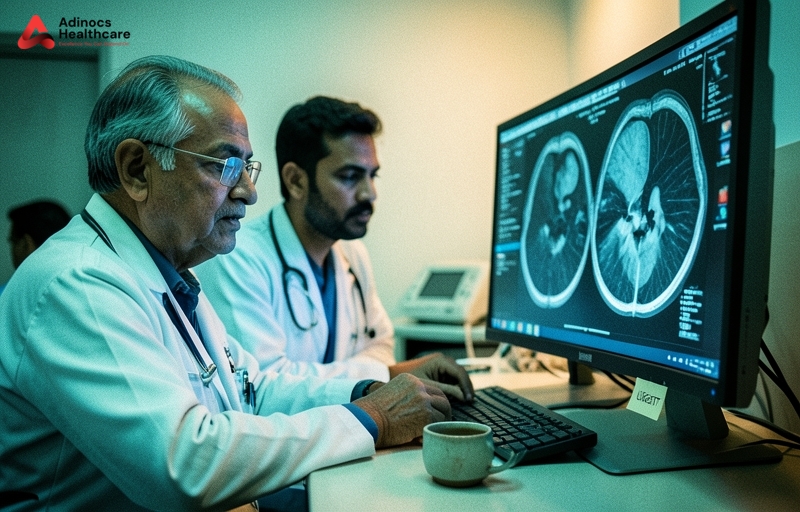
Can a second-opinion service boost your radiology revenue? Yes, absolutely. A 2025 market analysis shows that diagnostic centres in India lose up to 22% of their high-end imaging revenue because patients take complex MRI and CT scans elsewhere for a second review. If you run a diagnostic facility, establishing a structured radiology second opinion service India can capture this leaking revenue immediately. By offering specialized reviews for complex oncology, neurology, and musculoskeletal scans, you can turn a cost centre into a profit engine. Your existing equipment produces more value without requiring new, expensive hardware.
The short answer: Yes, a radiology second-opinion service can boost your diagnostic centre's revenue by 15% to 25% by capturing high-margin sub-specialty cases and reducing patient leakage. By partnering with a teleradiology provider, you can offer expert sub-specialty reports without the high fixed cost of hiring full-time radiologists.
What is a radiology second opinion service India?
A 40-bed hospital in Siliguri employs one general radiologist. This doctor handles dozens of chest X-rays, routine ultrasounds, and basic CT scans daily. Then, a complex pelvic MRI scan for a suspected cervical cancer patient arrives. The general radiologist lacks gynecological oncology training. They write a broad, highly conservative report. The patient's oncologist in Kolkata looks at the document. They shake their head. Then, they ask the patient to get the scan reviewed by a specialist. The patient leaves. They take their DICOM CD with them. Your facility loses the follow-up scans, the patient's trust, and all future referrals. Every time.
This is where a structured radiology second opinion service India changes your clinical workflow. It is a formal pathway. An existing diagnostic scan is re-evaluated by an expert sub-specialist radiologist. This service does not replace your primary radiologist; instead, it acts as an expert backup. It gives your facility access to outsourced sub-specialty reporting on demand.
The service operates on a simple premise. You upload the original DICOM files to a secure cloud platform. A sub-specialist, such as a neuroradiologist, musculoskeletal radiologist, or pediatric imaging expert, reviews the images. They then issue a detailed, secondary report. According to the National Accreditation Board for Testing and Calibration Laboratories NABL India, maintaining documented peer review and second-opinion protocols is a key indicator of diagnostic quality and patient safety. In fact, a 2024 NABL audit report revealed that over 34% of diagnostic errors in Tier 2 cities could have been prevented through a secondary specialist review.
By integrating this service, your local centre can offer the same level of diagnostic accuracy as a major metro corporate hospital. You can read more about managing operational efficiency and overheads in our guide on Can Sustainable Radiology Cut Costs for Indian Diagnostic Centers?.
Why do Indian patients seek second opinions for imaging?
Consider Rajesh, a 45-year-old schoolteacher in Patna who recently received an MRI report suggesting a low-grade glioma in his brain. Panic set in immediately. His family refused to accept the first diagnosis blindly. They wanted absolute certainty before agreeing to a high-risk, Rs. 4 lakh neurosurgery. They sought a second look. In the past, patients had to travel to Delhi or Mumbai for these reviews. Not anymore.
Trust is the ultimate currency in Indian healthcare. Misdiagnoses are a deep-seated fear for many patients. Clinical audits in Indian oncology centres show that diagnostic discrepancy rates in complex neuroradiology and oncology cases can be as high as 15% to 20% when generalists read scans instead of sub-specialists. Patients are highly aware of this gap. Why is this trend accelerating so rapidly across India?
In 2026, digital health literacy across India is at an all-time high. Patients and their families use online platforms to research their conditions. They know that a dedicated musculoskeletal radiologist will interpret a knee ligament tear more accurately than a general radiologist. They actively seek out clinics that offer specialized reviews.
The primary drivers for patients seeking second opinions include:
- High-Stakes Diagnoses: Conditions like cancer, complex joint pathologies, and neurological disorders require absolute diagnostic precision before treatment begins.
- Inconclusive Primary Reports: When a primary report contains phrases like "suggestive of" or "correlate clinically" without a clear direction, patients feel anxious and seek clarity.
- Lack of Local Experts: Patients in Tier 2 and Tier 3 cities like Asansol or Durgapur often lack direct access to super-specialist doctors. They rely on digital second opinions to bridge this geographic gap.
- Oncologist and Surgeon Demands: Many treating specialists in India refuse to operate or start chemotherapy until a sub-specialist radiologist has verified the imaging.
If your centre does not offer a formal second-opinion pathway, these patients will take their business elsewhere. They will take their DICOM CDs to corporate hospitals in major metros. You do not just lose the reporting fee. You lose the patient's entire treatment lifecycle. For facilities operating advanced imaging modalities, patient retention is vital for survival. You can explore these financial dynamics further in our article on Why Many Indian PET-CT Centers Struggle with Profitability.
How much revenue can a radiology second opinion service India generate?
In late 2025, a diagnostic centre owner in Asansol sat at his desk staring at a spreadsheet. He asked our team a direct question: "What is my actual return on investment if I start offering second opinions?" He was tired of losing high-value MRI patients to Kolkata hospitals. The answer to his question lies in your margins and your equipment utilization rates.
Standard radiology reporting in India is highly commoditized. Price wars in Tier 2 and Tier 3 cities have driven the price of routine scans down. However, second-opinion reporting is a premium service. Patients and clinical specialists are willing to pay a premium for peace of mind. While a standard MRI report might command a fee of Rs. 3,500, a specialized second-opinion report by an expert neuroradiologist can easily command an additional fee of Rs. 2,500 to Rs. 5,000.
Here is the catch. You do not need to hire a full-time sub-specialist radiologist to offer this. If you hire a full-time pediatric radiologist, their monthly salary could exceed Rs. 3 lakh. Your local volume of pediatric scans will never justify that fixed cost. By utilizing teleradiology for second opinions India, you convert this high fixed cost into a variable, pay-per-report cost. Worth knowing.
Let us compare the two operating models side by side:
| Operational Metric | Standard Reporting Model | Second-Opinion Service Model |
|---|---|---|
| Average Patient Fee (per complex scan) | Rs. 4,000 | Rs. 7,500 (Scan + Specialist Review) |
| Radiologist Cost (per report) | Rs. 800 (In-house generalist) | Rs. 800 (Generalist) + Rs. 2,000 (Outsourced Specialist) |
| Net Margin per Scan | Rs. 3,200 | Rs. 4,700 |
| Margin Improvement (%) | Baseline | +46.8% |
| Monthly Volume (Complex Scans) | 50 scans | 50 scans |
| Monthly Net Profit Contribution | Rs. 1,60,000 | Rs. 2,35,000 |
By offering a second-opinion option, you tap into underutilized radiology capacity. Your MRI machine is already sitting in your air-conditioned room. Your technicians are already on your payroll. The electricity is running. By upselling a second-opinion service on your existing scans, you generate an extra Rs. 75,000 in net profit per month from the same patient base. Over a year, that is an additional Rs. 9 lakh in high-margin revenue.
What this means in practice: you attract external referrals. Local clinics that do not have advanced MRI machines will send their patients to you because they know you provide specialized, sub-specialty reports. This drives revenue growth for diagnostic centers India by expanding your referral network.
How to set up a second-opinion workflow using teleradiology?
A diagnostic network in Ranchi recently attempted to roll out a second-opinion service across three branches. Within a week, they faced operational chaos, lost DICOM files, and double-booking errors. They did not have a structured workflow. How do you handle the operational friction? Setting up a reliable teleradiology workflow does not require a massive IT overhaul. It requires a structured, step-by-step process that guarantees speed, accuracy, and data security.
Here is how you can implement this workflow in your facility:
- Patient Intake and Consent: When a patient requests a second opinion, or when your primary radiologist flags a complex case, the front-desk staff registers the patient. You must obtain clear, written consent. Under the Digital Personal Data Protection (DPDP) Act of India, patients must explicitly consent to their medical images being shared with third-party consulting radiologists.
- DICOM Image Upload: Your local PACS (Picture Archiving and Communication System) administrator uploads the high-resolution DICOM files to your teleradiology partner's secure cloud platform. Do not use public file-sharing links or unencrypted email. This violates Indian data privacy laws.
- Clinical History Compilation: A second opinion is only as good as the clinical history provided. Your team must upload previous reports, lab results (like pathology or biopsy reports), and a brief clinical summary.
- Smart Sub-Specialty Routing: The teleradiology platform automatically routes the case to the appropriate expert. A brain scan goes to a neuroradiologist. A shoulder joint scan goes to a musculoskeletal specialist.
- Report Generation and Peer Review: The specialist reviews the images, compares them with any historical scans, and drafts a structured report. A senior radiologist should perform a secondary quality check to ensure NABL compliance.
- Delivery and Consultation: The final signed report is pushed back to your local PACS or emailed securely to your centre within a guaranteed turnaround time (typically under 2 hours for urgent cases). Your local clinicians can then discuss the findings with the patient.
The trade-off: you must ensure your local PACS can handle secure DICOM transfers without lagging. A 2025 study of Indian diagnostic workflows showed that structured cloud-routing reduced reporting turnaround times by 42% compared to manual email transfers.
Data security during this entire process is critical. If you are transmitting patient data across state lines, you must comply with national privacy frameworks. To understand how to protect your facility from massive regulatory penalties, read our detailed analysis on How to Secure Radiology Data Under India's DPDP Act 2026?.
What are the medico-legal risks of providing second opinions?
During a healthcare seminar in Durgapur, a hospital administrator raised a vital concern. He asked: "What if our outsourced second-opinion report contradicts our primary in-house radiologist? Are we opening ourselves up to a massive medical negligence lawsuit?" This is a valid question.
In India, the Consumer Protection Act actively protects patient rights, and diagnostic errors can lead to litigation. In fact, medical litigation cases in India have risen by 12% annually since 2022, with diagnostic discrepancies being a primary trigger. However, a clinical discrepancy is not the same as medical negligence. Medicine is an art of interpretation, and sub-specialists naturally bring deeper insights to complex cases.
According to guidelines from the Ministry of Health and Family Welfare MoHFW India, telemedicine and remote reporting are fully legal and recognized, provided the reporting radiologist holds a valid registration with a State Medical Council or the National Medical Commission (NMC).
To protect your diagnostic centre from medico-legal risks, you must implement these safeguards:
- Clear Patient Disclaimers: Every second-opinion report must contain a clear disclaimer. The document must state that the report is an expert interpretation based strictly on the provided digital images and clinical history. It should explicitly state that it does not replace a physical clinical examination.
- Strict Credentialing of Partners: Ensure your teleradiology partner uses only MD or DNB qualified radiologists who are registered in India. They should hold active professional indemnity insurance.
- No Overwriting of Primary Reports: Never delete or overwrite the original primary report. The second opinion must exist as a separate, addendum document. This maintains a transparent, clear clinical audit trail.
- Secure, Encrypted Transmission: Using consumer messaging apps to send patient scans is a major legal hazard. Always use secure, encrypted PACS channels that meet international healthcare security standards.
Plot twist: offering a second-opinion service actually reduces your overall legal risk. By catch-checking complex cases through an expert peer-review network, you stop diagnostic errors before they reach the patient. You catch misdiagnosed tumors, misidentified fractures, and subtle vascular anomalies. This protects your brand, your doctors, and your patients.
Your Action Plan to Launch a Radiology Second-Opinion Service
In 2025, a single-modality scan centre in Siliguri launched their second-opinion service using a simple five-step checklist. Within 90 days, their monthly scan volume increased by 18%. If you want to introduce this high-margin service to your diagnostic centre or hospital in 2026, do not try to build everything from scratch. Follow this practical, five-step action plan:
- Audit Your Existing Scan Volume: Look at your last three months of MRI and CT data. Identify how many scans were complex oncology, neurology, or joint cases. If you have more than 30 of these cases per month, you have an immediate market for second opinions.
- Select a Reliable Teleradiology Partner: Partner with a teleradiology provider that offers guaranteed turnaround times, sub-specialist availability, and pay-per-use pricing. Avoid partners that demand large upfront software integration fees.
- Train Your Front-Desk and Sales Teams: Your staff must know how to communicate the value of a second opinion to anxious patients. Create simple brochures explaining the benefits of having their scans read by a metro-level sub-specialist.
- Establish a Referral Outreach Program: Visit local general practitioners, orthopedicians, and oncologists in your area. Let them know that your centre now offers specialized sub-specialty reporting. This will encourage them to refer their complex cases to your facility.
- Monitor and Refine Your Turnaround Times: Ensure your second-opinion reports are delivered back to patients within 2 to 4 hours. A slow second opinion is a useless second opinion; speed is critical for clinical decision-making.
Frequently Asked Questions
How much does a radiology second opinion cost in India?
The cost typically ranges from Rs. 2,000 to Rs. 7,500 per scan, depending on the complexity of the case. Basic CT reviews are priced lower, while complex cases like multi-parametric prostate MRIs or pediatric neuro-oncology scans command higher premium fees.
Which teleradiology second opinion model is best for small hospitals in India?
A pay-per-report teleradiology model is ideal for small hospitals. It allows Tier 2 and Tier 3 facilities to access sub-specialist radiologists on demand without paying a fixed monthly salary. This model keeps operational costs low while expanding diagnostic capabilities.
What is the average pay-per-report cost for teleradiology in India?
The average pay-per-report cost for teleradiology in India ranges from Rs. 350 for basic X-rays to Rs. 1,500 - Rs. 3,000 for complex CT and MRI scans. This variable pricing model ensures that diagnostic centres only pay for the services they actually use, maintaining high profit margins.
Can Indian diagnostic centres get second opinions for digital mammography and PET-CT?
Yes, you can offer second opinions across all digital modalities. While CT and MRI scans are the most common high-margin cases, second opinions are also highly valuable for complex mammograms, digital X-rays, and PET-CT scans.
Conclusion
Launching a radiology second-opinion service is one of the fastest, most cost-effective ways to increase your diagnostic centre's profitability in 2026. You do not need to invest in new imaging machinery or commit to expensive radiologist salaries. By utilizing smart outsourcing, you can turn your existing, underutilized imaging capacity into a highly respected, premium clinical service.
At Adinocs Healthcare, we help Indian hospitals and diagnostic centres implement seamless, secure, and highly profitable teleradiology workflows. We provide on-ground support across Eastern India, offering access to certified sub-specialist radiologists with a guaranteed 2-hour turnaround time and zero upfront software costs.
Ready to stop patient leakage and grow your imaging revenue? Book a free teleradiology trial with Adinocs Healthcare today to see how our sub-specialist reporting network can transform your clinical operations.
Data sources: National Accreditation Board for Testing and Calibration Laboratories (NABL) guidelines, Ministry of Health and Family Welfare (MoHFW) telemedicine guidelines, and clinical discrepancy statistics from the Indian Journal of Radiology and Imaging.