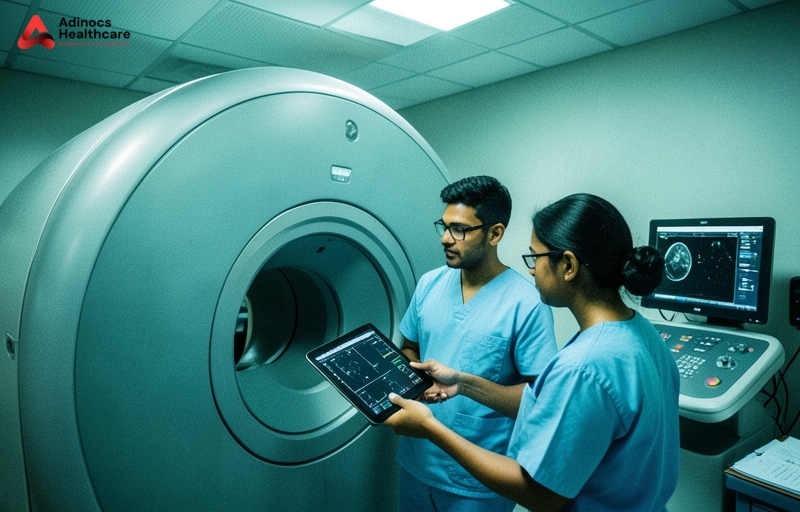
Did you know that nearly 45% of newly established nuclear medicine facilities in Tier 2 and Tier 3 Indian cities struggle to break even within their first three years of operation? It is a sobering reality. While the demand for oncology and cardiology diagnostics is skyrocketing across India, setting up and running a Positron Emission Tomography-Computed Tomography (PET-CT) facility is an entirely different beast compared to standard radiology. The financial drain is silent, continuous, and often devastating for unprepared hospital administrators and diagnostic lab owners. If you are currently evaluating your facility's performance or planning a new installation in 2026, understanding the core PET-CT operational challenges India faces is the first step toward safeguarding your investment.
The short answer: Most Indian PET-CT centers fail to achieve profitability because of a deadly combination of massive upfront capital expenditure, high daily radioisotope decay losses, stringent regulatory compliance delays, and a severe shortage of qualified nuclear medicine professionals. To survive, centers must shift from a volume-only mindset to high-efficiency workflow scheduling and strategic outsourcing.
What are the high initial investment costs for PET-CT centers in India and how do they drive PET-CT operational challenges India?
A 120-bed multi-specialty hospital in Siliguri decided to install a PET-CT unit in 2024. They budgeted Rs. 8 crore. By the time the first patient was scanned in early 2025, the actual capital expenditure had crossed Rs. 11.5 crore. The culprits? Hidden infrastructure costs, import duties, and fluctuating exchange rates. This is a classic example of how the PET-CT setup cost India requires can catch even seasoned administrators off guard.
A standard PET-CT machine from major global OEMs costs anywhere between Rs. 5.5 crore to Rs. 9 crore depending on the slice count (typically 16 to 128 slices) and crystal technology. But the machine is just the tip of the iceberg. Import duties, GST (which stands at 18% for medical equipment), and custom clearances add a massive premium. Then comes the civil work. You cannot just place a PET-CT in a standard room. You need a specialized bunker with thick lead shielding, heavy concrete walls, dedicated uptake rooms, and separate hot labs for isotope preparation.
The high debt-servicing cost (interest on loans) means a center needs to perform at least 6 to 8 scans per day just to cover its fixed costs. In Tier 2 and Tier 3 cities, getting 8 patients a day consistently is a massive hurdle. Let us look at a realistic breakdown of the setup costs as of 2026:
| Cost Component | Tier 1 City (e.g., Kolkata, Mumbai) | Tier 2/3 City (e.g., Siliguri, Patna, Asansol) |
|---|---|---|
| PET-CT Equipment (16 to 64 slice) | Rs. 6.0 - 8.5 Crore | Rs. 5.5 - 7.5 Crore |
| Civil Shielding & Bunker Construction | Rs. 80 Lakh - 1.2 Crore | Rs. 60 - 90 Lakh |
| Air Conditioning (HVAC with HEPA) | Rs. 25 - 40 Lakh | Rs. 20 - 30 Lakh |
| Regulatory & Licensing Fees (AERB) | Rs. 5 - 10 Lakh | Rs. 5 - 10 Lakh |
| Initial Radioisotope & Consumables | Rs. 15 - 20 Lakh | Rs. 15 - 20 Lakh |
| Annual Maintenance Contract (AMC/CMC) | Rs. 45 - 60 Lakh/year | Rs. 40 - 55 Lakh/year |
What this means in practice: you are paying for an incredibly expensive asset that depreciates every single day. If your scanner sits idle because of a lack of patients or operational delays, you are losing money fast. Many administrators try to save money by purchasing refurbished equipment. This is often a trap. Refurbished machines frequently suffer from higher downtime, and finding replacement parts for older crystal technologies in India can take weeks, leading to massive revenue losses.
How do stringent AERB and NABL regulations impact hybrid imaging operations?
A diagnostic centre in Bhubaneswar had its PET-CT machine sitting idle for four months. Why? They failed to secure the final registration on the e-LORA portal of the Atomic Energy Regulatory Board (AERB) because of a minor structural deviation in the hot lab design. The interest on their Rs. 7 crore bank loan kept ticking. That is Rs. 7 lakh per month down the drain without scanning a single patient.
To operate a PET-CT legally in India, you must navigate a maze of regulatory requirements. Nuclear medicine compliance India standards are among the strictest in the world. The AERB mandates that every stage of setting up a nuclear medicine facility, from site selection and design approval to commissioning and operation, must be strictly monitored. Any deviation in wall thickness, lead glass specifications, or ventilation rates can lead to an immediate halt in approvals.
The safety of patients and staff from ionizing radiation is paramount. We see similar regulatory bottlenecks in other radiology modalities, as highlighted in our discussion on how MRI Safety Fails in 60% of Indian Radiology Centers. However, nuclear medicine carries the added complexity of handling unsealed radioactive sources.
Then there is the National Accreditation Board for Testing and Calibration Laboratories (NABL). For a hybrid imaging center profitability India model to work, NABL accreditation is vital to secure empanelment with government schemes like Ayushman Bharat (PM-JAY) and private insurance TPA networks. Meeting NABL guidelines for nuclear medicine requires strict documentation, regular calibration of dose calibrators, and proficiency testing. The compliance process is lengthy. Any delay in paperwork can push back your launch by months, during which your expensive staff is on payroll but idle.
What are the complexities of managing radioisotope supply and waste in India?
A pathology and imaging network in Patna orders Fluorodeoxyglucose (FDG) from a cyclotron facility in Kolkata. The flight is scheduled for 6:00 AM. Due to winter fog, the flight is delayed by three hours. By the time the isotope reaches Patna and is transported to the clinic, more than half of the active dose has decayed. This is the reality of managing radioisotopes India logistics.
FDG-18, the most common radiopharmaceutical used in PET-CT scans, has a half-life of just 110 minutes. This means every 110 minutes, half of your expensive material disappears. If you operate a center in a city without a local cyclotron (which is true for almost all Tier 2 and Tier 3 cities in Eastern India), you are at the mercy of aviation logistics, road traffic, and weather conditions.
The trade-off: Do you buy extra doses to compensate for decay? Yes, many centers do. But this increases your cost per scan dramatically. If a patient fails to show up or is delayed due to high blood sugar levels, that expensive dose is completely wasted. You cannot save it for tomorrow. It will be completely gone.
Here is a contrarian insight: While most consultants advise ordering a 30% to 40% "decay buffer" to ensure you do not turn patients away, we have observed that this practice is a major margin killer. Over-ordering FDG without a dynamic scheduling system is equivalent to throwing cash into a biological waste bin. A smarter, albeit more difficult, approach is "dynamic grouping" where patients are booked in tight, back-to-back blocks of three, and the isotope order is calculated using real-time flight tracking APIs.
Waste management is another operational headache. Radioactive waste cannot be dumped in regular municipal bins. It must be stored in specialized decay closets until its activity falls below background levels, as mandated by the AERB. Managing this process requires dedicated space and strict protocol adherence, which we explore further in our guide on how How Can Indian Radiology Centers Optimize Patient Radiation Dose?.
How does the shortage of specialized staff affect PET-CT center efficiency?
A corporate hospital in Asansol had to suspend its PET-CT services for three weeks in late 2025 because their Radiation Safety Officer (RSO) resigned unexpectedly to take a job in Mumbai. Without an approved RSO on site, operating a nuclear medicine facility is a direct violation of AERB guidelines. Finding a replacement took weeks, costing the hospital lakhs in lost revenue and patient trust.
The talent pool for nuclear medicine in India is incredibly shallow. To run a legal, efficient hybrid imaging center, you need:
- A qualified Nuclear Medicine Physician (MD or DNB in Nuclear Medicine)
- An AERB-certified Radiation Safety Officer (RSO Level-II)
- Nuclear Medicine Technologists (B.Sc. or M.Sc. in Nuclear Medicine Technology)
- A Medical Physicist
Because of the severe shortage of specialized staff for PET-CT India faces, these professionals command premium salaries. In Tier 2 and Tier 3 cities, attracting this talent requires paying a 30% to 50% location premium compared to metro cities. If your nuclear medicine physician is sick or goes on leave, your scanner stops. The fixed costs, however, do not.
Many centers try to cross-train regular radiographers or use general radiologists to read PET-CT scans. This is a recipe for regulatory disaster and diagnostic errors. PET-CT is a hybrid modality; it requires deep knowledge of both anatomical CT and functional metabolic imaging. This staff bottleneck directly limits your ability to scale up. It also limits your ability to offer specialized packages, though you can learn How Can Indian Radiology Profit from Wellness Packages? to diversify your revenue streams in other departments.
What strategies can optimize workflow and reduce operational costs for hybrid imaging to solve PET-CT operational challenges India?
A diagnostic group in Kolkata managed to increase their PET-CT margin by 24% without buying new equipment. How? They redesigned their entire workflow. They decoupled the patient preparation phase from the scanning phase, allowing them to scan 14 patients a day instead of 8. They also optimized their scheduling to match the exact decay curve of their daily FDG delivery.
To tackle the PET-CT operational challenges India presents, you must optimize every single minute of your machine's uptime. Here are concrete strategies that work in the Indian context:
1. Decoupled Workflow & Multiple Uptake Rooms
The actual scan takes 15 to 20 minutes. However, the patient must rest quietly in an uptake room for 60 minutes after receiving the FDG injection. If you only have one or two uptake rooms, your multi-crore PET-CT scanner will sit idle waiting for patients to "cook." Build at least three, preferably four, uptake rooms. This allows a continuous assembly line of patients ready for the scanner.
2. Dynamic Patient Scheduling
Never schedule a PET-CT scan like an ultrasound. Group patients based on their weight and the expected arrival time of the isotope. Since FDG dosage is weight-dependent, scheduling lighter patients first or grouping pediatric cases can help optimize dose utilization. Also, ensure you have a strict "sugar control" protocol. If a patient arrives with a blood glucose level above 150 mg/dL, you cannot inject FDG. You must have a backup protocol to manage these patients quickly without wasting the dose.
3. Outsourced Sub-Specialty Reporting
Keeping a full-time, highly paid nuclear medicine physician on your payroll when you only do 4 scans a day is financial suicide. A growing trend among profitable Indian centers is utilizing specialized teleradiology services. By outsourcing the reporting to sub-specialist radiologists, you only pay per report. This converts a massive fixed cost into a variable cost. You can partner with a trusted provider like Adinocs Healthcare to access sub-specialist radiologists with quick turnaround times.
4. Negotiating Comprehensive Maintenance Contracts (CMC)
Do not sign standard AMCs. Negotiate a CMC that includes tube replacement and crystal coverage. A single CT tube replacement can cost Rs. 35 Lakh to Rs. 50 Lakh. An unexpected tube failure without CMC coverage can wipe out an entire quarter's profit. Ensure your contract has a guaranteed uptime clause (typically 95% or higher) with penalty clauses for prolonged downtime.
Key Takeaways for Indian PET-CT Center Owners
- Do not compromise on the number of uptake rooms: At least 3 to 4 are needed to keep the scanner active.
- Calculate the true cost of FDG decay: Build a dynamic scheduling system that syncs with delivery logistics rather than relying on massive buffer orders.
- Ensure regulatory redundancy: Always have a backup plan or a secondary certified professional to avoid sudden shutdowns due to RSO resignations.
- Leverage teleradiology: Use pay-per-report models to keep reporting costs flexible, especially during low-volume startup phases.
Frequently Asked Questions about Hybrid Imaging in India
What is the average PET-CT setup cost in India?
The average PET-CT setup cost in India ranges from Rs. 7 Crore to Rs. 11 Crore, depending on the machine specifications, bunker construction, and location. This includes the cost of the scanner, lead shielding, HVAC systems, and regulatory licensing.
How long does it take to secure AERB approval for a PET-CT facility?
It typically takes 4 to 8 months to secure complete AERB approval, from site layout approval to the final license to operate. Delays usually happen due to non-compliant civil designs or incomplete documentation on the e-LORA portal.
Why is managing radioisotopes so difficult for centers in Tier 2 Indian cities?
Managing radioisotopes in Tier 2 cities is difficult because of the rapid 110-minute half-life of Fluorodeoxyglucose (FDG) and the lack of local cyclotrons. Centers must rely on air or road transport, making them highly vulnerable to transit delays and isotope decay.
Can teleradiology help improve PET-CT center profitability in India?
Yes, teleradiology can significantly improve profitability by converting the high fixed cost of a full-time nuclear medicine physician into a flexible, pay-per-report model. This is especially beneficial for new or low-volume centers.
Operating a profitable PET-CT center in India in 2026 requires more than just clinical excellence. It demands operational precision, strict cost control, and strategic partnerships. At Adinocs Healthcare, we support diagnostic centres and hospitals in navigating these operational hurdles. From sub-specialist teleradiology reporting with a guaranteed 2-hour turnaround time to pay-per-report pricing models, we help you eliminate high fixed overheads and improve clinical outcomes. Talk to our team at Adinocs Healthcare today for a free workflow audit.
Data sources: Atomic Energy Regulatory Board (AERB) guidelines, NABL documentation, industry reports on Indian diagnostic market trends, and CrelioHealth resources.