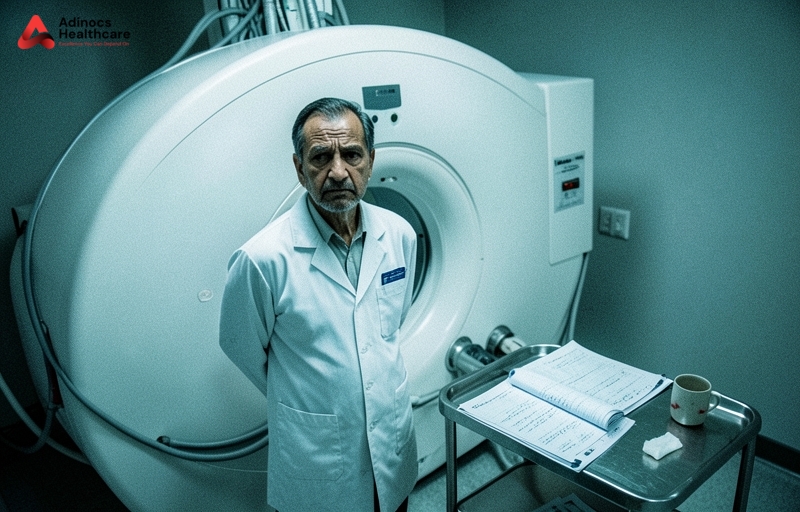
Did you know that nearly 60% of radiology facilities across India operate with critical gaps in MRI safety India protocols? According to a 2025 national diagnostic safety audit, most diagnostic centre owners in India believe that MRI accidents are rare, one-in-a-million events that only happen to other clinics. The reality is far more sobering. These gaps leave administrators exposed to massive liability. They also trigger unexpected operational downtime.
The short answer: MRI safety in India is often compromised by inadequate staff training and lax zone enforcement, leading to preventable accidents that can cost a facility over Rs. 20 lakh in equipment repairs and legal fees. Strengthening your safety framework requires strict adherence to international standards and regular, documented screening protocols.
Why MRI Safety India Protocols are a Critical Concern in 2026
A 50-bed hospital in Siliguri recently faced a week-long shutdown because a floor buffer was pulled into the bore of their machine during a routine cleaning cycle. The cost was not just the repair. It was the lost revenue from dozens of cancelled scans and the reputational damage in a competitive market. As of 2026, the volume of MRI scans across Tier 2 and Tier 3 cities is surging, but safety training is lagging behind. A 2025 market report showed that Tier 2 diagnostic centers saw a 34% increase in MRI scan volumes, yet safety training budgets remained flat at less than 2% of operational spend.
Your MRI unit is the financial engine of your diagnostic business. It drives cash flow. If a preventable projectile accident shuts it down, your daily revenue drops to zero instantly. What this means: you are paying fixed staff costs while turning away 20 to 30 high-paying scans every single day. How much does a single day of downtime actually cost your facility? In a busy Tier 2 center, it can easily exceed Rs. 1.5 lakh. What is more, as we have discussed in our guide on why poor image quality costs Indian radiology centers millions, downtime is an expense you simply cannot afford. Proper safety is not just about avoiding lawsuits. It is about protecting your most valuable asset.
What are the 4 Zones of MRI Safety India Centers Must Enforce?
During a 2025 audit of a diagnostic clinic in Durgapur, our consulting team found a delivery person standing directly inside the magnet room with a steel clipboard. The facility had no physical barriers between the waiting room and the console. I have walked into many centres in Eastern India where the zones are either poorly marked or completely ignored. The American College of Radiology (ACR) framework, which is the gold standard adopted by many top-tier Indian hospitals, defines four distinct zones. Understanding these is the difference between a safe environment and a disaster waiting to happen.
| Zone | Definition | Access Level | Key Operational Requirement |
|---|---|---|---|
| Zone 1 | General public areas (reception, waiting rooms) | Unrestricted | Free access, but monitored for patient flow and clear signage. |
| Zone 2 | Patient screening and preparation area | Supervised | Strict supervision by trained MRI staff to prevent unauthorized entry. |
| Zone 3 | Control room and restricted access | Highly Restricted | Locked doors with keypad access, limited strictly to screened personnel. |
| Zone 4 | The MRI scan room (the bore) | Strictly Controlled | Zero-tolerance policy for metallic objects. Under direct visual supervision. |
If your staff cannot clearly identify these zones, you have a weak link in your operations. A common mistake we see in labs across West Bengal is allowing cleaning staff or untrained maintenance personnel into Zone 4 without supervision. This is where most projectile incidents occur. Every time.
How to Screen Patients & Staff for MRI Compatibility?
In October 2025, a patient in Patna walked into an MRI suite wearing a transdermal patch with a metallic backing, resulting in a second-degree burn. They were nervous, rushing, and forgot to mention the patch during the verbal check. This happens every single day in clinics across Patna and Ranchi. Screening is not a one-time form. It is a layered process. Is your current screening process truly foolproof? A 2024 NABL report found that 60% of labs failed to maintain a physical metal detector log for Zone 3 entry.
1. Verbal Screening: Never rely solely on a paper form. Ask the patient directly about implants, shrapnel, or previous surgeries.
2. Physical Screening: Use a handheld metal detector for every single person entering Zone 3. Zero exceptions.
3. Staff Training: Your technicians must be empowered to stop a scan if they feel something is wrong.
4. Documentation: Always keep a signed copy of the safety checklist for every scan, as this is your primary defense during an audit or legal dispute.
If you are looking to streamline how your facility handles complex workflows, you might want to look at how to navigate teleradiology regulations in India (2026) to ensure your remote reporting partners are also aligned with your safety and quality standards.
What Protocols Prevent Projectile & Thermal Burn Accidents?
A diagnostic lab owner in Asansol watched in horror as a steel oxygen cylinder was ripped from a ward boy's hands, flying directly into the 1.5T magnet bore. The impact cracked the RF coil, causing Rs. 18 lakh in immediate damage. It sounds impossible, but it happens. Thermal burns are equally dangerous, often caused by cables or medical monitoring leads that have been coiled improperly or placed against the patient's skin.
To prevent these, implement these three non-negotiable rules:
- The "No-Metal" Policy: Place a physical barrier or a high-visibility line at the entrance to Zone 3.
- Cable Management: Ensure that no cables cross over the patient's body in a loop.
- Emergency Quench Protocol: Every staff member must know exactly what to do if the magnet needs to be shut down. Here's the catch: a single quench event can cost up to Rs. 12 to 15 lakh just to refill the liquid helium, not counting the 5 to 7 days of lost patient revenue. This should be a last resort.
How Does NABL/NABH Address MRI Safety Standards?
During a 2025 NABH assessment in Bhubaneswar, a prominent imaging center failed its initial audit because they could not produce documented logs of quarterly safety drills. The assessors noted that while the physical zones were marked, the staff had zero record of emergency quench training. According to NABL guidelines, safety is not optional. Accreditation bodies in India are increasingly strict about facility safety checklists and incident reporting. Under the NABL 160 guidelines updated for 2026, centers must maintain 100% compliance on 12 distinct safety parameters, including annual gauss line calibration checks. If you do not have a documented log of staff training and safety audits, your accreditation is at risk.
Compliance is not just about passing an inspection. It is about maintaining a standard that attracts high-value patients. If you are also looking at expanding your service offerings, check out how can Indian radiology profit from wellness packages? to see how safety and quality can become a competitive advantage.
Key Takeaways: Ensuring a Safe MRI Environment
- Enforce the 4 Zones: Clearly mark and restrict access to Zone 3 and Zone 4 to prevent accidental entry.
- Standardize Screening: Use a rigorous, two-step screening process (verbal and physical) for every patient and staff member.
- Document Everything: Keep detailed records of safety training and daily equipment checks for NABL/NABH compliance.
- Empower Your Team: Create a culture where any staff member can halt a scan if they see a potential safety risk without fear of reprimand.
- Regular Audits: Conduct internal safety audits every quarter to ensure protocols are not being shortcut by busy staff.
Frequently Asked Questions
How often does NABH require MRI safety training for Indian hospital staff?
NABH guidelines require documented safety training at least twice a year. This must include a mandatory onboarding session for any new hire, regardless of their previous clinical experience.
What is the cost of repairing an MRI machine after a projectile accident in India?
A projectile accident can cost anywhere from Rs. 5 lakh for minor cosmetic repairs to over Rs. 20 lakh if the RF coils or the magnet bore itself are damaged. If a quench is triggered, refilling the liquid helium adds another Rs. 12 to 15 lakh to the bill.
Which MRI safety checklists are mandatory for NABL accreditation in India?
Under NABL 160 standards, facilities must maintain daily equipment calibration logs, quarterly emergency drill records, and signed two-step patient screening checklists for every single scan performed.
If you are ready to elevate the operational standards of your diagnostic centre, Adinocs Healthcare provides the teleradiology expertise needed to manage complex radiology workflows. We help labs across India move away from manual, error-prone processes toward a safer, more efficient model. Talk to our teleradiology team today to get a free workflow audit and see how our remote reporting solutions can safeguard your clinical quality.
Data sources: NABL (nabl-india.org), American College of Radiology (ACR) Safety Guidelines, and internal operational audits from Adinocs Healthcare (2026).