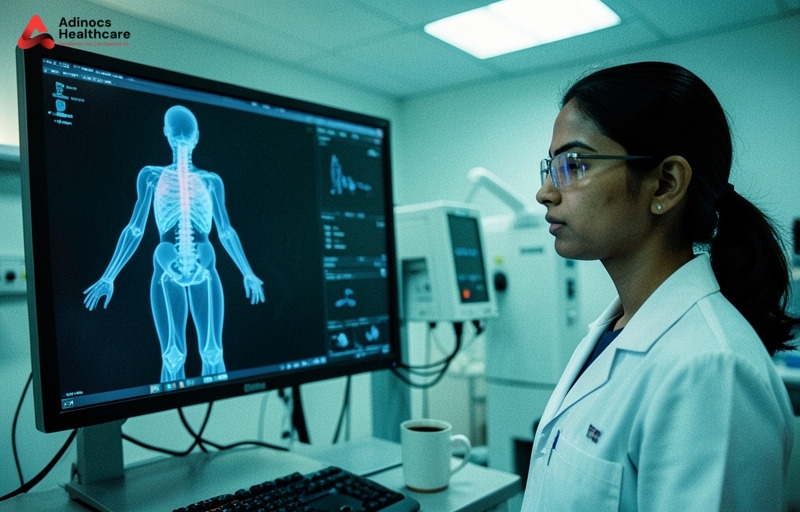
According to a 2025 national survey of Indian diagnostic centers, 35% of diagnostic imaging procedures in India involve unnecessary radiation exposure due to outdated protocols or poorly calibrated equipment. To address this, implementing structured **radiation dose management India** protocols is no longer just a clinical preference; it is an operational necessity. For a hospital administrator in Ranchi or a lab owner in Siliguri, this is a massive liability. It directly blocks your path to high-quality patient care standards. As we move through 2026, the shift toward smarter, safer imaging is a fundamental requirement for maintaining your reputation.
The short answer: Effective **radiation dose management India** requires implementing standardized low-dose imaging protocols, conducting annual AERB-approved equipment calibrations, and utilizing digital PACS-integrated dose tracking systems to minimize patient exposure while maintaining diagnostic-quality images.
Why is Radiation Dose Management India a Critical Priority for Diagnostic Labs?
In 2025, a diagnostic center in Bhubaneswar faced a severe reputational crisis when a local news outlet highlighted that three pediatric patients received double the recommended CT radiation dose due to uncalibrated equipment. The fallout was immediate. Patient footfall dropped by 40% in a single month. This is why radiation dose management is the systematic practice of tracking, optimizing, and reporting the amount of ionizing radiation used in medical imaging.
Why should you care? Beyond the obvious patient safety aspect, poor management is a direct route to regulatory trouble. The Atomic Energy Regulatory Board (AERB) mandates strict adherence to safety protocols. If your centre is frequently cited for high-dose variations, you are not just risking patient health. You are risking your license to operate. We have seen this pattern across many facilities in Eastern India. When you focus on dose optimization, you naturally improve image quality. This reduces the need for costly and time-consuming repeat scans. It is a win-win for your bottom line and your patient outcomes. Every time.
Is your staff actually wearing their TLD badges, or are they sitting in a drawer? A 2024 AERB compliance report indicated that 18% of registered X-ray installations failed their annual quality assurance audits on the first attempt. This highlights a massive gap in daily operational oversight.
What Are the Key AERB Guidelines for Radiation Safety in 2026?
Consider a 100-bed hospital in Nagpur that was fined Rs. 2,50,000 in early 2026 because their TLD badge records were missing for two consecutive quarters. The hospital administration assumed their third-party vendor was handling it. They were wrong. The regulatory landscape in 2026 is tighter than it was five years ago. The AERB has shifted its focus from simple equipment registration to ongoing performance monitoring. If you operate an X-ray or CT facility, you must adhere to the principle of ALARA (As Low As Reasonably Achievable). This is the backbone of the CDSCO Medical Devices Rules and AERB safety norms.
Here is what you need to track to stay compliant:
- Mandatory QA Testing: Quality Assurance (QA) tests must be conducted by an AERB-approved agency at least annually.
- TLD Badge Compliance: Every staff member working in the radiation zone must wear a Thermoluminescent Dosimeter (TLD) badge, with reports updated quarterly.
- Patient Dose Documentation: You are now expected to maintain digital logs of radiation doses delivered per procedure, especially for pediatric patients.
- Room Shielding Verification: Periodic checks of lead-lined doors and walls are non-negotiable.
What this means: if your facility is still using manual logbooks, you are highly vulnerable to audit failures. If you are struggling with these, you might also want to read our deep dive on MRI Safety Fails in 60% of Indian Radiology Centers to ensure your facility isn't missing critical safety gaps.
How Can RIS-PACS Technology Drive Radiation Dose Management India?
A 50-bed hospital in Patna recently upgraded their legacy CT scanner software to an integrated RIS-PACS platform with automated dose modulation features. Within three months, they reduced average patient radiation exposure by 22% without sacrificing image clarity. The secret? They stopped relying on manual settings for every patient. They automated the process.
Modern technology, such as AI-driven dose management systems, allows you to:
| Feature | Benefit to Your Lab |
|---|---|
| Automated Protocol Selection | Prevents human error in setting exposure levels. |
| Real-time Dose Monitoring | Alerts technicians if a dose exceeds safety limits. |
| Digital Reporting | Simplifies AERB compliance and audits. |
| Remote Protocol Optimization | Ensures consistent quality across multiple sites. |
| Sub-specialist Teleradiology Audits | Identifies over-exposure trends across different shifts. |
This is where expert teleradiology support, such as the services provided by Adinocs Healthcare, becomes highly effective. By using sub-specialist radiologists who understand the nuances of low-dose imaging, you can refine your protocols. This ensures that every scan meets international standards while keeping your facility firmly in the safe zone. No more guesswork.
What Are the Financial Benefits of Effective Dose Management?
A diagnostic chain in Coimbatore saved over Rs. 4,20,000 in 2025 simply by reducing their CT tube replacement frequency. How? They optimized their radiation dose settings, which prevented the tubes from overheating during high-volume shifts. Many administrators view radiation safety as a cost centre. That is a mistake. When you optimize your radiation dose, you are actually optimizing your machine's lifecycle. Excessive radiation settings often put unnecessary strain on X-ray tubes and cooling systems, leading to more frequent, expensive breakdowns.
Consider these financial impacts:
- Reduced Re-scan Rates: Better protocols mean fewer images are rejected due to artifacts or poor contrast, saving you significant electricity and reagent costs.
- Lower Maintenance Costs: Optimized usage extends the life of your expensive imaging hardware.
- Improved Patient Throughput: Faster, accurate scans mean you can handle more patients per day without increasing your staff count.
- Market Differentiation: Marketing your centre as a "Low-Dose, High-Safety" facility is a powerful way to win over patients, which helps you profit from wellness packages by positioning your brand as premium and ethical.
Worth knowing. According to a 2025 market report, Indian diagnostic centers that actively market their low-dose safety protocols see a 15% increase in self-referring wellness patients.
How to Implement a Radiation Dose Management Program in Your Center?
When a multi-specialty clinic in Vijayawada decided to overhaul their imaging workflow, they didn't buy new scanners. Instead, they spent Rs. 50,000 on staff training and protocol optimization. Within 60 days, their average dose per lumbar spine X-ray dropped by 18%. Implementing a program doesn't require a massive upfront investment. You can start today with these four steps:
- Audit Your Current Status: Review your last two years of AERB inspection reports. Where are the recurring findings?
- Train Your Technicians: Most dose errors occur because staff are using "default" settings that are too high for smaller patients. Schedule a mandatory training session on patient-specific protocol selection.
- Digitize Your Logs: If you are still using paper registers for dose records, move to a digital system. It is cheaper, faster, and audit-ready.
- Consult the Experts: Partner with a professional teleradiology provider who can remotely review your scan protocols and suggest adjustments to keep doses low. If you are uncertain about the legalities, check How to Navigate Teleradiology Regulations in India (2026).
Here's the catch: training is not a one-time event. You must audit compliance monthly to ensure technicians do not slip back into old habits.
Key Takeaways
- Safety as a Strategy: Radiation dose management is a competitive advantage that builds patient trust and lowers operational liability.
- Regulatory Compliance: AERB norms are getting stricter; digital logging and annual QA are no longer optional.
- Operational Efficiency: Lowering radiation doses often leads to longer machine life and reduced maintenance expenses.
- Utilize Expert Support: You don't have to do this alone. Expert teleradiology support can help you optimize protocols across your entire facility.
Frequently Asked Questions
How much does a radiation dose management system cost for an Indian diagnostic center?
The cost varies. If you are implementing basic protocol optimization and staff training, the cost can be as low as Rs. 15,000 to Rs. 30,000. However, integrating dedicated dose-tracking software into your RIS-PACS can range from Rs. 1,50,000 to Rs. 5,00,000 depending on the number of connected modalities.
What is the AERB calibration frequency for CT scanners in India?
According to AERB guidelines, you must conduct comprehensive Quality Assurance (QA) tests and equipment calibration at least once a year. Additionally, you must perform these tests immediately following any major repair, tube replacement, or software upgrade.
How does teleradiology help small Indian hospitals reduce radiation doses?
By partnering with Adinocs Healthcare, you gain access to sub-specialist radiologists who can analyze your scan protocols remotely. They provide actionable feedback to ensure your technicians use the lowest possible radiation dose while still delivering high-quality diagnostic images.
Ready to modernize your facility's safety standards? Talk to our teleradiology team today at Adinocs Healthcare for a free assessment of your current radiology protocols and see how we can help you stay compliant and efficient.
Data sources: Atomic Energy Regulatory Board (AERB) safety norms, CDSCO Medical Devices Rules, and internal industry benchmarking from 2026 operational audits.