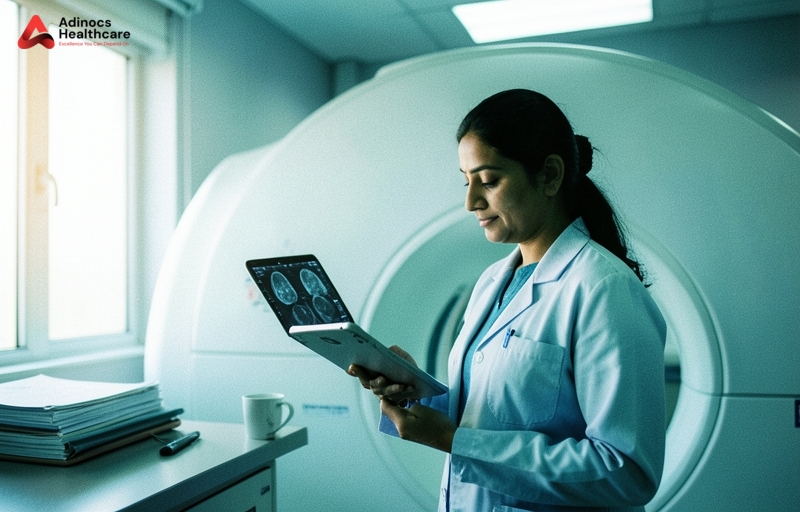
Can adopting sustainable radiology India initiatives actually protect your bottom line? Yes, absolutely. Most diagnostic centres in India lose up to 15% of their monthly operating margins to a silent profit killer: phantom electricity draws and wasted helium boil-offs. If you run an imaging facility in Kolkata, Patna, or Ranchi, you are likely watching your electricity bills climb every single quarter. Adopting sustainable radiology India is no longer just an environmental choice; it is a hard-nosed financial strategy to protect your margins from rising utility tariffs and equipment maintenance costs.
The short answer: Yes, sustainable radiology can cut operational costs for Indian diagnostic centres by up to 20% to 30% through energy-efficiency upgrades, digital-only workflows, and optimized scanner idle states. Investing in green radiology future-proofs your facility against rising power tariffs and stringent environmental compliance audits.
What is Sustainable Radiology India and Why Does it Matter?
A 50-bed hospital in Siliguri recently installed a refurbished 1.5T MRI scanner. The owner expected high clinical returns but was shocked by the first month's power bill. It was not just the scans driving up the cost. It was the 24/7 chiller running to keep the magnet cold, even when the clinic was closed. This is where sustainable radiology directly impacts your balance sheet.
Sustainable radiology is the practice of delivering high-quality diagnostic imaging while minimizing the consumption of natural resources, reducing carbon emissions, and eliminating hazardous waste. It covers everything from the physical hardware (MRI, CT, X-ray) to the software (PACS, LIMS, AI-driven scheduling) and operational workflows. In the Indian context, this shift is critical. Our healthcare sector is expanding rapidly into Tier 2 and Tier 3 cities. Energy grids in these regions are frequently unstable. When the grid fails, centres rely on diesel generators. Running a CT or MRI scanner on a diesel generator costs up to Rs.22 per unit, compared to Rs.8 to Rs.11 for grid power. Every minute of inefficient operation directly drains your bank account.
According to research from the World Health Organization India, healthcare facilities contribute significantly to national carbon emissions, with energy-intensive diagnostic imaging being a primary driver. Implementing green diagnostic imaging India is about resource optimization. It is about understanding that an idle MRI scanner still consumes up to 60% of its peak scanning power just to keep the cryogenic helium pump running. If your centre is not running at 100% capacity, you are literally burning money while the machine sits empty. Is your scanner actually earning its keep during those quiet afternoon hours?
The transition to sustainable practices is not just about saving the planet. It is about survival. As of 2026, the cost of medical equipment, spare parts, and power has risen by nearly 18% over the last three years. Diagnostic centres that fail to optimize their energy consumption and waste management will find their margins squeezed to zero. By adopting sustainable radiology, you protect your business from external economic shocks while ensuring long-term operational viability.
How Can Sustainable Radiology India Practices Reduce Operational Costs?
A diagnostic clinic in Patna recently slashed its monthly electricity bill by Rs.24,000 without buying any new equipment. How? They simply reprogrammed their CT scanner's idle state and adjusted their HVAC sequencing. Most diagnostic centres think that buying a new, expensive green machine is the only way to go green. In reality, 70% of a scanner's energy waste happens during idle hours. You can achieve up to 18% energy savings tomorrow without spending a single Rupee on new hardware. You simply need to renegotiate your HVAC sequencing and program your CT's automatic low-power sleep state. This translates directly into cost savings green radiology India.
Let's break down the actual numbers. A typical 1.5T MRI scanner uses approximately 130,000 to 140,000 kWh of electricity per year. In West Bengal, commercial electricity tariffs often exceed Rs.9 per unit. This equates to over Rs.12 lakh annually. Just for one machine. By implementing simple software-driven power-down modes during off-hours, you can reduce this consumption by 25%. That saves up to Rs.3 lakh per year per scanner. What this means: helium boil-off costs are a massive vulnerability. Traditional MRI scanners require thousands of litres of liquid helium to keep the magnet in a superconducting state. Helium is a finite, increasingly expensive resource. Global helium supply chains remain highly volatile, driving up liquid helium prices in India to over Rs.2,500 per litre. A single quench or a slow leak can cost a lab owner Rs.5 lakh to Rs.10 lakh in refills. Moving towards zero-boil-off or low-helium technologies virtually eliminates this operational risk.
Another major area of waste is physical film. Many diagnostic centres in semi-urban India still print physical X-ray and CT films. Each film costs Rs.100 to Rs.150 to print. Add to that the cost of chemical processing and hazardous waste disposal. Not anymore. Transitioning to a digital-first workflow using cloud-based PACS and sending reports via secure WhatsApp links or patient portals can save a busy center over Rs.50,000 per month. This is particularly relevant for high-overhead facilities, as detailed in our analysis on Why Many Indian PET-CT Centers Struggle with Profitability, where fixed costs can quickly destroy business viability.
The table below compares the operational costs and environmental impacts of conventional radiology operations against sustainable, green radiology practices:
| Operational Parameter | Conventional Radiology Operations | Sustainable/Green Radiology Operations | Estimated Annual Savings (per scanner) |
|---|---|---|---|
| MRI Energy Consumption | Continuous peak/idle power draw (140,000 kWh/year) | Automated low-power sleep states during off-hours | Rs.2.5 lakh - Rs.3.5 lakh |
| Helium Maintenance | Regular top-ups due to boil-off (1,500L capacity magnets) | Zero-boil-off or low-helium (7L capacity) sealed magnets | Rs.1.5 lakh - Rs.4 lakh |
| Reporting & Imaging Media | Physical plastic film printing (X-ray, CT, MRI) | Digital-only sharing via secure cloud links and WhatsApp | Rs.3 lakh - Rs.6 lakh (based on volume) |
| IT Infrastructure | On-premise servers running 24/7 with dedicated cooling | Cloud-hosted PACS and decentralized teleradiology | Rs.1 lakh - Rs.2 lakh |
| HVAC Management | Continuous maximum cooling in scanner rooms 24/7 | Smart HVAC sequencing based on real-time scan loads | Rs.80,000 - Rs.1.5 lakh |
What are the Key Environmental Regulations for Indian Diagnostic Imaging?
A diagnostic centre in Asansol recently received a surprise show-cause notice from the West Bengal Pollution Control Board regarding improper disposal of lead-lined aprons and old computer monitors. Many owners do not realize that radiology waste is heavily regulated under Indian law. Failing to comply can lead to immediate closure of your facility.
The regulatory landscape for diagnostic imaging in India is governed by multiple authorities. First and foremost is the Atomic Energy Regulatory Board (AERB). AERB regulates radiation safety. While radiation safety is primarily about patient and staff protection, it directly impacts the environment. Proper shielding prevents radiation leakage into the surrounding environment. Second, the Hazardous and Other Wastes Rules, along with the E-Waste (Management) Rules, govern how older imaging equipment, lead shielding, and electronic components must be decommissioned. You cannot simply sell old X-ray tubes or CT detectors to local scrap dealers. They must be disposed of through authorized recyclers registered with the Central Pollution Control Board (CPCB).
Here's the catch: NABL environmental guidelines radiology are becoming increasingly strict. According to the National Accreditation Board for Testing and Calibration Laboratories (NABL), accredited facilities must maintain strict environmental controls, including temperature, humidity, and waste disposal protocols. A 2024 NABL report found that over 45% of Tier 2 diagnostic centers struggle with chemical waste documentation. For radiology centers that also house pathology labs, NABL compliance requires detailed documentation of how chemical wastes, like developer and fixer solutions from older analog X-rays, are neutralized before discharge. Even if you have transitioned to digital X-rays, the disposal of lead-lined aprons, contrast media bottles, and electronic waste must be meticulously logged to maintain your accreditation.
Proper radiology waste management India is not just about avoiding fines. It is about building a compliant, institutional-grade business. As corporate hospital chains expand and health insurance companies demand higher quality standards, having clean, documented environmental compliance will make your centre a preferred partner. It reduces your legal liability and ensures that your business can pass any surprise inspection without panic.
How Does Green Imaging Enhance Your Center's Reputation and Patient Trust?
A modern diagnostic chain in Kolkata launched a "Zero-Paper, Low-Dose" campaign. They stopped printing physical films unless specifically requested and instead planted a tree for every 100 digital reports delivered. Within six months, they saw a 15% increase in young, tech-savvy patients choosing them over older, established competitors. Patients in 2026 are highly conscious of healthcare safety and environmental responsibility.
When you focus on reduce environmental impact radiology India, you are also improving patient care. For example, modern green imaging protocols often involve optimizing scan times and reducing radiation doses. This is a massive selling point. Patients are often terrified of radiation exposure from CT scans. By promoting your use of low-dose, high-efficiency scanning protocols, you address their fears directly. You can read more about how to implement these clinical protocols in our guide on How Can Indian Radiology Centers Optimize Patient Radiation Dose?. This alignment of green initiatives with patient safety creates a powerful narrative of trust.
Corporate tie-ups are another major growth driver for Indian diagnostic centres. Large IT firms, multinational corporations, and manufacturing units in industrial hubs like Durgapur or Haldia require annual health checkups for thousands of employees. These corporate clients operate under strict Environmental, Social, and Governance (ESG) mandates. When they select a diagnostic partner, they look at your environmental practices. A centre that can demonstrate paperless reporting, energy-efficient operations, and certified waste management has a massive competitive advantage over one that still relies on chemical developers and plastic films.
Consider this real-world example: A 150-bed multi-specialty hospital in Durgapur achieved a 22% reduction in monthly power bills and boosted patient walk-ins by 18% simply by transitioning to low-dose, energy-efficient CT protocols and marketing their "Green Imaging Initiative" to local corporate partners. They proved that sustainability is not a cost center; it is a customer acquisition tool.
What Steps Can Indian Radiology Centers Take Towards Sustainability?
An imaging center owner in Ranchi recently managed to fund their entire digital transition using nothing but the savings from their first month's electricity bill. You do not need a multi-crore budget to start your green transition. You can begin with operational tweaks that cost absolutely nothing. To build future-proof radiology centers India, you must take a systematic, phased approach. Here is a practical, step-by-step roadmap that you can begin implementing today:
- Optimize Equipment Idle States: Contact your original equipment manufacturer (OEM) and ask them to program the eco-mode or sleep-mode on your CT and MRI scanners. Most modern scanners have these settings built-in, but technicians rarely activate them. This simple step can reduce off-hour energy consumption by up to 30% without affecting patient throughput.
- Implement Smart HVAC Sequencing: Radiology equipment rooms require precise temperature control to prevent overheating. However, the cooling load when the scanner is idle is much lower than when it is running. Installing smart thermostats that adjust the air conditioning based on real-time scanner activity can save thousands of units of electricity every month.
- Transition to Cloud-Based Teleradiology: On-premise servers run 24/7, consuming electricity and generating heat that requires continuous air conditioning. By moving your reporting to cloud-hosted platforms, you eliminate the need for local server infrastructure. This not only reduces your local carbon footprint but also ensures compliance with national regulations. For details on how to manage this transition securely, see our article on How to Secure Radiology Data Under India's DPDP Act 2026?.
- Go Digital-First with Reports and Images: Stop printing plastic-based films. Shift to digital delivery via WhatsApp, email, or a secure patient portal. If a patient absolutely insists on a physical copy, charge a nominal eco-fee to cover the cost and discourage unnecessary printing. This single move can save you lakhs of rupees in raw material costs annually.
- Invest in Helium-Free or Low-Helium MRI Technology: When upgrading your equipment, look for newer MRI systems that use sealed-loop cooling technology. These systems require as little as 7 litres of helium compared to the 1,500 litres in traditional magnets, completely eliminating the risk of expensive helium boil-offs and quenches.
By executing these five steps, you will significantly reduce environmental impact radiology India while simultaneously boosting your operating margins. The savings generated from the first three low-cost steps can easily fund the capital expenditure required for the hardware upgrades in steps four and five. This is a self-sustaining cycle of operational efficiency.
Your Action Plan for 2026
- Audit Your Energy Bills: Identify the baseline power consumption of your MRI, CT, and HVAC systems during working hours versus non-working hours to pinpoint waste.
- Eliminate Film Printing: Incentivize patients and referring physicians to accept digital-only reports by offering a small discount or highlighting the environmental benefits.
- Activate Eco-Modes: Force your operational staff to coordinate with equipment engineers to ensure all scanners are programmed to enter low-power standby modes when idle.
- Decommission On-Premise Servers: Shift your PACS and reporting workflows to secure, cloud-based teleradiology networks to cut local electricity and cooling costs.
- Train Your Staff: Educate your technicians and administrative staff on the importance of switching off auxiliary equipment, lights, and computers when not in use.
Frequently Asked Questions About Sustainable Radiology
How much does it cost to set up a green diagnostic center in India?
Rs.0 to Rs.50,000 is all you need for basic operational changes. If you are just optimizing scanner idle states, adjusting HVAC settings, and moving to digital-only reporting, the upfront cost is virtually zero, while the savings start immediately. Upgrading to energy-efficient hardware requires capital, but the payback period is typically under 3 to 4 years.
What are the NABL waste disposal rules for Indian radiology labs?
NABL does not directly penalise centres for not being green, but they strictly enforce environmental controls and waste management guidelines. Non-compliance with biomedical waste disposal, chemical discharge, or radiation safety standards will lead to the suspension of your accreditation.
Can I upgrade my old 1.5T MRI to reduce electricity bills in India?
Yes, many older imaging systems can receive software patches from the manufacturer to enable low-power standby modes. Additionally, retrofitting your equipment room with smart HVAC controllers and power-factor correctors can significantly reduce the energy drawn by older machines.
Which teleradiology service is best for reducing on-premise server costs in India?
Teleradiology reduces the carbon footprint by eliminating the need for radiologists to travel to multiple Tier 2 or Tier 3 centres, while also reducing the local server power load. By utilizing centralized, highly efficient cloud infrastructure, teleradiology platforms process reports with a fraction of the energy required by individual, on-premise hospital servers. Adinocs Healthcare provides cloud-based teleradiology services that eliminate the need for local server infrastructure entirely.
Partnering for a Sustainable and Profitable Future
Transitioning to sustainable radiology is not a luxury; it is an operational necessity for Indian diagnostic centres in 2026. By reducing energy waste, eliminating plastic films, and streamlining your IT infrastructure, you can protect your margins from rising costs while building a brand that patients trust. At Adinocs Healthcare, we help diagnostic centres transition to sustainable, highly profitable operational models. Through our advanced teleradiology services under Adinocs Healthcare, we provide access to sub-specialist radiologists with a guaranteed 2-hour turnaround time and pay-per-report pricing. This eliminates the need for expensive, energy-hungry on-premise servers and helps you go completely paperless. Based in Kolkata, we provide dedicated, on-ground support across Eastern India, helping you future-proof your facility without large upfront investments. Talk to our teleradiology team today to schedule a free operational audit of your imaging workflow and see how Adinocs can cut your reporting overhead.
Data sources: Central Pollution Control Board (CPCB) Guidelines 2025, NABL Environmental and Quality Standards, Atomic Energy Regulatory Board (AERB) Safety Directives, and World Health Organization India Healthcare Waste Management Reports.