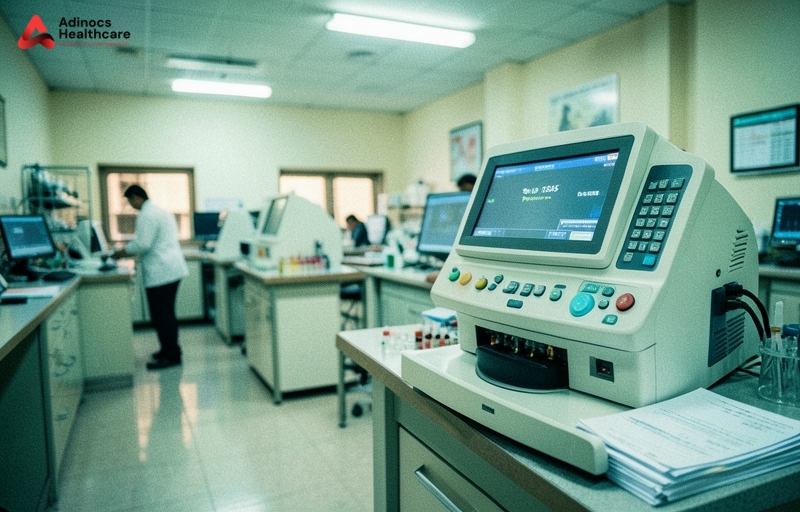
Nearly 45% of the entire capital budget for a new 100-bed hospital in India is swallowed by medical equipment procurement. If you are a hospital administrator in Patna or a diagnostic centre owner in Asansol, this is a number you know all too well. The choice you make between imported machinery and home-grown alternatives will dictate your balance sheet for the next decade. When evaluating global vs domestic medical equipment India, market dynamics in 2026 demand a hard look at the total cost of ownership, not just the sticker price.
The short answer: While global medical equipment brands offer high-end clinical features, domestic Indian medical equipment in 2026 delivers superior long-term value for Tier 2 and Tier 3 facilities due to 40% lower upfront costs, faster local servicing, and cheaper spare parts.
Why Compare Global vs Domestic Medical Equipment India in 2026?
Consider a 30-bed nursing home in Muzaffarpur that installed a domestic C-arm system in January 2026. Within six months, they realized they were performing the same number of orthopedic procedures as a nearby corporate hospital using an imported German system, but at a fraction of the capital cost. In the past, choosing an Indian medical equipment brand felt like a compromise. You chose it because you were low on cash, not because you wanted to. Not anymore. The domestic manufacturing sector has shifted from producing low-tech consumables to high-tech electronic medical devices. According to a 2025 report by the Association of Indian Medical Device Industry (AiMeD), India's medical device market is projected to reach $50 billion by 2030, growing at a CAGR of 15%. This growth is driven by the government's Production Linked Incentive (PLI) schemes and updated regulatory frameworks. The Central Drugs Standard Control Organisation (CDSCO) has tightened quality controls, forcing domestic manufacturers to meet rigorous global standards like ISO 13485.
This regulatory shift means the clinical gap between a German-made patient monitor and an Indian-made one has shrunk to almost zero. Yet, the price gap remains massive. For a healthcare facility in Eastern India, this shifts the entire financial dynamic. Why pay a premium for imported equipment when a domestic alternative offers the same clinical utility? Is the premium brand actually worth the premium price? The decision requires a strategic look at your patient demographic. If your patients cannot afford metro-city diagnostic rates, your equipment cost must reflect that reality. High capital expenditure on imported machines forces you to charge higher test rates. This can drive patients straight to your local competitors. It is a simple volume game. Lower capital costs allow lower pricing, which drives higher patient volume.
Here's the catch. The domestic market is highly responsive to Indian operating conditions. A diagnostic lab owner in Siliguri told us last month that his imported biochemistry analyzer kept throwing errors during the humid monsoon weeks. The manufacturer's manual suggested keeping the room at a constant 18 degrees Celsius with zero humidity. That is easy to write in a manual. It is incredibly expensive to maintain in a Tier 2 city with frequent power cuts. Domestic manufacturers design their systems with these exact environmental challenges in mind. They build in wider voltage tolerances and more durable cooling systems because they know where their machines will actually run.
What Are the Upfront Costs of Global vs Domestic Medical Equipment India?
A diagnostic center owner in Gaya recently compared two quotes for a digital radiography (DR) system. The imported system from a major European brand was quoted at Rs. 35,00,000, while a leading Indian manufacturer offered a comparable system for Rs. 22,00,000. The purchase price of a medical device is just the tip of the iceberg. When you buy a global brand, you are not just paying for the machine. You are paying for ocean freight, import duties, customs clearance, and the distributor's hefty margin. These hidden costs can inflate the final invoice by 25% to 40% compared to domestic alternatives. In 2026, currency fluctuation adds another layer of risk. If you sign a procurement contract in US Dollars or Euros, a sudden drop in the Indian Rupee can ruin your budget before the machine even clears customs.
To understand how these costs compound over time, we need to look at the entire lifecycle of the asset. You can read more about this in our detailed guide on What is the True Cost of Medical Equipment in India?. Here is a typical cost comparison for a mid-range digital radiography (DR) system in 2026:
| Cost Component | Global Brand (Imported) | Indian Brand (Domestic) | The Financial Impact |
|---|---|---|---|
| Base Machine Price | Rs. 35,00,000 | Rs. 22,00,000 | Indian brand is 37% cheaper upfront |
| Import Duty & Customs | Rs. 4,20,000 (approx. 12%) | Rs. 0 | Pure savings on domestic equipment |
| Freight & Installation | Rs. 1,50,000 | Rs. 50,000 | Local transport reduces logistics costs |
| Annual Maintenance (AMC) | Rs. 3,50,000 / year | Rs. 1,80,000 / year | Nearly 50% savings on recurring operational costs |
| Total Year 1 Cost | Rs. 44,20,000 | Rs. 24,30,000 | Rs. 19,90,000 saved in the first year |
What this means in practice: for the price of one imported DR system, you can almost buy two domestic systems. If you are setting up a diagnostic centre in a Tier 2 city, that extra cash flow can be used for marketing, superior clinical interiors, or working capital. The trade-off is clear. Are your clinicians demanding specific software features that only the global brand offers? If not, the domestic option is the logical financial choice. This is the core of strategic equipment procurement India operators use to stay profitable.
How Does Service & Support Differ for Indian vs. Global Equipment?
A 50-bed multi-specialty hospital in Patna recently faced an operational crisis. Their imported high-end ultrasound machine went blank on a busy Tuesday morning. The local distributor did not have the diagnostic software tool required to recalibrate the system. The hospital had to wait four days for a factory-trained engineer to fly down from Mumbai. During those four days, they turned away 65 patients, losing approximately Rs. 1,30,000 in direct scan revenue. That is not just lost revenue. It is a permanent dent in the hospital's local reputation. This highlights the severe medical equipment service challenges India presents to facilities outside major tier-1 metros.
Global brands have brilliant service teams, but they are concentrated in Mumbai, Delhi, and Bangalore. If your facility is in West Bengal, Bihar, or Odisha, you are at the mercy of their travel schedules. Domestic manufacturers, however, often have deep-rooted regional networks. Because their manufacturing or primary assembly hubs are closer, they can station engineers in regional hubs like Kolkata, Guwahati, or Patna. They can get an engineer to your facility within hours, not days.
What this means: poor maintenance directly impacts clinical outcomes. When machines are not serviced on time, they drift out of calibration. This is a common point of failure. We have analyzed this risk extensively in our article on Why Calibrated Equipment Still Fails Indian Labs in 2026. The service contract terms also differ wildly. Global brands usually push for Comprehensive Maintenance Contracts (CMC) that cost 8% to 10% of the machine's value annually. Domestic brands are far more flexible, offering AMC packages at 5% to 6% with negotiable Service Level Agreement (SLA) terms. For an administrator, this flexibility is crucial for managing monthly operational expenses.
What About Spare Parts Availability and Long-Term Reliability?
In October 2025, a laboratory in Bhagalpur had its imported biochemistry analyzer break down due to a minor power surge that bypassed their online UPS. The replacement motherboard had to be flown in from a warehouse in Singapore, keeping the lab offline for 12 business days. Let us address a contrarian truth: high-end global equipment often experiences more downtime in Tier 2 and Tier 3 Indian cities not because the build quality is poor, but because the machines are too sensitive for local operating environments. Imported machines are designed for air-conditioned, dust-free environments with stable power grids. When you install them in a facility with frequent voltage fluctuations and high ambient dust, they fail. And when they fail, the spare parts nightmare begins.
If a critical circuit board on an imported biochemistry analyzer burns out, the part must be shipped from a central warehouse in Europe or Singapore. It must clear Indian customs. It must be couriered to your town. This process can take anywhere from 7 to 15 business days. Can your lab survive two weeks without its primary analyzer? Not a chance. You will end up outsourcing your tests to a competitor, losing both your margin and your doctor's trust. In contrast, domestic manufacturers design their equipment specifically for Indian conditions. Their spare parts are stocked locally. A replacement board can often be couriered from Kolkata or Delhi within 24 hours. Worth knowing.
There is also the hidden cost of "reagent lock-in" or "consumable lock-in" that often comes with global diagnostic equipment. Many imported biochemistry or hematology analyzers use closed systems. This means you must buy their proprietary reagents, which are priced in foreign currencies and subject to import inflation. Domestic systems often run on open systems. This allows you to source high-quality reagents locally at a fraction of the cost. The real cost of a diagnostic analyzer is not the machine; it is the reagent contract over seven years. This is where the true long-term value medical equipment India buyers look for is won or lost.
Long-term reliability is also tied to how staff interact with the machine. If a machine is hard to use or poorly designed for the physical comfort of your technicians, they will handle it roughly, leading to premature wear and tear. This is why ergonomic design is a hidden cost driver. To understand this connection, read our analysis on Why Poor Ergonomics Costs Indian Labs Millions in 2026.
How Do Future Upgrades & Technology Roadmaps Compare?
A clinic in Darbhanga tried to connect their imported CT scanner to a local cloud-based PACS in late 2025. They were shocked to receive a software integration quote of Rs. 3,50,000 from the European manufacturer, simply to unlock the DICOM export feature. The technology race is no longer won by physical hardware. It is won by software, connectivity, and digital integration. When you buy from global brands, you are often locked into a proprietary ecosystem. Want to connect your imported CT scanner to a local PACS (Picture Archiving and Communication System)? That will require an expensive software license. Want to integrate your lab equipment with the Ayushman Bharat Digital Mission (ABDM) framework? You might have to wait for the MNC's global headquarters to approve a custom software patch for India.
According to the National Health Authority (NHA) guidelines, digital health integration is mandatory for hospitals empanelled under government insurance schemes. Domestic manufacturers are highly agile here. They build their systems with local compliance in mind from day one. They design their software to easily interface with local LIMS (Laboratory Information Management Systems) and HIS (Hospital Information Systems). This agility is a core part of strategic equipment procurement India in 2026.
However, global brands still hold an edge in long-term technology roadmaps. If you run a high-volume tertiary care hospital in a metro city, you might need advanced AI-assisted diagnostic tools that only global players currently offer. But for 80% of Indian healthcare facilities, the standard technology packages offered by domestic brands are more than sufficient. Let's look at how the two categories stack up across critical operational parameters:
- Software Upgrades: Global brands charge high recurring subscription fees; domestic brands often bundle upgrades or offer flat-rate local licensing.
- ABDM Integration: Domestic brands offer native integration out-of-the-box; global brands require custom middleware or expensive software adapters.
- Hardware Modular Upgrades: Global brands require proprietary, imported components; domestic brands use standardized, locally sourced components that are cheaper to upgrade.
If your technology roadmap requires direct, low-cost integration with local digital health networks, domestic brands offer a clear path forward. They don't require you to jump through international licensing hoops just to export a PDF report to a patient's WhatsApp.
Key Takeaways for Indian Healthcare Decision-Makers
If you are evaluating equipment purchases this quarter, do not make the decision solely in the board room. Involve your biomedical engineers, your technicians, and your finance team. Here is a step-by-step framework to guide your procurement strategy:
- Calculate the 7-Year Total Cost of Ownership (TCO): Never buy based on the purchase order price alone. Factor in customs, installation, AMC/CMC costs for years 3 to 7, and the average cost of proprietary spare parts.
- Audit the Local Service Network: Ask the vendor for a list of active installations within a 100-kilometer radius of your facility. Call those hospital administrators and ask about their average service response time.
- Assess the Clinical Necessity: Challenge your clinical team. Do they genuinely need the 128-slice imported CT scanner, or will a high-quality domestic 32-slice scanner meet 95% of your patient load?
- Evaluate Power and Environmental Tolerance: If your facility is in a region with unstable power grids, prioritize rugged domestic builds over highly sensitive imported systems.
- Check Digital Compliance: Ensure the equipment can directly integrate with ABDM and your existing HIS/LIMS without requiring expensive proprietary software keys.
Anonymized Case Study: A 60-bed multi-specialty hospital in Siliguri achieved a 35% reduction in diagnostic downtime by transitioning from an imported biochemistry setup to a domestic, lease-backed analyzer system with local service support. This shift saved them Rs. 4.2 lakh in annual maintenance fees while keeping their daily test volumes completely stable.
Frequently Asked Questions About Equipment Choices
Are Indian-made medical devices as accurate as imported brands?
Yes, domestic medical equipment in 2026 is highly accurate and meets global standards. Most top Indian manufacturers hold ISO 13485 certifications and CDSCO approvals, ensuring their clinical accuracy matches imported alternatives for standard diagnostic and monitoring workflows.
How much money can a 50-bed Indian hospital save by buying domestic equipment?
A hospital can save between 30% and 50% on upfront capital expenditure by choosing domestic brands. Additionally, long-term operational costs are reduced by 40% due to cheaper service contracts (AMCs) and lower spare parts pricing.
What are the main risks of buying domestic medical equipment in India?
The biggest risk is the lack of standardized quality across smaller, unorganized local manufacturers. To mitigate this, always buy from established Indian brands that hold valid CDSCO registrations and have a proven track record of regional service support.
Can Indian medical equipment connect to global PACS and LIMS systems?
Yes, most modern Indian medical equipment is built on open HL7 and DICOM standards. This allows them to connect directly with global and local PACS, LIMS, and HIS platforms without requiring expensive proprietary middleware.
Navigating the choice between global giants and rising domestic manufacturers does not have to be a gamble. The key is finding a partner who understands the ground reality of running a healthcare facility in India, especially in regions like Eastern India where service delays can cripple operations.
At Adinocs Healthcare, we do not just sell machines. We provide end-to-end equipment solutions, including expert installation, comprehensive AMC support, and specialized operator training. Whether you are looking to upgrade your diagnostic capabilities or optimize your operational workflows, we help you make procurement decisions that protect your margins and your patients. Ready to optimize your equipment strategy? Talk to our equipment procurement team at Adinocs Healthcare today to get a customized cost-benefit analysis for your facility.
Data sources: Central Drugs Standard Control Organisation (CDSCO) guidelines, Association of Indian Medical Device Industry (AiMeD) market reports, National Health Authority (NHA) digital integration standards.