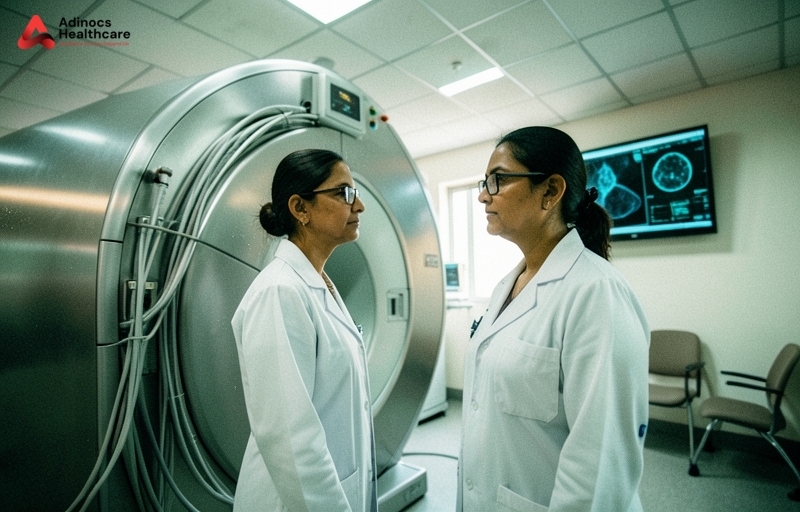
According to a 2025 Indian healthcare market study, diagnostic centres and hospitals in India lose nearly 25% of their potential annual profit to hidden equipment-related inefficiencies. What is the true cost of medical equipment in India? The short answer is that the sticker price represents only 30% to 40% of the actual lifetime expenditure. To avoid bleeding cash, you must calculate the **Total Cost of Ownership medical equipment India** requires, which includes maintenance, power, consumables, and downtime.
TL;DR: The true cost of medical equipment in India is the Total Cost of Ownership (TCO), which typically runs 150% to 200% higher than the initial purchase price over a 7-year lifecycle due to maintenance, consumables, and downtime.
What is the Total Cost of Ownership medical equipment India requires?
In 2024, a 50-bed hospital in Siliguri purchased an entry-level ultrasound machine for Rs. 12 lakh. The sticker price was highly competitive. However, within six months, they faced frequent sensor failures, high probe replacement costs, and a service contract that excluded critical parts. They ended up paying an additional Rs. 4.8 lakh in just two years. This is the classic TCO trap. Total Cost of Ownership is the comprehensive assessment of all direct and indirect costs associated with a medical device from the day you sign the purchase order to the day you decommission it. It is not just about the cheque you write today. Not at all. It is about the monthly cash flow impact for the next seven to ten years. In India, we often focus on the capital expenditure (CAPEX) because it is a fixed, visible number. Yet, operational expenditure (OPEX) is where most facilities bleed cash. A machine that is cheap to buy but expensive to run is a liability, not an asset. When you evaluate equipment, you must account for:- Consumables and reagents: Are they proprietary or open-system?
- Energy consumption: Does the machine require high-voltage stabilization or specialized cooling?
- Training costs: How much productivity is lost while your team learns a complex interface?
- Maintenance and downtime: What is the cost per hour when the machine sits idle?
Why is Total Cost of Ownership medical equipment India metrics critical in 2026?
In 2025, a pathology lab in Raipur purchased a high-throughput biochemistry analyzer for Rs. 22 lakh. Because the local power grid suffered from frequent voltage drops, the sensitive electronic boards fried twice in three months, costing Rs. 1.5 lakh per repair. They spent more on emergency repairs and power conditioning than the actual equipment financing cost. As of 2026, the regulatory landscape has tightened significantly. Under the latest CDSCO Medical Devices Rules, compliance is no longer optional. If your equipment lacks the documentation for NABL or NABH audits, you face the risk of losing your certification. This is a massive blow to your reputation and revenue. A 2025 NABL survey indicated that 42% of Tier 2 labs faced compliance delays due to uncalibrated legacy equipment. Here's the catch. The rise of the Ayushman Bharat Digital Mission (ABDM) means your equipment must be able to push HL7-compliant data directly into the national ABDM registry via secure APIs. If your legacy machine cannot handle digital integration, you are looking at an expensive upgrade or a complete replacement sooner than planned. Every moment your equipment is down, you are not just losing the scan fee. You are losing the patient to the lab across the street. Every time. We have detailed how this impacts your bottom line in our guide on why equipment bottlenecks cost Indian labs millions.Key Components of Medical Equipment TCO in India
Consider a diagnostic chain in Patna that bought three CT scanners in 2023. While the initial capital outlay was Rs. 1.8 crore, their operational expenses over three years reached Rs. 1.2 crore due to tube replacements and high electricity bills. This represents a massive operational burden that was completely left out of their initial budget.| Cost Category | Description | Impact Level |
|---|---|---|
| Acquisition | Purchase price, taxes, shipping, installation | Low (One-time) |
| Maintenance | AMC, CMC, spare parts, software updates | High (Recurring) |
| Operational | Reagents, electricity, specialized staff | Very High (Daily) |
| Downtime | Lost revenue, patient referral costs | Critical (Variable) |
How to Calculate and Reduce TCO for Your Diagnostic Lab?
In early 2025, a diagnostic lab in Bhubaneswar reduced its annual operational leakage by 18% simply by auditing their hematology analyzer's per-test cost. They realized they were spending Rs. 45 more per test on proprietary reagents than they would have on an open-system analyzer. If you want to improve your margins, you have to stop looking at equipment as a single transaction. Follow these four steps to get a handle on your numbers:- Map the Lifecycle: Estimate the expected life of the device (typically 5-7 years). Do not assume it will run perfectly for 10 years without major part replacements.
- Calculate Per-Report Cost: Take the total estimated cost (purchase + maintenance + consumables) and divide it by the number of tests you expect to perform over that period. If the cost per report is higher than your market price, the investment is a net loss. Are you actually tracking the cost of every single reagent flush?
- Factor in Downtime: Calculate your average daily revenue from that machine. If it breaks down for 10 days a year, that is 10 days of lost revenue plus the cost of the repair.
- Evaluate Support Speed: A machine from a vendor based in Bangalore might be cheaper, but if their engineer takes 48 hours to reach your lab in Siliguri, the TCO skyrockets due to lost business.
Strategic Procurement: Beyond the Purchase Price
A cardiology clinic in Ranchi recently negotiated a 5-year Comprehensive Maintenance Contract (CMC) capped at 6% of the purchase price, saving Rs. 14 lakh in unexpected repair bills. This proactive negotiation completely changed their financial outlook. When you sit down to sign the purchase order, ask your vendor the hard questions. Do not let them distract you with talk of high-resolution 4D imaging matrices or AI-driven auto-contouring. Ask about the cost of the next software update. Ask about the price of the proprietary sensors. Ask for a reference from a lab in your region that has used the machine for at least three years. In our work with over 200 labs, we have found that the most successful owners prioritize flexibility. They avoid large upfront capital blocks. Instead, they look for models that allow them to scale. This is why subscription-based models or pay-per-report pricing are gaining traction. They shift the risk from you to the vendor. If the machine is down, you do not pay. That is the kind of alignment you need in 2026. As you plan your next upgrade, make sure you are also thinking about the end of the machine's life. Proper planning for the exit is just as important as the entry. Worth knowing. You can read more about this in our Medical Equipment Decommissioning Guide for Indian Labs 2026.Key Takeaways
- Look beyond the sticker price: TCO includes maintenance, energy, and lost revenue during downtime.
- Prioritize local support: A machine is only as good as the technician who can fix it within 4 hours.
- Calculate per-test costs: Ensure your operational costs do not exceed your profit margins per report.
- Demand transparency: Ask vendors for the cost of consumables and software updates before signing the deal.
- Consider pay-per-use: Reducing upfront CAPEX lowers your financial risk and improves cash flow.
Frequently Asked Questions
Why is the cheapest medical equipment price in India often a trap?
A lower purchase price often comes with higher maintenance costs, expensive proprietary reagents, or slower service response times. This significantly increases your long-term TCO. For example, a cheap biochemistry analyzer might require Rs. 2 lakh in proprietary reagents annually, wiping out any initial savings within 12 months.What is the cost of NABL equipment calibration for a small Indian lab?
NABL calibration costs typically range from Rs. 5,000 to Rs. 25,000 per device annually, depending on the complexity of the instrument. Choosing equipment that comes with built-in compliance features or easy-to-export data logs will save you thousands in administrative man-hours and potential audit fines.How much revenue does a diagnostic lab lose per day during MRI downtime?
A typical Tier 2 diagnostic lab in India can lose between Rs. 30,000 and Rs. 80,000 per day during MRI downtime. When a machine stops, you lose the immediate scan revenue, damage your reputation with referring doctors, and often have to pay a premium for expedited repairs.Which is better for a Tier 2 Indian lab: AMC or CMC?
For critical, high-use equipment like CT scanners or high-throughput analyzers, a Comprehensive Maintenance Contract (CMC) is usually better because it covers both labor and expensive spare parts. For low-risk or simple equipment, an Annual Maintenance Contract (AMC) covering only labor may suffice, but the trade-off is high out-of-pocket costs if a major component fails. For hospital administrators and lab owners who want to avoid the pitfalls of high TCO, Adinocs Healthcare provides a different approach. We offer sub-specialist teleradiology services and equipment solutions designed for the Indian market, focusing on pay-per-report models that eliminate the burden of massive upfront investment. Our team provides on-ground support across Eastern India, ensuring your facility stays operational without the hidden costs that plague traditional procurement. Talk to our teleradiology team today at Adinocs Healthcare to get a free workflow audit and see how our pay-per-report model can slash your equipment overhead.Data sources: CDSCO Medical Devices Rules (2017/2020 updates), NABL Guidelines for Equipment Calibration, and industry operational benchmarks for Indian diagnostic facilities (2026).