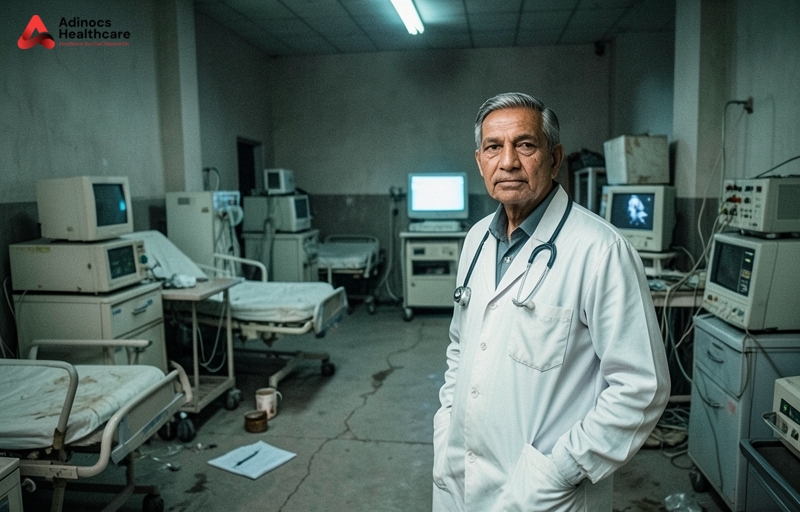
How do you safely and legally retire obsolete diagnostic assets in 2026? According to a 2025 CPCB compliance report, over 42% of Indian diagnostic facilities fail to retire their clinical hardware correctly, risking massive regulatory fines. Proper medical equipment decommissioning India requires a structured process of decontamination, data sanitization, regulatory de-registration (AERB and PC-PNDT), and certified e-waste disposal. Skipping these steps can lead to loss of NABL accreditation, data breaches under the DPDP Act, or even criminal charges.
The short answer: Medical equipment decommissioning in India requires a structured process of data sanitization, regulatory de-registration (with AERB and PC-PNDT authorities), and certified e-waste disposal. Skipping these steps risks heavy financial penalties, data breaches under the DPDP Act, and environmental lawsuits.
What is Medical Equipment Decommissioning India and Why Does it Matter?
A pathology lab in Siliguri recently upgraded its chemistry analyser. The old unit sat in a damp corridor for nine months. Reagent residue slowly leaked. It pooled on the floor. A junior technician slipped, suffering severe chemical burns. The local pollution control board issued a show-cause notice within 48 hours. This is not an isolated incident. It happens across India every week. Every single week.
Decommissioning is not just throwing away old gear. It is the systematic, safe, and fully documented removal of a medical device from active service. It involves decontamination, data wiping, physical dismantling, and certified disposal. Many owners think donating retired equipment to charitable trusts in Tier 3 towns is a noble, risk-free move. It is not. Why take that risk? If that donated machine lacks proper maintenance records or leaks patient data, your facility can still be held legally liable for subsequent mishaps. True philanthropy requires a formal transfer of liability, which is rarely done correctly.
Why does this matter so much right now? Rapid obsolescence. Labs are upgrading faster than ever to stay competitive. A 2025 market study showed that Indian diagnostic labs replace their primary analysers every 4.2 years on average, leaving thousands of older units in legal limbo. To understand how to navigate these upgrades, you can read our guide on How to Manage Diagnostic Equipment Obsolescence in India?. If you do not decommission your old assets properly, you waste valuable square footage, pay unnecessary insurance premiums, and expose your business to severe litigation.
What are the Key Regulations for Medical Equipment Decommissioning India in 2026?
A 50-bed hospital in Asansol recently faced a Rs. 5 lakh penalty. Their offence? They sold a broken X-ray machine to a local scrap dealer. The dealer dismantled it without safety gear. Hazardous lead and beryllium components spilled. The government tracked the serial number back to the hospital. The rules are clear. Yet, many administrators remain blissfully unaware of them. Not anymore.
The regulatory framework for diagnostic equipment disposal regulations India is strict and multi-layered. You cannot treat medical hardware like standard office waste. Three major regulatory frameworks govern this process in 2026:
- E-Waste Management Rules 2022 medical devices: Enforced by the Central Pollution Control Board (CPCB), these rules classify medical devices under specific electrical and electronic waste categories. Under the 2022 rules, medical devices are categorized under Schedule I. Labs must file Form-2 annually by June 30th to report their e-waste inventory. Labs must hand over decommissioned electronic equipment only to CPCB-authorized recyclers. You must maintain Form-2 logs to prove where every gram of e-waste went.
- AERB decommissioning radiology India: The Atomic Energy Regulatory Board (AERB) mandates that any equipment emitting ionizing radiation (like CT scanners, mammography units, or X-ray machines) must be formally decommissioned through the e-LORA portal. You cannot simply turn off the machine and sell it. You must submit a decommissioning application, prove the radiation source is safe or disposed of, and get approval before physical dismantling begins. AERB guidelines require a certified Radiological Safety Officer (RSO) to oversee the decommissioning of any source-based equipment.
- PC-PNDT ultrasound disposal India: Under the Pre-Conception and Pre-Natal Diagnostic Techniques Act, ultrasound machines are tightly tracked to prevent misuse. If you are retiring an old ultrasound machine, you must inform your district's Chief Medical Officer (CMO) in writing. You must provide the serial number, the name of the buyer (if selling), or proof of destruction from an authorized recycler. Selling or scrapping an ultrasound without official notification can lead to the immediate sealing of your diagnostic centre. In 2025, over 120 clinics across Maharashtra and Uttar Pradesh were sealed due to unregistered ultrasound transfers.
Here is a quick comparison of the regulatory requirements for different equipment types:
| Equipment Type | Primary Governing Regulation | Key Authority | Mandatory Decommissioning Action |
|---|---|---|---|
| CT Scanners, X-Ray, Mammography | AERB Safety Code | Atomic Energy Regulatory Board (AERB) | De-registration on e-LORA portal; radiation safety verification. |
| Ultrasound Machines | PC-PNDT Act | District Appropriate Authority (CMO) | Prior written notification; transfer of ownership or destruction certificate. |
| Biochemistry Analysers, Hematology Systems | E-Waste Management Rules 2022 | State Pollution Control Board / CPCB | Disposal through CPCB-authorized recycler; Form-2 filing. |
| Reagents & Chemical Waste | Bio-Medical Waste Management Rules | State Pollution Control Board | Neutralization and disposal through authorized BMW partners. |
How to Ensure Data Sanitization and Security During Equipment Retirement?
A pathology lab in Guwahati learned a hard lesson last year. They auctioned off three old laboratory information system (LIS) terminals. A local buyer recovered the hard drives. Within weeks, the medical histories, Aadhaar numbers, and phone numbers of over 8,000 patients were leaked online. The lab faced a massive public relations disaster. They also faced severe legal action under the Digital Personal Data Protection (DPDP) Act. The penalty? Up to Rs. 250 crore under the new framework.
Modern diagnostic machines are essentially specialized computers. They store vast amounts of Protected Health Information (PHI). Simply deleting files or formatting the hard drive does not work. Anyone with basic recovery software can retrieve that data. You must implement strict data sanitization medical devices India protocols before any machine leaves your facility.
Here's the catch:
- Physical Destruction: For older hard drives that cannot be securely wiped, physical shredding or degaussing (using strong magnets to disrupt the drive's magnetic field) is the safest route.
- Cryptographic Erasure: For modern solid-state drives (SSDs) found in high-end imaging systems, cryptographic erasure sanitizes the target data by destroying the decryption keys.
- Software Overwriting: Use industry-standard data wiping software that overwrites the entire drive with random patterns multiple times.
- Certificate of Destruction: Always demand a formal, serial-number-specific Certificate of Data Sanitization from your IT vendor or disposal partner. Keep this certificate in your compliance audit file.
Are you willing to risk your reputation over a 500-rupee hard drive? The trade-off: secure data sanitization takes time and costs money. But skipping it is a massive gamble. With the DPDP Act now fully active, the cost of improper equipment disposal India is no longer just about environmental fines. It is about protecting your brand from ruinous data breach penalties.
What are the Financial Implications of Medical Equipment Decommissioning India?
A diagnostic chain in Bengaluru saved Rs. 4 lakh by hiring an uncertified local contractor to haul away their old MRI chiller. Two weeks later, they were hit with a Rs. 12 lakh lawsuit. The contractor had dumped the hazardous coolant in a suburban lake. What seemed like a smart cost-saving measure turned into a financial nightmare. Every time.
Consider the alternative. What is the actual cost of improper equipment disposal India? Let us break down the potential financial drain for a typical mid-sized diagnostic centre:
- Environmental Fines: Violating the E-Waste Management Rules can result in fines ranging from Rs. 50,000 to Rs. 5 lakh per instance, along with potential closure orders from the State Pollution Control Board.
- PC-PNDT Violations: Failing to report an ultrasound disposal can lead to a fine of up to Rs. 50,000 and imprisonment for up to three years for the directors or owners.
- Loss of NABL Accreditation: NABL audits require clear equipment logs. If you cannot produce disposal certificates for retired assets, you risk losing your accreditation. This can halt your corporate tie-ups and reduce daily revenue by 40% or more. To see how operational bottlenecks affect your revenue, read about Why Equipment Bottlenecks Cost Indian Labs Millions.
- Real Estate Waste: Keeping dead machines in your facility costs money. If you pay Rs. 150 per square foot for rent in a commercial area like Salt Lake, Kolkata, a bulky, unused MRI machine occupying 200 square feet wastes Rs. 30,000 every single month. That is Rs. 3.6 lakh annually down the drain.
Plot twist: Compliant decommissioning can actually recover value. Many components in older analysers and imaging systems have resale or scrap value. Copper, high-grade plastics, and certain optical components can be salvaged. Some manufacturers offer trade-in discounts when you upgrade. By planning your retirement cycle, you can offset the cost of new diagnostic tools, such as those highlighted in our article on 5 POCT Devices Transforming Indian Diagnostic Labs.
Best Practices for a Smooth Medical Equipment Decommissioning Process?
A 120-bed multi-specialty hospital in Patna successfully retired their old 1.5T MRI and three ultrasound systems in late 2025. By following a structured decommissioning protocol, they secured Rs. 12 lakh in salvage value. They also ensured complete data sanitization of over 15,000 patient records. Their AERB de-registration was completed within 45 days. They avoided a potential Rs. 8 lakh fine for improper hazardous waste handling by using a certified CPCB recycler. You can achieve the same results. Easily.
Here is the step-by-step roadmap to ensure a compliant and hassle-free decommissioning process at your facility:
- Create an Asset Retirement Plan: Identify which machines are nearing their end-of-life at least six months in advance. Do not wait for a machine to break down completely before planning its exit.
- Perform Decontamination: Ensure clinical staff thoroughly clean and decontaminate all surfaces. This is critical for laboratory analysers that have been in contact with blood, reagents, or other biohazardous fluids. Document this step with a signed decontamination certificate.
- Sanitize All Data: Wipe all local hard drives, storage media, and connected workstations. Ensure no patient names, scan files, or billing records remain on the device.
- Notify Regulatory Bodies: Submit the necessary applications to the AERB (via e-LORA) or your local PC-PNDT authority. Wait for formal clearance before moving the equipment.
- Select a Certified Partner: Do not hire local scrap dealers. Partner only with CPCB-authorized e-waste recyclers who specialize in medical devices. They must provide you with a green channel disposal certificate.
- Update Asset Registers: Remove the equipment from your active asset register, cancel any ongoing AMC (Annual Maintenance Contract) agreements, and notify your insurance provider to stop premium payments.
Key Takeaways
- Compliance is non-negotiable: Environmental, radiation, and data privacy laws in India carry heavy financial and criminal penalties for improper equipment retirement.
- Data security comes first: Always perform complete data sanitization on all storage media to comply with the DPDP Act 2023.
- Use certified channels: Only dispose of electrical medical devices through CPCB-authorized recyclers and obtain official certificates of destruction.
- Regulatory de-registration is mandatory: Ensure you complete all e-LORA (AERB) and PC-PNDT notifications before physically dismantling imaging systems.
- Decommissioning saves money: Proper retirement frees up valuable floor space, stops unnecessary AMC payments, and protects your brand from costly legal battles.
Frequently Asked Questions
Can I sell my old ultrasound machine to another clinic in India?
No. You cannot sell, transfer, or gift an ultrasound machine without prior written permission from your district's PC-PNDT Appropriate Authority. Both the seller and the buyer must submit formal transfer documents to the local CMO. Failure to do so is a direct violation of the PC-PNDT Act and can result in the sealing of your facility and prosecution.
What is the fine for violating E-Waste Rules for medical devices in India?
Fines typically range from Rs. 50,000 to Rs. 10 lakh depending on the scale of the violation and the environmental damage caused. Additionally, the State Pollution Control Board has the authority to issue closure notices to your diagnostic centre or hospital if you fail to comply with proper disposal logs.
Does factory reset delete patient data from lab equipment?
No. Standard factory resets or simple disk formatting do not destroy data permanently. Specialized data recovery software can easily retrieve patient records from formatted drives. You must use certified software overwriting, cryptographic erasure, or physical destruction of the drive to ensure complete data sanitization.
How to scrap old dental X-ray machine under AERB?
Yes. You must submit a decommissioning request on the AERB e-LORA portal for any equipment that emits ionizing radiation, including dental X-ray units. The machine cannot be dismantled or disposed of until the AERB issues a formal decommissioning clearance.
How long to keep medical equipment disposal records in India?
You should keep all decommissioning records, including certificates of destruction, data sanitization logs, and regulatory clearances, for at least five years. These documents are vital during NABL audits, tax assessments, and environmental inspections.
Partner with Adinocs Healthcare for Compliant Operations
Navigating the complex regulatory and operational steps of medical equipment lifecycles requires expertise and constant vigilance. At Adinocs Healthcare, we help Indian hospitals and diagnostic centres stay compliant, efficient, and profitable. From setting up advanced teleradiology workflows with our sub-specialist radiologists to integrating NABL-compliant Adibix LIMS software, we provide the tools you need without demanding massive upfront capital investments. We offer flexible subscription and pay-per-report pricing models that match your operational needs. Adinocs Healthcare is based in Kolkata and provides dedicated on-ground support across Eastern India, so your lab never experiences downtime. Talk to our teleradiology and LIMS team today to schedule a free demo of Adibix LIMS and secure your diagnostic workflow.
Data sources: Central Pollution Control Board (CPCB) E-Waste Management Guidelines, Atomic Energy Regulatory Board (AERB) e-LORA Portal Directives, Ministry of Health and Family Welfare (MoHFW) PC-PNDT Rules, and Digital Personal Data Protection (DPDP) Act 2023.