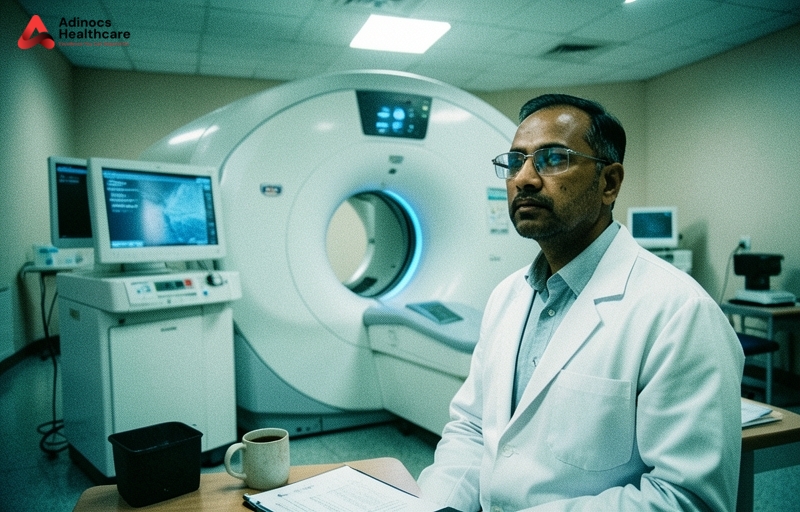
Is Your Radiology Equipment Underutilized in India?
Stop losing money on idle machines. Learn how to fix radiology equipment underutilization in India to boost your diagnostic center's ROI and revenue.
Read ArticleEquipment bottlenecks lead to long patient waits and lost revenue. Learn how Indian diagnostic labs can optimize equipment for better throughput and profitability.
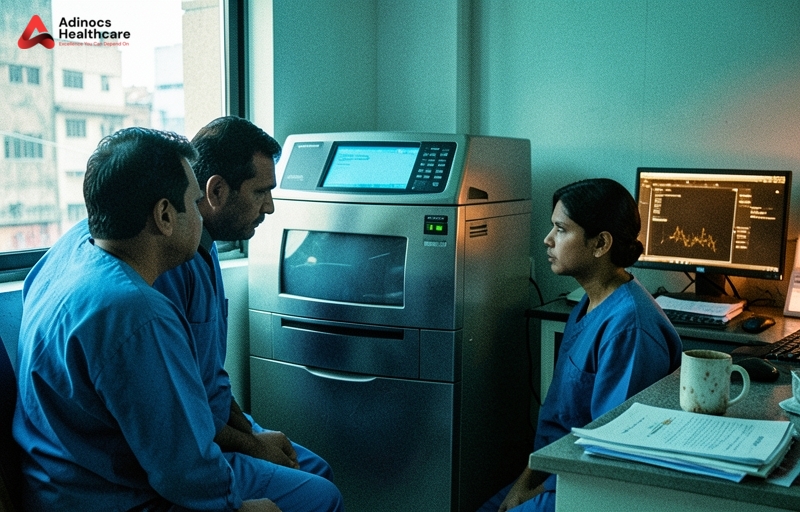
Why do equipment bottlenecks India diagnostic centers face cost millions of rupees every year? The answer is simple: they force high-value machines to sit idle, losing up to 30% of daily revenue while fixed overheads remain constant. If you run a pathology lab or a radiology clinic in 2026, you cannot afford to have your Rs. 2-crore MRI scanner or high-throughput biochemistry analyzer acting as a pacing constraint. It is a massive leak.
The short answer: Equipment bottlenecks in Indian labs are caused by poor patient scheduling, slow reporting turnarounds, and unplanned machine downtime. Resolving these bottlenecks through strategic equipment selection, automated scheduling, and sub-specialist teleradiology can increase daily patient throughput by 40% and boost monthly revenue by lakhs.
A 30-bed hospital in Patna recently installed a multi-slice CT scanner. The management expected a massive surge in daily scans. Instead, they faced a crisis. Patients were waiting up to three hours in the reception area. Why? The technician was manual-typing patient registration details, the billing desk was slow, and the radiologist was stuck in traffic. The machine sat idle for 25 minutes between scans. This is a classic equipment bottleneck. The machine itself is fast. The ecosystem around it is slow. Every time.
An equipment bottleneck occurs when any point in your diagnostic workflow chokes the capacity of your physical machines. It is not always a mechanical failure. More often, it is a failure of workflow coordination, staff training, or reporting speed. According to data from the National Health Authority (NHA) on diagnostic access under the Ayushman Bharat scheme, over 40% of high-end imaging equipment in Indian Tier 2 and Tier 3 cities operates at less than half its rated capacity due to operational inefficiencies rather than lack of patient demand. You can read more about national healthcare access frameworks on the official National Health Authority (NHA) portal.
What this means in practice: you are paying for a high-speed engine but driving it in first gear. To optimize diagnostic equipment utilization India facilities must look beyond the machine itself. You have to analyze the entire cycle. This starts from the moment a patient walks in with a prescription to the second they receive their digitally signed report. If any step in this chain drags, your expensive asset is bottlenecked.
A pathology lab in Siliguri lost three major corporate health check-up contracts in early 2026. The reason? Their automated biochemistry analyzer was constantly choked during peak morning hours (8 AM to 11 AM). Patients walked out due to long waiting times. The lab could not deliver same-day reports. This scenario is playing out across the country. The cost of long patient waits India labs face is not just a minor inconvenience. It is a direct hit to your bottom line.
Let us look at the math. If five patients walk out daily from an ultrasound or MRI clinic because of delays, that is a direct loss of Rs. 15,000 to Rs. 40,000 per day. Over a year, that translates to a loss of Rs. 45 lakh to Rs. 1.2 crore. That is money straight out of your pocket. Meanwhile, your fixed costs (staff salaries, rent, and machine EMIs) remain exactly the same. How much money are you leaving on the table?
To help you visualize this, we have compared a standard bottlenecked facility with an optimized diagnostic facility below:
| Operational Metric | Bottlenecked Lab (Average) | Optimized Lab (Target) | Operational Impact |
|---|---|---|---|
| Patient Wait Time | 90 - 120 minutes | Under 20 minutes | Drastically reduces walk-outs |
| Daily MRI/CT Throughput | 8 - 10 scans per day | 18 - 22 scans per day | Doubles daily billing revenue |
| Reagent Waste | 15% due to batch delays | Under 3% with continuous flow | Saves Rs. 1.2 lakh per month |
| Report Turnaround Time (TAT) | 24 - 36 hours | Under 2 hours (Teleradiology) | Secures repeat doctor referrals |
Patient satisfaction is highly fragile. In Tier 2 and Tier 3 cities, word-of-mouth is your primary marketing channel. If a patient tells their family that your centre made them wait two hours for a routine X-ray, you lose that entire family's lifetime value. Conversely, achieving effective patient flow optimization diagnostic imaging India standards will turn your patients into brand ambassadors.
A diagnostic centre owner in Asansol bought a refurbished 1.5T MRI scanner from an unverified broker to save Rs. 30 lakh upfront. Within three months, the cold head failed. The broker was unreachable. The machine sat dead for two weeks. Patients went to competitors. The owner learned a hard lesson: cheap equipment often comes with expensive bottlenecks.
In 2026, strategic equipment selection is about looking at the total cost of ownership (TCO) and operational reliability. When purchasing new or refurbished gear, you must evaluate the manufacturer's service network in your specific region. If you are in Eastern India, having a service engineer based in Mumbai or Bangalore is a recipe for disaster. A single day of downtime on a high-end scanner can cost you Rs. 50,000 in lost revenue.
Worth noting: you must ensure your equipment complies with the latest regulatory guidelines. The Central Drugs Standard Control Organisation (CDSCO) has tightened rules around medical device registration and maintenance. Buying non-compliant or poorly documented equipment can lead to sudden operational halts during regulatory audits.
To avoid these traps, consider flexible procurement models. Instead of locking up crores of capital in upfront purchases, look for partners who offer end-to-end solutions. This includes installation, guaranteed annual maintenance contracts (AMC), and operator training. This ensures your staff knows how to run the machines at peak efficiency from day one, preventing operational bottlenecks before they start.
A busy clinic in Pune had two high-end ultrasound machines but still faced a massive backlog. They realized the bottleneck was not the actual scanning time. It was the time patients took to drink water and fill their bladders. By setting up a dedicated "hydration lounge" with a staff member monitoring patient preparation, they increased daily scan throughput by 35% without buying a single new machine.
You do not always need to buy new gear to increase diagnostic lab capacity India. Often, the solution lies in optimizing what you already have. Here is a step-by-step action plan you can implement this week:
By focusing on these operational details, you can dramatically reduce patient wait times diagnostic center India and sweat your assets much harder.
A pathology lab chain in Patna was struggling with sample-to-report turnaround times. Their advanced chemistry analyzer was fast, but the manual entry of results into their legacy software was creating a massive backlog. Reports were delayed by 24 hours. They resolved this by upgrading to a modern, cloud-based Laboratory Information Management System (LIMS) with automated analyzer interfacing. Results now flow directly from the machine to the patient's WhatsApp, cutting turnaround times by 50%.
Here is a contrarian insight that most Indian lab owners miss: The physical machine is rarely the ultimate bottleneck. The true bottleneck is cognitive capacity. This means the speed at which qualified radiologists or pathologists can interpret images and sign off on reports. You can buy the fastest 3T MRI in the world, but if your radiologist only visits your centre for two hours in the evening, your daily throughput is effectively capped at what they can report before going home. Is your expensive scanner actually working for you, or are you working for it?
To break this bottleneck, progressive labs are turning to teleradiology and smart automation. By routing scans to a network of sub-specialist radiologists who operate 24/7, you can guarantee a 2-hour turnaround time for critical reports. This allows you to run your imaging machines late into the night and on Sundays, knowing that reports will be delivered to patients without delay.
Similarly, using a LIMS like Adibix that handles 1,000+ samples daily without lag, integrates with the Ayushman Bharat Digital Mission (ABDM), and supports ABHA creation helps automate patient registration. This reduces data entry errors at the front desk, ensuring a smooth, paperless flow of patients through your facility.
You can reduce wait times by implementing digital pre-registration, optimizing patient preparation rooms, and automating report delivery. Separating billing from registration and cross-training technicians to handle multiple machines also dramatically improves patient flow.
An average Tier 2 diagnostic centre can lose Rs. 15,000 to Rs. 40,000 per day in walk-outs and lost doctor referrals due to long wait times. Over a year, this operational leakage can easily exceed Rs. 50 lakh in lost revenue.
You can optimize utilization by conducting a time-motion study to eliminate idle time between scans, scheduling preventive maintenance during off-peak hours, and using teleradiology to ensure reports are generated continuously throughout the day.
Yes, teleradiology directly resolves the reporting bottleneck, which is the most common cause of delayed patient flow. By outsourcing reporting to a 24/7 network of sub-specialists, you can operate your scanners round-the-clock without waiting for an in-house radiologist to arrive.
Resolving operational bottlenecks requires the right mix of reliable equipment, smart software, and clinical support. At Adinocs Healthcare, we help Indian diagnostic centres and hospitals maximize their throughput and revenue. Whether you need end-to-end radiology equipment solutions with guaranteed on-ground support in Eastern India, a highly efficient LIMS like Adibix with built-in NABL compliance, or ultra-fast teleradiology reporting from sub-specialist radiologists, we have you covered. Our pay-per-report pricing and flexible subscription models mean you can scale your capacity without heavy upfront capital investments.
Ready to optimize your diagnostic operations and stop losing revenue to equipment bottlenecks? Talk to our teleradiology team today or book a free demo of the Adibix LIMS to see how we can transform your workflow.
Data sources: National Health Authority (NHA) operational guidelines, National Accreditation Board for Testing and Calibration Laboratories (NABL) maintenance standards, and Central Drugs Standard Control Organisation (CDSCO) medical device rules.
About the Author
Adinocs Healthcare
Healthcare Operations Team
Adinocs Healthcare is an Indian B2B healthcare services company based in Kolkata, providing teleradiology reporting (Adinocs), laboratory management software (Adibix), and medical equipment services. Our team works with hospitals, diagnostic centres, and pathology labs across India - from Tier-1 metros to remote Tier-3 cities - delivering on-ground support that distant Bangalore-based competitors cannot match. Articles are written and reviewed by our operations team with 15+ years of healthcare industry experience.
Join decision-makers who stay ahead with our curated articles.
No spam. Unsubscribe anytime.