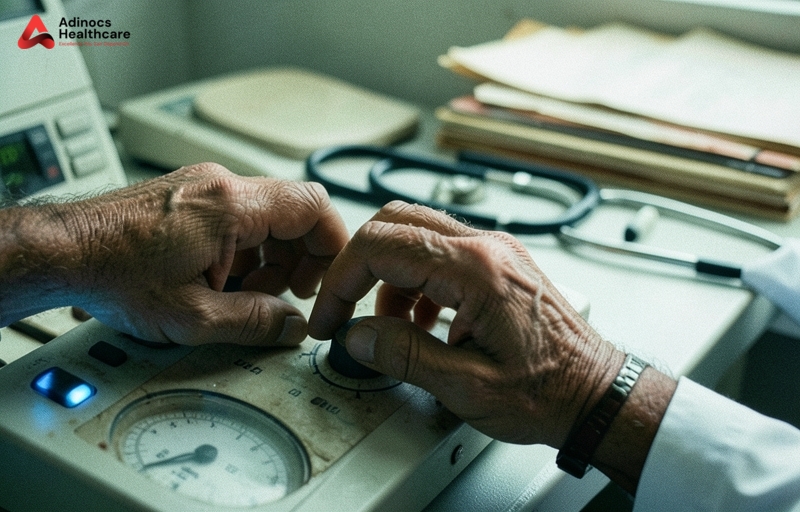
Did you know that up to 30% of an Indian diagnostic lab's annual operating budget is wasted on maintaining equipment that has passed its optimal lifecycle? If you run a diagnostic centre, you know the sinking feeling of watching a premium patient walk out because your biochemistry analyzer is down. Again. For the third time this month. Margins are shrinking. A pathology lab owner in Pune recently reported that her reagent costs jumped 18% without warning. But the real margin killer is diagnostic equipment obsolescence India. To manage this, labs must transition from reactive repairs to structured technology roadmaps, leasing models, and NABL-compliant maintenance schedules.
The short answer: Managing diagnostic equipment obsolescence India requires a structured healthcare technology roadmap that balances proactive asset lifecycle assessments, strategic leasing models, and NABL-compliant maintenance schedules. By shifting from reactive repairs to planned technology refreshes, labs can reduce operational downtime by 40% and protect their margins.
What is Diagnostic Equipment Obsolescence India and How Does It Occur?
A 50-bed hospital in Siliguri recently faced a classic dilemma. Their 8-year-old CT scanner was mechanically sound. The gantry rotated. The tubes fired. But the software ran on Windows 7. The manufacturer refused to patch it. Security vulnerability? High. NABL auditors were asking tough questions. The OEM offered a simple solution: buy a new Rs. 1.2 crore machine. Is that really the only option? Not a chance.
Many Indian lab owners think obsolescence means a machine is broken. That is a mistake. A machine is obsolete when it is no longer viable to run. This happens long before the hardware actually stops spinning. In our work with 200+ Indian labs, we see four distinct types of obsolescence. First, functional obsolescence occurs when a machine cannot perform new, clinically necessary tests. Second, technological obsolescence happens when newer machines on the market run tests in half the time at half the cost. Your old machine works, but it makes you non-competitive. Third, software and cybersecurity obsolescence is the silent killer. If your operating system is unsupported, you risk data breaches and lose compliance. Total silence.
Fourth, regulatory obsolescence is a growing threat. The regulatory environment in India is tightening. The Central Drugs Standard Control Organisation (CDSCO) frequently updates rules regarding medical device safety. If your machine cannot comply with updated standards, it is obsolete. According to the National Accreditation Board for Testing and Calibration Laboratories (NABL) guidelines, labs must maintain documented evidence of equipment performance and software validity. What this means in practice: you must look beyond the physical hardware. Managing outdated diagnostic machines India is about software, parts availability, and compliance. If you cannot get spare parts within 24 hours, your machine is obsolete, no matter how shiny it looks.
Here is a contrarian insight: most lab owners believe obsolescence is a physical hardware failure. It is not. In 2026, obsolescence is primarily a software and supply chain failure. If you are considering buying pre-owned gear to save money, you must understand the legal landscape. Read more about this in our analysis on Will India's 2026 Policy Clarify Refurbished Device Rules?.
Why Diagnostic Equipment Obsolescence India Directly Impacts Your Bottom Line
Consider a busy pathology lab in Hubli that ignored its aging biochemistry analyzer. The machine kept running, but it slowly drifted out of calibration. The lab spent an extra Rs. 85,000 on control runs and wasted reagents in just one month. That is a direct hit to the bottom line. Data from Indian healthcare operations shows that running a diagnostic machine past its optimal 7-year lifecycle increases operational costs by up to 35% annually. Why? Because older machines are inefficient. They waste reagents. They consume massive amounts of power. They require frequent, expensive calibrations. Let us look at a concrete example. An older biochemistry analyzer might require 200 microlitres of reagent per test. A modern, high-throughput analyzer might only require 100 microlitres. Over 50,000 tests a year, that difference represents lakhs of rupees literally poured down the drain.
Then there is the electricity cost. Older MRI and CT scanners run on outdated power distribution units. They draw massive amounts of current even when idle. You can learn how to mitigate these specific utility costs in our guide on 5 Ways to Cut Medical Equipment Electricity Costs in India. The trade-off: keeping an old machine to save on capital expenditure (CapEx) actually drains your operating expenditure (OpEx).
Let us compare the numbers. Here is how an obsolete analyzer stacks up against a modern alternative in 2026:
| Performance Metric | Obsolete Analyzer (8+ Years Old) | Modern Analyzer (0-3 Years Old) |
|---|---|---|
| Average Turnaround Time (TAT) | 120-180 minutes | 30-45 minutes |
| Reagent Wastage Rate | 12% to 15% | Under 3% |
| Monthly Unscheduled Downtime | 36 to 48 hours | Under 2 hours |
| NABL Compliance Risk | High (due to manual data entry) | Zero (automated LIMS integration) |
| Power Consumption (Monthly) | Rs. 45,000 - Rs. 60,000 | Rs. 18,000 - Rs. 25,000 |
Every single day you run an outdated machine, you pay a hidden tax. Your technicians spend hours manually entering data because the old machine cannot talk to your Laboratory Information Management System (LIMS). This manual entry leads to transcription errors. Serious ones. In a pathology lab, a single misplaced decimal point in a report can ruin a patient's life. It destroys your lab's reputation instantly. NABL compliance equipment upgrades are not optional luxuries. They are survival mechanisms.
How to Assess Your Lab's Equipment Obsolescence Risk in 2026?
A mid-sized diagnostic chain in Ranchi recently realized that three of their five ultrasound machines were over nine years old. They had no tracking system. They only realized the risk when a critical transducer failed, and the manufacturer told them the part was discontinued in 2024. The machine sat idle for three weeks. How do you know if a machine is a ticking time bomb? You need a systematic way to measure risk. Do not rely on gut feeling. In our consultations across Eastern India, we use a simple four-step risk assessment framework. This helps lab owners build a practical healthcare technology roadmap India. Here is how you can assess your risk today:
- Calculate the Mean Time Between Failures (MTBF): Track every single breakdown. If a machine breaks down more than twice a quarter, it is entering the high-risk zone.
- Map the End-of-Support (EOS) Dates: Contact your OEM. Ask for the exact date they will stop manufacturing spare parts for your specific model. If that date is within the next 18 months, you need an exit plan.
- Track the Maintenance-to-Value Ratio (MVR): Calculate your annual maintenance costs (including AMC/CMC and spare parts). Divide this by the current market value of the machine. If this ratio exceeds 15%, the machine is economically obsolete.
- Check Digital Compliance: Does the machine support HL7 protocols? Can it integrate with the Ayushman Bharat Digital Mission (ABDM) and generate ABHA IDs? If not, you are locking yourself out of the future of Indian healthcare.
Let us look at a real-world example. A 120-bed hospital in Patna achieved a 42% reduction in diagnostic downtime by implementing this exact risk matrix. They discovered that their aging ultrasound machine was costing them Rs. 2.5 lakh annually in repairs while generating declining revenue. They sold it, leased a new model, and saw patient satisfaction scores jump immediately. Plot twist: sometimes the risk is not the machine itself, but the lack of qualified operators in your region. A highly complex, older machine that only one retired technician in Ranchi knows how to calibrate is a massive operational risk. To understand how to manage these lifecycles step-by-step, read our in-depth guide: How Can Indian Hospitals Optimize Equipment Lifecycles?.
What are Key Strategies for Obsolescence Management in India?
A diagnostic network in Kolkata with 12 collection centres recently faced a massive cash flow crunch. They needed to replace four aging hematology analyzers but lacked the Rs. 45 lakh in capital. Instead of stalling, they adopted a phased medical equipment technology refresh India strategy. This is the smart way to play the game. You have three primary paths when managing outdated diagnostic machines India.
The first path is the structured upgrade. Instead of replacing the entire unit, negotiate with the OEM for component-level upgrades. For example, you can upgrade the workstation and software of an MRI machine while keeping the magnet. This can save you up to 60% of the cost of a brand-new system. The second path is third-party refurbishment. This is highly cost-effective if done right. Under the CDSCO Medical Devices Rules, refurbished equipment must adhere to strict quality standards. If you go this route, ensure your vendor provides a comprehensive warranty and guaranteed spare parts availability for at least five years.
The third path is shifting to a subscription or pay-per-use model. Why tie up your capital in depreciating assets? Many modern vendors offer equipment on a lease or reagent-rental basis. You pay a fixed cost per test. The vendor handles all maintenance, calibration, and eventual upgrades. Here is the catch: reagent-rental agreements often lock you into high minimum-volume commitments. If your test volume drops, you still pay the minimum guarantee. Before signing, analyze your historical test volumes carefully. Never agree to a minimum volume that is higher than 70% of your average monthly run rate.
How to Future-Proof Your Diagnostic Equipment Investments?
A pathology lab owner in Asansol once told me, "I bought a high-end immunoassay analyzer in 2021 for Rs. 18 lakh, and by 2025, it felt like an antique. The manufacturer launched a new model and stopped updating my software." This is a common tragedy. How do you prevent it? You must design a diagnostic lab future-proofing equipment strategy from day one.
First, insist on vendor-neutral software. When purchasing imaging equipment or laboratory analyzers, ensure the software can integrate with any standard LIMS or PACS (Picture Archiving and Communication System). If a vendor tries to lock you into their proprietary, closed ecosystem, walk away. Second, negotiate a "Technology Protection Clause" in your purchase contract. This clause guarantees that any software updates released within the first five years will be provided to you free of charge or at a pre-negotiated, nominal fee.
Third, integrate teleradiology and digital health platforms. If you run a radiology department, your biggest bottleneck is often not the physical X-ray or CT machine, but the availability of sub-specialist radiologists to read the scans. By outsourcing your reporting to a reliable teleradiology provider, you can run your machines 24/7 without worrying about radiologist availability or local workstation software limitations. Fourth, focus on modular hardware. Choose platforms where you can add modules (like adding an extra chemistry module to an existing immunochemistry line) as your testing volume grows. This prevents you from having to buy an entirely new system when your lab outgrows its current capacity. What this means for healthcare asset management India: stop buying machines based on the lowest initial purchase price. Calculate the total cost of ownership (TCO) over seven years, including service contracts, software upgrades, and power consumption.
Key Takeaways for Indian Lab Owners
Managing diagnostic equipment obsolescence India requires a shift from reactive panic to proactive planning. Here is your immediate action plan:
- Audit your inventory today: Identify every machine older than 5 years and map its OEM end-of-support date.
- Calculate your true cost of downtime: Track every hour a machine is offline. Multiply this by your average hourly revenue to see the real cost of delaying an upgrade.
- Negotiate software updates upfront: Never buy a machine without a contractually guaranteed software upgrade path.
- Consider pay-per-use models: Protect your capital reserves by exploring reagent-rental or equipment leasing options instead of outright purchases.
- Diversify your service providers: Do not rely solely on the OEM. Establish relationships with verified third-party biomedical engineers for faster emergency response times.
Frequently Asked Questions
What is the average lifespan of diagnostic equipment in India?
7 to 10 years is the typical operational lifespan for major diagnostic equipment like CT scanners, MRI machines, and high-throughput biochemistry analyzers in India. However, technological obsolescence often occurs within 5 to 6 years due to rapid software advancements and changing regulatory standards.
Does NABL allow outdated software on diagnostic machines?
NABL requires all software used in diagnostic testing to be validated, secure, and capable of maintaining data integrity. If your equipment runs on an unsupported operating system (like Windows 7 or older) that cannot receive security patches, it poses a major non-compliance risk during NABL audits.
Is it better to lease or buy diagnostic equipment for a new lab in India?
Leasing is generally better for high-growth labs wanting to preserve capital and avoid technology obsolescence, especially for rapid-turnover devices like immunochemistry analyzers. Outright purchase makes financial sense only for long-life, stable assets like high-end ultrasound machines or digital X-ray systems with predictable, high volumes.
How much money do Indian labs lose due to outdated equipment?
Rs. 3 lakh to Rs. 15 lakh per year is the estimated operational loss for a mid-sized Indian diagnostic laboratory running obsolete hardware. This cost includes reagent wastage, high power consumption, emergency repair fees, and lost patient revenue due to extended downtime.
Are third-party AMCs reliable for discontinued diagnostic machines in India?
Yes, third-party Annual Maintenance Contracts (AMCs) can manage obsolescence effectively, provided the service provider has a guaranteed supply chain for spare parts. For older machines where the OEM has discontinued support, independent service organisations are often the only way to keep the equipment running cost-effectively.
Conclusion
Navigating the complexities of diagnostic equipment obsolescence India does not have to be a solo journey. You need partners who understand both the clinical demands and the operational realities of running a healthcare facility in Eastern India.
At Adinocs Healthcare, we help Indian hospitals and labs optimize their technology lifecycles. Whether you need sub-specialist radiologists with a guaranteed 2-hour turnaround time through our pay-per-report teleradiology services, or you are looking to acquire reliable, end-to-end diagnostic equipment with complete installation, AMC, and operator training, we have you covered. We operate out of Kolkata, providing rapid, on-ground support across West Bengal, Bihar, Jharkhand, and the entire Eastern region.
Stop letting outdated technology drain your profits. Adinocs Healthcare is ready to help you future-proof your facility. Talk to our teleradiology and equipment team at Adinocs Healthcare today to schedule a free operational audit of your diagnostic department.
Data sources: Central Drugs Standard Control Organisation (CDSCO) Medical Devices Rules, National Accreditation Board for Testing and Calibration Laboratories (NABL) guidelines, and internal operational data compiled from 200+ Indian diagnostic facilities.