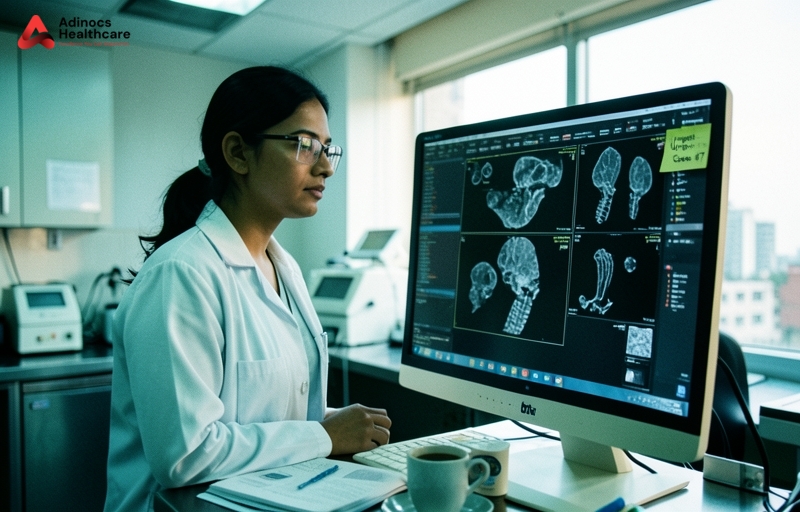
According to a 2025 Indian Journal of Pathology report, India has only one qualified pathologist for every 65,000 citizens, leaving Tier 2 and Tier 3 cities in a diagnostic crisis. How can diagnostic labs survive this acute pathologist shortage India is facing? The answer lies in combining cloud-based Laboratory Information Management Systems (LIMS) with digital pathology scanners to automate routine verifications and enable remote slide reporting. This integration allows a single pathologist to sign off on reports from multiple locations instantly, cutting turnaround times by 40%.
The short answer: Modern Laboratory Information Management Systems (LIMS) and digital pathology solve the pathologist shortage in India by automating routine tasks, enabling remote slide review, and allowing a single specialist to sign off on reports from multiple locations instantly. Implementing these tools can cut report turnaround times by up to 40% and reduce pathologist workload by half.
How Bad is the Pathologist Shortage India Faces in 2026?
In Malda, a diagnostic centre owner recently spent three months trying to recruit a full-time MD pathologist, only to have the candidate back out for a metro-city offer at the last minute. This is not an isolated incident. Every single day, labs across the country face similar hiring roadblocks. According to data from the National Health Authority (NHA), over 70% of medical decisions in India rely on diagnostic reports, yet the country faces a deficit of nearly 50,000 qualified pathologists. The crisis is not evenly distributed. While Mumbai, Delhi, and Bangalore have clusters of highly specialized doctors, Tier 2 and Tier 3 cities are starved of talent. If you operate a lab in Malda or Asansol, you already know this pain. You either pay exorbitant salaries to fly in a pathologist from Kolkata twice a week, or you delay your reports. Neither is sustainable.
The real bottleneck? It is not just the lack of pathologists. It is how we use their time. A typical Indian pathologist spends up to 90% of their day on non-diagnostic administrative tasks. They are manually typing patient names, checking if the lab technician entered the correct reference ranges, and signing off on completely normal CBC reports. This is a massive waste of expensive medical talent.
The pathology talent gap India faces is forcing a radical rethink of lab operations. In 2026, successful lab owners are no longer trying to solve this by simply hiring more staff. Instead, they are looking at diagnostic lab staffing solutions India can realistically support, which means making their existing pathologists three times more productive.
How LIMS Solves the Pathologist Shortage India Struggles With
A 40-bed hospital in Asansol was on the verge of losing its NABL accreditation. Why? Their single visiting pathologist could only visit for two hours a day. This led to massive typing errors in CBC and biochemistry reports. The technician manually entered machine values into Excel sheets. The pathologist signed them off in a rush. Not anymore.
This is where a modern LIMS for pathologist workload management cuts report turnaround times from 6 hours to 15 minutes. A smart system connects directly to your biochemistry and hematology analyzers. It pulls the data automatically. No manual typing. No transcription errors.
What this means: it introduces auto-verification. In any standard diagnostic lab, up to 80% of routine tests (like Hb, blood sugar, or lipid profiles) fall within normal biological reference ranges. Why should an MD Pathologist spend hours looking at normal reports? A modern LIMS can be configured to automatically verify and release these normal reports based on pre-set clinical rules. The pathologist only gets flagged for abnormal or borderline cases. This single change can reduce your doctor's daily review pile by up to 70%.
By eliminating routine paperwork, your pathologist can focus on complex cases. This direct reduction in workload is also essential for compliance. If you want to understand why manual processes fail audits, read our deep dive on Why NABL Compliance Fails Post-Accreditation in India.
Digital Pathology: Solving the Pathologist Shortage India Faces
Consider a lab in Siliguri that sends physical biopsy slides via overnight courier to Kolkata. A single rainy day during the monsoon delays the diagnosis by 72 hours, leaving an anxious oncology patient in limbo. Slides get cracked. Couriers get delayed. Patients wait. It is a broken system.
What if you could digitize the entire process? This is how digital pathology in India works in practice. Instead of physical transport, you use high-resolution slide scanners at your collection centres. The physical slide is converted into a gigapixel digital image in less than 60 seconds. This image is uploaded to a cloud-based viewer.
Your pathologist in Kolkata or Delhi can open the digital slide on a standard computer screen, zoom in to the cellular level, and write the report immediately. This is how you expand pathologist coverage. A single specialist sitting in a metro can service five different labs across Eastern India without stepping out of their office.
Let us look at how traditional pathology compares to digitized, remote pathology reporting India is adopting in 2026:
| Parameter | Traditional Pathology Workflow | Digital Pathology (LIMS + Scanners) |
|---|---|---|
| Average Turnaround Time (TAT) | 24 to 48 hours (due to slide transport) | 2 to 4 hours (instant digital upload) |
| Pathologist Location Requirement | Must be physically present at the lab site | Can report from anywhere in India via secure cloud |
| Monthly Courier & Transport Costs | Rs. 15,000 to Rs. 40,000 per location | Zero (replaced by standard internet bandwidth) |
| Risk of Slide Damage or Loss | High (breakage, fading, staining errors) | Zero (permanent, secure digital backup) |
| NABL Compliance & Auditing | Manual slide retrieval takes hours | Instant digital search and retrieval |
This shift is not just about speed. It is about survival. If your competitor down the road offers a 4-hour biopsy report while you take 3 days, your referring doctors will switch. It is that simple.
Ensuring Diagnostic Quality with Fewer Pathologists
In 2026, the discussion around AI in pathology labs India has shifted. It is no longer about 'will it replace doctors?' but 'how fast can it help them work?'. The reality is simple. AI is not a replacement. It is a highly efficient assistant.
When you have a limited number of pathologists, the risk of diagnostic error increases due to fatigue. A pathologist looking at their 80th slide of the day is far more likely to miss a tiny cluster of malignant cells than they were at 9:00 AM. AI algorithms solve this by pre-screening digital slides.
The AI scans the digital image first. It highlights areas of concern, counts mitotic figures, and pre-classifies the tissue. When the pathologist opens the slide, the system guides their eyes to the most critical zones. This ensures high diagnostic quality even when your staff is stretched thin.
Here's the catch: software is only as reliable as your quality control. If your lab is struggling with basic test accuracy, no amount of AI will save your reputation. To understand how quality control impacts your bottom line, take a look at our analysis on Why Poor EQAS Costs Indian Labs Millions Annually.
Implementing Smart Tech: A Roadmap for Indian Labs
How does a mid-sized lab in West Bengal actually transition to this digital model without going bankrupt? You do not need to buy five expensive slide scanners on day one. A step-by-step rollout is much safer. It protects your cash flow.
Here is a practical, step-by-step roadmap you can implement starting this month:
- Upgrade your LIMS first: Replace your legacy, offline lab software with a cloud-based LIMS like Adinocs Healthcare's Adibix. This connects your systems to auto-verification, analyzer interfacing, and multi-centre data consolidation.
- Automate your pre-analytical stage: Reduce manual sample handling errors. If you are curious about the role of automated hardware, read about how labs are asking Can Robotics Solve Indian Pathology Lab Efficiency Issues?.
- Identify your high-volume slide sources: If histopathology and cytology make up less than 10% of your revenue, do not buy a scanner yet. Instead, partner with a digital pathology network that provides scan-as-a-service or use a low-cost manual camera attachment for your existing microscope.
- Establish remote reporting protocols: Ensure your remote pathologists are registered with the National Accreditation Board for Testing and Calibration Laboratories (NABL) and that their digital signatures are securely integrated into your LIMS.
- Monitor and optimize: Track your TAT weekly. You should see a drop of at least 30% within the first month of automating your workflows.
Key Takeaways for Lab Owners
- The shortage is permanent: The pathologist shortage India is facing will not be solved by new graduates alone. Digital workflows are the only viable way to expand pathologist coverage.
- LIMS is your foundation: A smart LIMS reduces pathologist workload by up to 70% through automated analyzer interfacing and clinical auto-verification rules. No more manual data entry.
- Geography is no longer a barrier: Digital pathology allows you to hire top-tier specialists from Kolkata or Delhi to report for your labs in Tier 2 and Tier 3 towns. Instantly.
- AI is an assistant, not a replacement: AI in pathology labs India helps tired doctors maintain diagnostic accuracy by pre-screening slides and highlighting critical zones.
- Start small, scale fast: Begin by upgrading your software to a cloud-based LIMS before investing in heavy digital hardware.
Frequently Asked Questions
Is digital pathology legal and NABL-compliant in India?
Yes. Digital pathology is fully recognized by NABL under specific guidelines for telepathology. The primary requirement is that the digital system must be validated, and the remote pathologist must use a high-resolution, calibrated monitor to ensure diagnostic accuracy. Your LIMS must also maintain a secure, tamper-proof audit trail of all digital signatures.
How much does a digital pathology setup cost in India?
The cost varies depending on your approach. A high-throughput automatic slide scanner can cost between Rs. 15 lakh to Rs. 40 lakh. However, many labs in 2026 avoid this upfront cost by opting for pay-per-use scanning models or starting with cloud-based LIMS automation, which requires no heavy hardware investment and costs only a small monthly subscription fee.
Can LIMS replace a physical pathologist in a small lab?
No. A LIMS cannot replace a pathologist because a qualified medical professional must still interpret abnormal results, make complex diagnoses, and legally sign off on reports. However, a LIMS drastically reduces the physical time a pathologist needs to spend in your lab by automating routine tasks and enabling secure remote sign-offs.
What is the turnaround time for remote pathology reporting in India?
Remote reporting can reduce your turnaround time for complex biopsies from 3 days down to less than 4 hours. Once the slide is scanned at your local centre, it is instantly accessible on the cloud, allowing a remote specialist to review and sign off on the report immediately.
In 2026, slow diagnostic operations will destroy your lab's reputation. If you are struggling to find, pay, or retain qualified pathologists, continuing with manual workflows is a recipe for operational failure. By integrating a smart LIMS with digital pathology, you can turn your staffing bottleneck into a faster turnaround time that wins over local doctors. At Adinocs Healthcare, we help Indian diagnostic labs and hospitals navigate this transition. From implementing our NABL-compliant Adibix LIMS to setting up end-to-end digital reporting workflows with zero upfront investment, we provide the on-ground support you need in Eastern India. Book a free demo of Adibix LIMS today to see how we can help you scale your operations.
Data sources: National Health Authority (NHA) reports, NABL guidelines, and Indian healthcare operational studies (2025-2026).