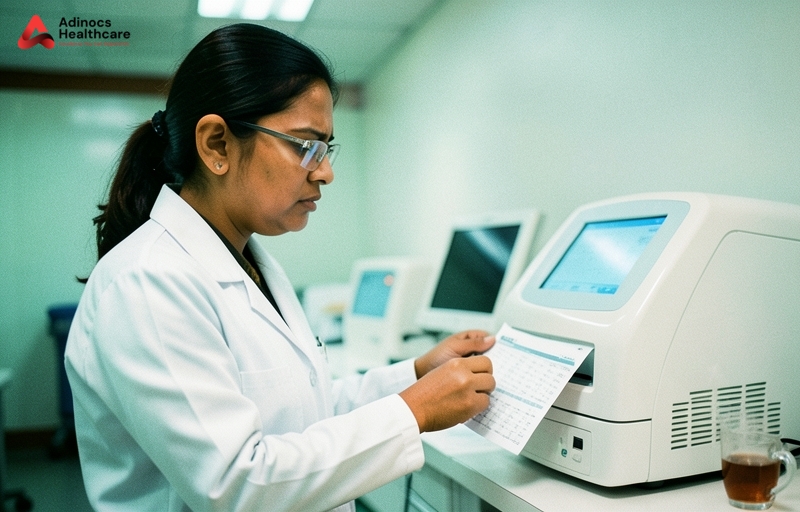
Most diagnostic centres in India lose between 15% and 25% of their annual revenue due to hidden rework costs, patient churn from incorrect reports, and the high price of re-testing samples. A massive leak. If you run a pathology lab, you understand that a single wrong result doesn't just damage your reputation; it creates a financial hole that takes months to recover from. External Quality Assurance Scheme (EQAS) for Indian diagnostic labs is often treated as a box-ticking exercise for accreditation, but in reality, it is the most powerful tool you have to protect your bottom line.
The short answer: Poor EQAS causes systemic diagnostic errors that lead to repeat testing costs, loss of NABL accreditation, and severe patient attrition. Investing in an automated quality assurance system that flags outliers in under 2 seconds is not an expense but a critical safeguard for your lab's financial health.
What is EQAS and Why Does it Matter for Indian Labs?
Imagine a 50-bed hospital lab in Siliguri that processes 300 samples a day. One Tuesday, the biochemistry analyzer drifts, but the internal controls don't catch it. The lab releases 40 reports before a doctor calls to complain about a patient's erratic blood glucose level. Now, the lab must recall those 40 patients, re-run all tests for free, and manage the fallout of a damaged brand. Pure chaos. This is where the External Quality Assurance Scheme (EQAS) for Indian diagnostic labs becomes the difference between a thriving business and a failing one. At its core, EQAS is a system for objectively checking your lab's performance against other laboratories using blind samples. While internal quality control tells you if your machine is working *now*, EQAS tells you if your results are *accurate* compared to the rest of the country. According to the National Accreditation Board for Testing and Calibration Laboratories (NABL), maintaining external quality benchmarks is mandatory for labs seeking and sustaining accreditation. Without consistent EQAS participation, you are essentially flying blind. You might think your results are precise. But what if your lab in a Tier 2 city like Ranchi is consistently reporting 5% higher than the national mean for a common analyte? You are providing clinically misleading data. This isn't just a technical failure; it is a business liability. If you are interested in how automation helps, you might want to read our analysis on 5 Ways Digital Pathology Boosts Indian Lab Quality.How Poor EQAS Directly Impacts Lab Revenue & Costs?
Think about a diagnostic chain owner in Vijayawada who recently told me, "I spend more on re-running samples due to doctor complaints than I do on my yearly reagent contracts." He wasn't exaggerating. When your EQAS results show a high Coefficient of Variation, it is a warning sign that your lab is bleeding cash. Every single error is a line item on your loss statement. The financial impact of poor quality assurance manifests in three ways:- Direct Re-run Costs: Every time you re-test a sample, you are using double the reagents and double the technician time. If your error rate is even 3%, a lab processing 10,000 tests a month is losing upwards of Rs. 50,000 to Rs. 1.2 Lakhs every year in wasted consumables alone.
- Patient Attrition: In the competitive Indian healthcare market, patients are vocal. A single incorrect diagnosis shared on social media or reported back to a referring physician can cost you dozens of future referrals. The cost of acquiring a new patient is 5x higher than retaining an existing one. Worth noting: one bad review on Google Maps can drop your monthly walk-ins by 10%.
- Regulatory Penalties and Accreditation Loss: If you lose your NABL status, you lose your empanelment with government schemes like Ayushman Bharat or corporate health insurance providers. This can lead to a 30-40% drop in revenue overnight. Not a risk worth taking.
How does EQAS for Indian diagnostic labs affect NABL accreditation in 2026?
A diagnostic lab owner in Guwahati recently faced a surprise audit. His documentation was perfect, but his EQAS participation log was spotty. He was issued a non-conformance report immediately. Under the NABL 112 guidelines, participation in an approved EQAS program is a non-negotiable requirement for ISO 15189 compliance. In 2026, the regulatory environment in India has tightened significantly. The Ministry of Health and Family Welfare is pushing for stricter quality standards across all diagnostic facilities to ensure patient safety. If you don't have a systematic approach to EQAS, you aren't just risking an audit failure; you are failing to meet the basic standard of care expected by the Indian public. Do you really want to be the lab that fails a surprise audit?| Metric | Low-Quality Lab | High-Quality (NABL Compliant) Lab |
|---|---|---|
| EQAS Participation | Ad-hoc/Reactive | Scheduled/Proactive (Monthly/Quarterly) |
| Re-run Rate | Greater than 5% | Less than 1% |
| Staff Accountability | Manual/Non-existent | Automated/LIMS-tracked with timestamps |
| Referral Physician Trust | Low (Frequent queries) | High (Zero-query reports) |
| Audit Readiness | Panic-driven prep | Always-ready digital logs |
What are the best ways to manage EQAS without increasing staff workload?
I once visited a diagnostic facility in Indore that had cut their error rate by 40% in six months. They didn't buy a new machine. They simply implemented a strict, digital-first protocol for handling EQAS samples. They stopped treating quality as a "chore" and started treating it as a data stream. Here is how you can do the same:- Assign a Quality Champion: Do not delegate EQAS to a junior technician. Make your most experienced lab manager responsible for tracking EQAS cycles and investigating every outlier immediately. One person. One point of accountability.
- Automate the Workflow: Use your LIMS to flag any sample that falls outside the 2-standard-deviation mark. Manual tracking is prone to human error and deliberate "smoothing" of data. What this means: your system should alert you the moment a result is suspicious, not three weeks later when the report arrives.
- Root Cause Analysis (RCA): When an EQAS report shows a failure, don't just re-calibrate. Conduct a formal RCA. Was it a reagent batch issue? A technician error? A temperature fluctuation in the storage unit? If you don't find the "why", the error will return. Every time.
- Integrate with Staff Training: Use EQAS results as a training tool. If a specific shift is consistently showing higher variance, that is where your training efforts should be focused.
Which EQAS provider is best for small to mid-sized Indian labs?
Consider a small lab in a remote district of West Bengal. They signed up with a global provider that offered a "prestigious" certificate. However, the samples arrived thawed because the cold-chain logistics failed in the heat of May. The results were useless. The lab paid thousands of rupees for a failed cycle. This is a common trap. You need a partner that understands the unique challenges of the Indian climate and logistics network. A lab in a remote district faces different hurdles than one in a large city like Kolkata. When evaluating providers, ask these three questions:- Are they NABL/ISO 17043 accredited? If the provider isn't accredited, your participation won't count for your own NABL audit. Period.
- Is the turnaround time fast? If it takes two months to get your results back, the data is useless for corrective action. You need results within 10-15 days to make real changes.
- Do they provide actionable insights? A good provider gives you a detailed report that helps you identify specific instrument drift or technician bias, rather than just a "Pass/Fail" grade.
Key Takeaways
- EQAS is a financial tool: It prevents the massive losses associated with re-runs, poor reputation, and loss of accreditation.
- Don't just collect certificates: Use EQAS data to identify and fix operational gaps before they lead to patient complaints.
- Automate your quality: If your LIMS doesn't track quality trends, you are working harder, not smarter.
- Focus on RCA: A failed EQAS cycle is a learning opportunity. Use it to train staff and refine your SOPs.
- Proactive compliance: In 2026, regulators are watching. Ensure your lab meets all NABL requirements to protect your business license.
Frequently Asked Questions
Is participating in EQAS for Indian diagnostic labs mandatory for NABL accreditation?
Yes. Participation in an NABL-approved EQAS program is a mandatory requirement for achieving and maintaining ISO 15189 accreditation for all diagnostic laboratories in India. Without it, you cannot sustain your accreditation status.How much does EQAS participation cost for a small lab in India?
Costs vary by the number of analytes and the provider, but most small labs spend between Rs. 20,000 and Rs. 75,000 annually per department. This is a fraction of the cost of a single major diagnostic error.How often should a lab perform EQAS testing?
It depends on your test volume and the specific analytes. However, most successful labs in India follow a monthly or quarterly cycle to ensure continuous monitoring of their equipment and staff performance.Does using a LIMS help with EQAS compliance?
Absolutely. An automated LIMS, such as Adibix, helps by automating the data entry process, flagging outliers in real-time, and maintaining the digital audit trail required by NABL auditors. It removes the guesswork.What is the biggest mistake labs make with EQAS?
The biggest mistake is treating EQAS as a "test" to be passed rather than a diagnostic tool for the lab itself. Many labs unfortunately try to manipulate their EQAS samples to get a "pass" grade. This completely masks underlying issues that will eventually cause a major clinical error. If you are tired of struggling with fragmented lab systems and want to bring true, data-driven quality to your facility, talk to our team at Adinocs Healthcare. We specialize in building NABL-ready infrastructure for Indian labs with our Adibix LIMS and expert support. Book a free demo of Adibix LIMS today to see how we can help you reduce your re-run costs and streamline your operations.Data sources: NABL India (nabl-india.org), Ministry of Health and Family Welfare (mohfw.gov.in), and internal analysis of Indian laboratory operational benchmarks as of 2026.