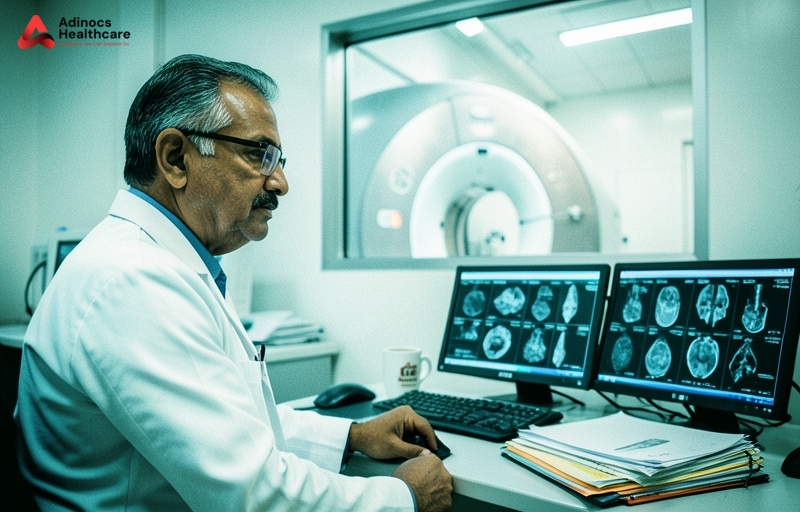
Most diagnostic centres in India lose nearly 25% of their potential radiology revenue due to equipment downtime and poor modality selection. It is a harsh reality. You spend Rs. 5 crore on a high-end MRI, only to find that your local market in a city like Ranchi or Siliguri primarily demands basic screenings and routine CT scans. The "prestige" of owning the latest machine does not pay the bank EMI. If you are looking for the best radiology equipment ROI India offers in 2026, you must stop thinking like a doctor and start thinking like a CFO. Success in the Indian diagnostic market depends on matching your clinical capability with the specific paying capacity of your local pin code.
The short answer: In 2026, Ultrasound remains the undisputed king of ROI in India due to low entry costs and high volume, while 32-slice CT scanners offer the fastest payback period for multi-specialty setups in Tier 2 cities.
How do you calculate ROI for radiology equipment in India?
A diagnostic centre owner in Asansol recently asked me why his new 128-slice CT scanner was "bleeding cash" despite seeing 15 patients a day. The problem? He only calculated the purchase price and the per-scan fee. He ignored the 12% annual maintenance increase and the staggering cost of electricity in West Bengal. Calculating radiology equipment ROI India requires a more surgical approach than a simple "cost vs. revenue" sheet.
To get a real number, you need to use the Total Cost of Ownership (TCO) model. This includes the equipment cost, civil works (lead lining is expensive!), air conditioning, staff salaries, and the often-ignored AMC/CMC (Annual/Comprehensive Maintenance Contract). In India, an AMC can easily cost 8-10% of the original equipment price every year after the warranty expires. If you bought a machine for Rs. 2 crore, you are looking at a Rs. 20 lakh annual bill just to keep it running. Not a small sum.
What this means in practice: Your "Break-Even Point" (BEP) is the number of scans you must perform just to cover these fixed costs. For a mid-range CT in a city like Patna, that number is often 12-14 scans per day. Anything less and you are effectively paying the bank to stay in business. The formula we use with our clients is: [ (Average Revenue Per Scan - Variable Cost Per Scan) x Monthly Volume ] - Monthly Fixed Costs. If that number does not clear your EMI by at least 30%, you are in the danger zone.
The trade-off: High-end machines might attract "premium" patients, but they also come with higher closed-system contrast injector costs and specialized technician requirements. Always calculate ROI based on your 70th percentile volume, not your "best day" dreams.
Which radiology modalities offer the fastest payback period?
Not all machines are created equal. In the Indian context, the "payback period" is the time it takes to recover your initial investment. Based on data from 200+ Indian facilities as of early 2026, the hierarchy of profitability has shifted. While MRI was once the "gold standard" for prestige, it is often the slowest to return capital in Tier 3 markets.
Ultrasound continues to lead the pack. With an investment of Rs. 15 lakh to Rs. 45 lakh, a busy clinic in a residential area of Kolkata can see a full ROI within 14 to 18 months. The operational costs are minimal-mostly electricity and a doctor's fee. No lead lining. No heavy-duty chillers. Just a probe and a steady stream of pregnancy and abdominal scans. It is the "cash cow" of Indian radiology.
CT scanners follow closely, but only if the modality mix optimization is handled correctly. A 16-slice or 32-slice scanner is the "sweet spot" for most Indian towns. It handles 90% of clinical needs, including trauma and basic cardiac work, without the massive price tag of a 128-slice unit. According to the CDSCO Medical Devices Rules, the regulatory compliance for CT is stricter than Ultrasound, but the revenue per patient is significantly higher.
| Modality | Average Investment (INR) | Estimated Payback Period | Typical Margin per Scan |
|---|---|---|---|
| Digital X-Ray | Rs. 15 - 25 Lakh | 24 - 30 Months | Low (Volume Driven) |
| Ultrasound (Color Doppler) | Rs. 25 - 45 Lakh | 14 - 20 Months | Very High |
| CT Scan (32-Slice) | Rs. 1.8 - 2.5 Crore | 36 - 42 Months | Medium |
| MRI (1.5 Tesla) | Rs. 5 - 7 Crore | 60+ Months | High (but high overhead) |
Worth noting: Digital X-ray has become a commodity. Unless you are running a high-volume orthopedic centre, X-ray is a "loss leader" used to bring patients in for more profitable services like CT or Ultrasound. If your X-ray machine is sitting idle for 4 hours a day, you are losing money on floor space alone.
How does patient volume in Tier 2 cities affect modality ROI?
A pathology lab owner in Durgapur once told me he wanted an MRI because "no one else in the district has one." That is a dangerous reason to buy equipment. In Tier 2 and Tier 3 cities, the most profitable radiology services India offers are those that cater to high-frequency, low-complexity needs. Why? Because the "referral ecosystem" in smaller towns is different than in Mumbai or Delhi.
In a city like Malda or Muzaffarpur, your primary volume comes from general practitioners and local nursing homes. These doctors need quick, reliable reports for common ailments. If you install a high-end MRI that requires a Rs. 8,000 patient fee to break even, but the local population can only afford Rs. 4,500, you have a "utilization gap." You will have the best machine in the district, but it will be empty 70% of the time. This is the classic trap of low equipment utilization.
Here is the catch: In smaller cities, "Turnaround Time" (TAT) is your biggest competitive advantage. If a patient travels 50km from a village to see a doctor in the city, they want their report the same day. They won't wait 24 hours. If your local radiologist is unavailable, your ROI drops because patients go to the competitor who delivers faster. This is where implementing best critical radiology TAT protocols in India 2026 becomes a financial necessity, not just a clinical one.
Plot twist: We have seen that centres in Tier 2 cities using teleradiology actually have 20% higher ROI. They don't have to pay a full-time radiologist a "hardship allowance" to live in a smaller town. They pay per report, keeping their fixed costs low while maintaining 24/7 coverage. This turns a fixed salary cost into a variable cost, which is the secret to surviving low-volume months.
What are the hidden operational costs that kill radiology profits?
The sticker price of a machine is just the tip of the iceberg. I've seen a 50-bed hospital in Berhampore nearly go bankrupt because they didn't factor in the "Helium factor" for their MRI. In 2025, global helium prices spiked, and many Indian labs were caught off guard. If your MRI "quenches" or leaks, you are looking at a Rs. 15-20 lakh bill just to refill the gas. Not to mention the lost revenue during the 10 days the machine is down.
Then there is the electricity. A CT scanner or MRI requires a dedicated transformer and a massive UPS system. In many parts of Eastern India, power fluctuations are common. If your stabilizer fails, a single power surge can fry a circuit board worth Rs. 12 lakh. According to the National Health Authority (NHA) guidelines for empanelment under Ayushman Bharat, equipment must be functional and calibrated. If your machine is down, you aren't just losing walk-in patients; you are risking your government contracts.
The most silent profit killer? No-shows. In India, patients often book appointments at three different centres and show up at the one that calls them back first or offers the lowest price. If you have a 20-minute slot blocked for a contrast CT and the patient doesn't show, that's a direct hit to your bottom line. You can't "inventory" that time; it's gone forever. Many labs are now realizing how much revenue radiology no-shows cost India and are implementing pre-payment or WhatsApp confirmation systems to protect their ROI.
Finally, don't forget the cost of "re-scans." If your technician is poorly trained, they might produce blurry images. The radiologist asks for a repeat. You've now used double the electricity, double the staff time, and possibly double the contrast media for a single billing. Training is not an "extra" cost; it is an ROI protection strategy.
How to choose the right equipment mix for a new diagnostic center?
If you are starting a new centre in 2026, do not buy everything at once. The "all-under-one-roof" model is beautiful but capital-intensive. Instead, focus on modality mix optimization. Start with the "anchors" and scale as your referral network grows. Every square foot of your facility must earn its keep.
The "Starter Pack" for a profitable Indian diagnostic centre usually looks like this:
- Premium Ultrasound: This is your primary revenue generator. Buy the best probes you can afford.
- Digital X-Ray (DR): Essential for volume and for building relationships with local clinics.
- 32-Slice CT: The workhorse. It handles everything from "Head CT" for trauma to basic chest scans for infections.
- Teleradiology Link: Instead of hiring three sub-specialists, hire one general radiologist and outsource the complex cases.
So what changed in 2026? The shift toward "Pay-Per-Use" and "Managed Services." Instead of putting Rs. 5 crore upfront, smart owners are looking for partners who provide the equipment and take a share of the revenue or a fixed fee per scan. This keeps your balance sheet light and reduces the risk of technology obsolescence. If a better machine comes out in three years, you aren't stuck with a "brick" that still has four years of EMI left.
The real question: What does this cost you per month? If your monthly outflow for equipment (EMI + AMC + Staff) exceeds 60% of your projected revenue, you need to reconsider your mix. A smaller, busier machine is always more profitable than a large, idle one. In cities like Kharagpur or Bardhaman, being "consistently good" beats being "occasionally high-tech" every single time.
Action Plan for Improving Radiology ROI
- Audit your utilization: Track exactly how many hours each machine is active. If a machine is used less than 4 hours a day, it is a liability, not an asset.
- Negotiate the CMC early: Never buy a machine without locking in the 5-year maintenance cost. The "honeymoon period" of the 1-year warranty ends very quickly.
- Implement Teleradiology: Reduce your fixed salary overhead by using a pay-per-report model for night shifts and sub-specialty cases (like Cardiac CT or Neuro MRI).
- Monitor Consumables: Use software to track the use of contrast media and films. Wastage in the darkroom or the injection suite can eat 5% of your margins.
- Focus on Referrals: In the Indian market, 80% of your business comes from 20% of the doctors. Identify them and ensure their patients get the fastest TAT.
Frequently Asked Questions
Is a refurbished MRI machine a good investment for an Indian lab?
Yes, but only if it comes with a guaranteed CMC from a reputable third-party provider. A refurbished 1.5T MRI can save you Rs. 2-3 crore in initial radiology machine investment cost India, potentially cutting your payback period by 18 months. However, ensure the "Cold Head" and "Compressor" are new, or you will face massive repair bills within the first year.
What is the most profitable radiology service in India currently?
Obstetric Ultrasound and Color Doppler are currently the most profitable services. They have the highest margin per minute of machine time and require the lowest operational overhead. While a CT scan brings in more "gross" revenue, the "net" profit after electricity, tubes, and contrast is often lower than a well-executed Ultrasound.
How does NABL accreditation affect radiology ROI?
NABL accreditation (ISO 15189) or NABH entry-level certification can actually increase ROI by 15-20% by making you eligible for premium corporate tie-ups and government schemes like Ayushman Bharat (PM-JAY). While the initial compliance cost is around Rs. 2-5 lakh, the "quality stamp" allows you to command slightly higher prices and attracts more referrals from top-tier hospitals.
Should I choose a 16-slice or 64-slice CT for a Tier 2 city?
For most Tier 2 cities in India, a 32-slice or 16-slice CT is the better financial choice. The 64-slice machine is significantly more expensive to buy and maintain (the X-ray tube replacement alone can cost Rs. 40-60 lakh). Unless you have a specific high-volume cardiac referral base, the 64-slice will not provide enough additional revenue to justify the higher EMI.
Optimizing your radiology department is not just about buying the right "box." It is about the ecosystem you build around it-the reporting speed, the maintenance reliability, and the cost-per-report. At Adinocs Healthcare, we help Indian diagnostic centres bridge this gap. Whether you need sub-specialist reporting via our teleradiology services to improve your TAT or a modern LIMS through Adibix to track your profitability, we provide the on-ground support Eastern India needs. Stop guessing your margins. Talk to our team at Adinocs Healthcare today for a free modality mix audit and see how we can help you hit your ROI targets faster.
Data sources: CDSCO Medical Device Rules 2017 (updated 2024), NABL-India Accreditation Guidelines, NHA PM-JAY Empanelment Criteria, and internal operational data from Adinocs Healthcare (2024-2026).