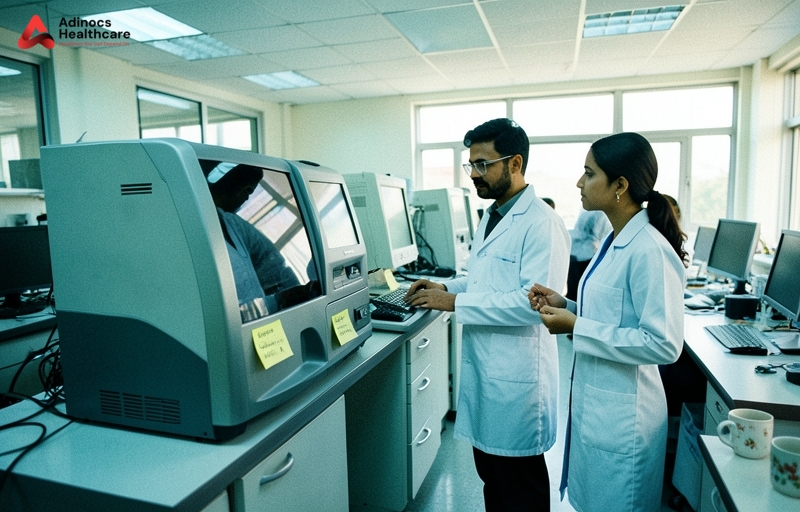
Did you know that 64% of independent pathology labs in Tier 2 and Tier 3 Indian cities delay upgrading their biochemistry analyzers because they cannot lock up Rs. 25 lakh to Rs. 50 lakh in capital? High machinery costs hurt cash flow. For many lab directors across West Bengal, Bihar, and Jharkhand, adopting the reagent rental model India suppliers offer provides a zero-down-payment way to get advanced diagnostic hardware installed immediately. But is preserving upfront capital cheaper over a 5-year lifecycle? Not always.
The short answer: A reagent rental agreement lets Indian diagnostic labs acquire fully automated chemistry or immunoassay analyzers with zero upfront capital by bundling machine equipment costs into ongoing reagent kit purchases. This model works best for emerging centers running under 60 tests daily. However, high-volume facilities processing over 100 samples a day typically pay 30% to 45% more over five years compared to outright machine purchases financed through bank loans.
What is the reagent rental model India diagnostic labs use?
Equipment vendors place an automated analyzer in your facility at zero initial purchase cost. You pay zero rupees for the physical hardware on day one. Instead, you commit to buying a fixed volume of proprietary reagents, calibrators, and quality control kits exclusively from that vendor over a 3-to-5-year term. So where does your money actually go? The vendor inflates the unit price of each reagent kit to amortize the analyzer's hardware depreciation, annual maintenance contract (AMC), and finance charges straight into your ongoing operating expenses.
Consider a 40-bed facility in Siliguri opening a dedicated pathology wing. Buying a 400-test-per-hour automated biochemistry analyzer outright requires an upfront investment of roughly Rs. 22 lakh. Under a reagent rental arrangement, the vendor installs the analyzer for free. In exchange, the lab owner signs a binding contract agreeing to purchase at least Rs. 1.2 lakh worth of reagents every month. The baseline cost per test climbs to Rs. 42 under rental terms, compared to Rs. 24 with open-system reagents on an owned unit. The machine pays for itself through your monthly testing orders. Simple math.
This structure allows growing pathology centers to run advanced immunoassay panels without waiting years to accumulate capital reserves. According to strict accreditation rules from the National Accreditation Board for Testing and Calibration Laboratories (NABL), maintaining precise calibration logs requires continuous access to manufacturer-recommended reagent kits. Rental contracts enforce these exact quality parameters by design.
How does a pay-per-test reagent rental model India setup impact monthly cash flow?
Shifting expenses from capital expenditure (CAPEX) to operational expenditure (OPEX) keeps your working capital liquid. Choosing pay-per-test options frees up funds for digital marketing in competitive centers like Patna or Asansol. You can hire senior lab technicians instead of paying heavy bank down payments. However, your per-test cost remains locked at a higher price ceiling.
The trade-off: High CAPEX for lab equipment hurts your cash balance on day one. Yet, it yields maximum profit per sample tube as your diagnostic volume grows. Reagent rentals protect your liquidity during month one. But they erode profit margins on every single patient report generated after you cross your breakeven threshold. Here's the catch: sample volume dictates your true cost.
| Procurement Parameter | Outright Purchase | Reagent Rental Model | Bank Equipment Loan (EMI) |
|---|---|---|---|
| Upfront Cash Outflow | Rs. 18 lakh - Rs. 45 lakh | Rs. 0 (Security Deposit Only) | 15% - 20% Down Payment |
| Average Cost Per Test (Reagents) | Baseline (e.g., Rs. 22) | 30% - 50% Higher (e.g., Rs. 38) | Baseline + Monthly EMI |
| Maintenance & AMC Costs | Free Year 1; Rs. 1.5-3 lakh/yr after | Included in Reagent Pricing | Free Year 1; Payable after |
| Equipment Ownership | Immediate Asset Ownership | Vendor retains ownership | Transfers after final EMI |
| Best Suited For | High volume (>100 tests/day) | Low to mid volume (<60 tests/day) | Medium volume with good credit |
What this means in practice: if your daily sample volume spikes unexpectedly, your monthly operational spending rises in direct proportion. With owned equipment running via a LIMS workflow, processing 200 daily tests drops your fixed overhead per patient result dramatically.
What are the hidden costs in reagent rental agreements?
Vendor representatives frequently label these arrangements as "free machinery." They are not free. When evaluating lab analyzer procurement strategies in 2026, healthcare executives must examine contract fine print to catch expenses that quietly erode operating profits.
Here are four specific financial traps common in Indian diagnostic contracts:
- Minimum Purchase Commitments (MPCs): Contracts enforce a mandatory monthly reagent spend, often set at Rs. 1.5 lakh or 1,200 test kits. If patient footfalls dip during monsoon months, you still pay the full minimum quota.
- Dead Volume & Calibrator Waste: Vendors calculate per-test rates based on ideal laboratory conditions. They ignore dead volume left at the bottom of sample cups, daily multi-point quality control runs, and automated system primes. That extra 15% wasted fluid comes out of your margin every morning.
- Mandatory Ancillary Consumables: Reaction cuvettes, halogen replacement lamps, wash solutions, and biohazard waste bags are frequently excluded from the base per-test quote, adding Rs. 4 to Rs. 8 per run.
- Uncapped Annual Escalations: Most 5-year contracts include clauses allowing vendors to increase reagent kit prices by 5% to 8% annually to offset currency shifts and shipping inflation.
Worth knowing: ambient climate conditions across eastern India trigger reagent degradation and rapid calibration drift. High humidity in coastal regions like Haldia or intense summer heat in Gaya causes open reagent carousels to evaporate. If your cooling system fails during a 4-hour power cut, you swallow the loss of spoiled reagent packs worth Rs. 35,000, not the distributor. Read more about protecting hardware against environmental wear in our detailed analysis on Does Indian Weather Shorten Your Equipment Lifespan?.
When should an Indian lab choose outright purchase over a rental contract?
Outright purchase wins the financial math once your facility maintains predictable, high-volume sample flow. If your laboratory processes over 80 immunoassay tests or 120 biochemistry panels every 24 hours, purchasing hardware outright lowers your total cost of ownership by 32% over a 5-year period.
Regulatory flexibility provides another major operational advantage. Medical devices imported or distributed in India must register under rules enforced by the Central Drugs Standard Control Organisation (CDSCO). Owning your analyzer gives your technical team complete freedom to source CDSCO-approved third-party open reagents. This single operational switch can slash your raw material costs from Rs. 45 down to Rs. 18 per reportable parameter.
Furthermore, owned machinery represents tangible business equity. After five years of operation, a well-maintained chemistry analyzer retains 15% to 22% trade-in value toward next-generation hardware. For practical tips on maximizing equipment equity at end-of-life, read our step-by-step guide on How to Get the Best Trade-in Value for Old Lab Gear?. If your healthcare management team is simultaneously building out imaging centers alongside core pathology wings, review How Much Does Radiology Room Shielding Cost in India? to structure capital budgets effectively across all departments.
How to negotiate better contract terms with equipment vendors?
Never sign standard vendor contract templates without counter-proposals. Equipment distributors operate with gross margins exceeding 40% on consumables and possess ample flexibility during competitive contract bids across West Bengal, Odisha, and Bihar.
- Demand a Cost-Per-Reportable-Test (CPRT) Clause: Refuse to pay for reagents by the bottle or kit box. Insist on a strict CPRT contract where your lab pays exclusively for validated patient reports. Under CPRT terms, the vendor absorbs all reagent volume spent on daily calibrations, controls, and machine re-runs.
- Cap Annual Price Escalations: Lock annual reagent price increases at a hard cap of 3%, or link rate revisions directly to official RBI wholesale price index trends.
- Enforce Uptime Guarantees and Penalties: Stipulate a mandatory 98% operational uptime benchmark in the service level agreement (SLA). Require the distributor to deliver a loaner machine or waive monthly minimum purchase quotas if service engineers fail to fix equipment breakdowns within 24 hours.
- Require Expiry Shelf-Life Guarantees: Mandate that all reagent kits delivered to your lab site have at least 6 to 9 months of remaining shelf life upon arrival.
Key Takeaways
- The reagent rental model India diagnostic centers adopt eliminates initial CAPEX outlay, making it ideal for startup labs and low-volume Tier 2 and Tier 3 facilities.
- High-volume path labs running over 100 daily samples pay significantly higher cumulative costs under rental agreements compared to outright purchases or bank EMI financing.
- Uncover hidden contract costs like minimum purchase commitments (MPCs), dead volume waste, ancillary cuvette fees, and uncapped annual price hikes.
- Always insist on Cost-Per-Reportable-Test (CPRT) contract structures so your facility never pays for reagent waste, controls, or technical repeat runs.
Frequently Asked Questions
Is a reagent rental contract fully tax deductible under Indian GST laws?
Yes, monthly reagent rental disbursements qualify as 100% operational business expenses (OPEX) under Indian income tax and GST frameworks. Because reagent orders are billed as consumable inventory rather than capitalized assets, your accountant can deduct the full invoice amount against gross income while claiming 12% to 18% GST input tax credits in the current financial year.
What happens if my lab misses the minimum monthly order in a reagent rental deal?
Your distributor will invoice you for the full shortfall amount regardless of your actual test volume. For example, if your minimum purchase commitment requires ordering Rs. 1.2 lakh in reagents but your lab only orders Rs. 90,000 during a slow month, the vendor bills you the remaining Rs. 30,000 without delivering extra stock. Negotiating conservative baseline quotas protects seasonal cash flow.
Can an Indian path lab cancel a 3-year reagent rental agreement early?
Terminating a rental contract early triggers severe contractual penalties under standard vendor clauses. Diagnostic labs attempting early exit typically face demands to pay out the unamortized machine value or forfeit heavy security deposits before equipment repossession occurs. Always include an early termination buyout clause tied to performance failures in your initial contract.
Should a new Tier 3 pathology lab buy equipment or choose reagent rental?
Choosing a reagent rental model works better for new Tier 3 centers during their first 18 to 24 months of operation. Because patient volume takes time to build, avoiding Rs. 20 lakh to Rs. 35 lakh in bank debt reduces financial risk while allowing your team to deliver automated, highly accurate patient reports from day one.
Choosing between buying lab machinery and signing a reagent rental contract requires matching your immediate cash flow needs with long-term diagnostic volume projections. Whether you are launching a new pathology facility or upgrading high-throughput clinical chemistry analyzers, choosing the right procurement model directly affects your monthly margins. Talk to our equipment procurement specialists at Adinocs Healthcare today to calculate precise total cost projections and secure optimal vendor contract terms tailored to your regional operations.
Data sources: National Accreditation Board for Testing and Calibration Laboratories (NABL), Central Drugs Standard Control Organisation (CDSCO), Reserve Bank of India (RBI) wholesale price index records, and internal Adinocs Healthcare survey data on Indian diagnostic equipment procurement trends (2025-2026).